
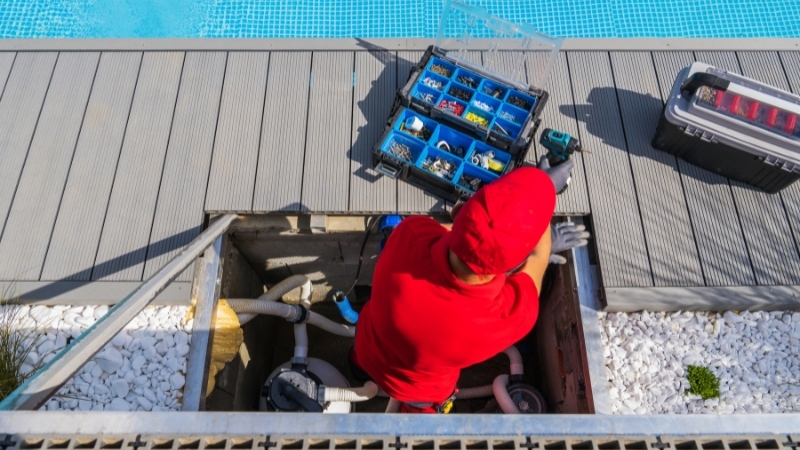

A swimming pool pump keeps water circulating, supports filtration, and helps maintain a clean swimming environment. However, when problems arise, deciding between repair and replacement can be challenging. With professional Swimming Pool Pump Repair & Replacement in Singapore, pool owners can maintain efficient operation and avoid unnecessary expenses.
Understanding the Importance of a Swimming Pool Pump
A swimming pool pump is one of the most important components of a swimming pool circulation system. Its primary function is to move water through the filtration system, allowing dirt, debris, and other unwanted particles to be removed before the water returns to the pool.
Without proper circulation, swimming pool water can quickly become cloudy, unbalanced, and difficult to maintain. A poorly functioning pump may also affect other pool equipment, including filters, heaters, and automatic cleaning systems.
Regular pump maintenance helps ensure that your swimming pool operates efficiently. However, even well-maintained pumps eventually experience wear and tear.
When a pump starts showing signs of trouble, pool owners often face an important question: Should you repair the existing pump or replace it with a new one?
The answer depends on several factors, including the pump's age, condition, repair costs, and overall performance.
Common Signs Your Swimming Pool Pump Needs Attention
Before deciding whether to repair or replace your swimming pool pump, it is important to recognise the warning signs. Identifying problems early can help prevent more expensive equipment damage.
Here are some common indicators that your pump may need professional attention.
1. Unusual Noises During Operation
Swimming pool pumps normally produce a consistent operating sound. However, unusual noises such as grinding, rattling, humming, or squealing may indicate an underlying mechanical problem.
These sounds can be associated with:
-
Worn or damaged motor bearings.
-
Loose internal components.
-
Problems with the pump motor.
-
Debris trapped inside the pump.
-
Damage to the impeller.
Some noise-related issues can be resolved through relatively simple repairs. However, if the motor has extensive internal damage, replacing the pump may be a more practical option.
2. Reduced Water Circulation
One of the most noticeable signs of pump trouble is reduced water circulation.
If water is not moving through the filtration system properly, you may notice:
-
Weak water returning through the pool jets.
-
Poor skimmer performance.
-
Cloudy swimming pool water.
-
Reduced filtration efficiency.
-
Longer periods needed to circulate pool water.
Reduced circulation does not always mean the pump needs replacement. A clogged basket, dirty filter, blocked pipe, or air leak may also cause similar symptoms.
A professional inspection can help identify the actual source of the problem.
3. Frequent Pump Shutdowns
Does your swimming pool pump frequently switch off without completing its operating cycle?
Unexpected shutdowns may indicate overheating, electrical faults, motor problems, or an issue with the pump's internal components.
Although some problems can be repaired, repeated shutdowns should not be ignored. Continuing to operate a faulty pump may increase the risk of further equipment damage.
4. Water Leaks Around the Pump
Water collecting around the pump housing is another warning sign.
Leaks may develop because of damaged seals, loose connections, worn gaskets, or cracks in the pump housing.
Minor leaks may be resolved by replacing individual components. However, if the pump housing is cracked or severely damaged, replacement may be necessary.
5. The Pump Takes Longer to Prime
Priming allows the pump to fill with water and establish proper circulation.
If your pump struggles to prime or repeatedly loses its prime, there may be an air leak, a damaged seal, a blocked suction line, or another circulation issue.
A professional technician should inspect the system before determining whether the pump itself needs repair or replacement.
When Should You Repair Your Swimming Pool Pump?
Repairing an existing swimming pool pump is often the most economical choice when the equipment is generally in good condition and the problem involves a replaceable component.
Here are situations where repairing the pump may make more sense.
1. The Pump Is Relatively New
If your swimming pool pump is relatively new and has been maintained properly, repairing it may be worthwhile.
Newer pumps generally have more remaining service life than older equipment. Replacing a small component can restore normal operation without requiring a completely new installation.
Before proceeding, check whether the pump is still covered by its manufacturer's warranty.
2. The Problem Is Minor
Not every pump malfunction requires complete replacement.
Some common issues involve individual components that can be repaired or replaced.
Examples include:
-
Damaged O-rings.
-
Worn mechanical seals.
-
Faulty gaskets.
-
Blocked pump baskets.
-
Minor plumbing connection problems.
-
Certain replaceable motor components.
If the main pump body and motor remain in good condition, repairing the affected component may be sufficient.
3. Repair Costs Are Reasonable
Cost is an important consideration when deciding between repair and replacement.
If the estimated repair cost is significantly lower than the price of a suitable replacement pump, repairing the existing equipment may offer better value.
However, it is important to consider the possibility of future repairs. A cheap repair may not be worthwhile if several other components are approaching the end of their service life.
4. Replacement Parts Are Readily Available
Some swimming pool pump models have readily available replacement components.
When compatible parts are accessible, technicians can often complete repairs without replacing the entire unit.
This is particularly beneficial for pool owners who have relatively modern equipment from established manufacturers.
5. The Pump Still Operates Efficiently
If your pump maintains suitable water circulation, operates within its intended performance range, and does not consume excessive electricity, repairing a minor fault may be the sensible decision.
There is little reason to replace an otherwise efficient pump simply because one component has worn out.
When Should You Replace Your Swimming Pool Pump?
Although repairs can extend equipment life, replacement becomes a better option when the pump experiences extensive damage or repeatedly develops problems.
Consider replacing your swimming pool pump in the following situations.
1. The Pump Is Reaching the End of Its Service Life
Swimming pool pumps do not last forever.
Depending on the manufacturer, model, operating conditions, maintenance practices, and usage frequency, a pump may require replacement after several years of service.
As equipment ages, internal components naturally experience wear and tear.
Older pumps may also become less efficient compared with newer models.
If your pump has been operating for many years and regularly requires repairs, investing in a replacement may provide better long-term value.
2. Repair Costs Are Too High
One of the clearest reasons to replace a swimming pool pump is when the repair costs become excessive.
For example, a pump with a severely damaged motor, worn internal components, and a deteriorating housing may require multiple expensive repairs.
Rather than spending repeatedly on an ageing unit, installing a new pump may be more economical.
Always compare the total estimated repair cost with the price of a suitable replacement, including installation and any necessary plumbing adjustments.
3. The Motor Has Significant Damage
The motor is responsible for driving the pump and maintaining water circulation.
If the motor develops serious internal damage, repair may become complicated and expensive.
In some cases, replacing the motor alone may be possible. However, when the motor and other major components are also deteriorating, replacing the complete pump may be a better investment.
A qualified technician can assess whether a motor replacement or a complete pump replacement is appropriate.
4. The Pump Frequently Breaks Down
Repeated breakdowns are frustrating and can disrupt your swimming pool maintenance routine.
If you have already repaired your pump several times but continue experiencing similar problems, it may be time to consider replacement.
Frequent repairs can also increase maintenance expenses over time.
A new pump can provide more predictable operation when the replacement model is correctly selected and installed.
5. Your Existing Pump Is Energy Inefficient
Older swimming pool pumps may consume more electricity than modern energy-efficient alternatives.
If your existing pump requires excessive electricity to maintain adequate circulation, upgrading may help reduce operating costs.
Variable-speed pumps are worth considering because they can adjust their operating speed according to circulation requirements.
Unlike traditional single-speed pumps, variable-speed models can operate at lower speeds for many routine filtration tasks.
However, the correct pump should always be selected according to the pool's hydraulic requirements and filtration system.
Swimming Pool Pump Repair vs Replacement: Key Differences
Understanding the advantages and disadvantages of both options can help you make a more informed decision.
|
Factors |
Repair |
Replacement |
|
Initial cost |
Usually lower |
Usually higher |
|
Installation time |
Often shorter |
May take longer |
|
Equipment age |
Suitable for newer pumps |
Better for ageing pumps |
|
Energy efficiency |
Depends on existing model |
Opportunity to upgrade |
|
Long-term reliability |
Depends on pump condition |
Can improve with a suitable new unit |
|
Future maintenance |
May require additional repairs |
Generally starts with a fresh equipment lifecycle |
The best option depends on the condition of your equipment rather than simply choosing the cheapest solution.
For example, repairing a relatively new pump with a damaged seal may be sensible. However, replacing an old pump with extensive motor damage may prevent repeated maintenance expenses.
Factors to Consider Before Replacing Your Swimming Pool Pump
If you decide that replacement is necessary, selecting the right pump is just as important as deciding to replace the existing one.
Here are several important factors to consider.
1. Swimming Pool Size
The size and water capacity of your swimming pool influence the pump's required circulation capacity.
A pump that is too small may struggle to provide sufficient circulation. On the other hand, an unnecessarily powerful pump may increase electricity consumption and create pressure-related problems.
A professional assessment can help determine the appropriate pump capacity.
2. Flow Rate Requirements
Flow rate refers to the volume of water a pump can move within a specific period.
Your pump should provide a suitable flow rate for your swimming pool's filtration requirements.
The selection should also account for pipe diameter, plumbing layout, filter capacity, and system resistance.
Choosing a pump based only on horsepower is not recommended because two pumps with similar motor ratings may deliver different flow rates.
3. Energy Efficiency
Electricity consumption is an important consideration for swimming pool owners in Singapore.
Since pumps may operate for several hours each day, selecting an energy-efficient model can make a noticeable difference to long-term operating expenses.
Consider modern variable-speed pumps where appropriate.
Although the initial purchase price may be higher, the potential energy savings can make them a worthwhile investment.
4. Compatibility With Existing Equipment
Before purchasing a new pump, ensure it is compatible with your existing filtration and circulation system.
Important considerations include:
-
Pipe connections and dimensions.
-
Filter specifications.
-
Required flow rate.
-
Electrical requirements.
-
Pump installation space.
-
Existing automation systems.
Professional assessment helps prevent compatibility problems after installation.
5. Manufacturer Warranty and Parts Availability
A swimming pool pump is a long-term equipment investment.
Before choosing a replacement, check the manufacturer's warranty, availability of spare parts, and access to technical support.
Choosing a suitable model from a recognised manufacturer can make future servicing easier.
Why Professional Swimming Pool Pump Maintenance Matters
Whether you repair your existing pump or install a replacement, regular maintenance is essential for reliable operation.
Professional servicing helps identify developing problems before they become expensive equipment failures.
A typical pump maintenance inspection may include:
Checking the pump basket: Removing accumulated leaves, insects, and other debris helps maintain proper water flow.
Inspecting seals and connections: Technicians can identify signs of leakage and deterioration around important connection points.
Checking motor performance: Monitoring unusual noise, vibration, and overheating helps identify potential mechanical issues.
Inspecting water circulation: Proper circulation supports filtration and helps maintain consistent water quality.
Checking the filtration system: The pump and filter work together, so both should be assessed to maintain overall system performance.
Reviewing operating efficiency: Evaluating pump performance and operating settings can help identify opportunities to reduce unnecessary energy consumption.
Regular maintenance is particularly important for swimming pools in Singapore because warm weather, frequent use, and environmental debris can place additional demands on pool equipment.
How Singapore's Climate Can Affect Swimming Pool Pumps
Singapore's tropical climate creates specific maintenance challenges for swimming pool owners.
High temperatures, humidity, frequent rainfall, and environmental debris can affect pool equipment over time.
High Temperatures and Humidity
Swimming pool pumps operate in an environment where heat and moisture can contribute to equipment deterioration.
Poor ventilation around the pump area may also increase operating temperatures.
Maintaining suitable ventilation and keeping the equipment area clean can support better operating conditions.
Heavy Rainfall and Environmental Debris
Rainwater can introduce additional debris and contaminants into swimming pools.
Leaves, dirt, and other particles may accumulate in skimmer baskets and pump baskets, potentially restricting water circulation.
Regular cleaning helps prevent unnecessary strain on the pump.
Frequent Swimming Pool Usage
Swimming pools in residential developments, condominiums, hotels, and commercial facilities may operate for extended periods.
Higher usage can increase the demand placed on circulation equipment.
A consistent maintenance schedule helps identify developing issues and supports reliable pool operation.
Why Choose Infinity Pool Services Pte Ltd?
Choosing an experienced swimming pool service provider can make a significant difference when dealing with pump problems.
Infinity Pool Services Pte Ltd understands the importance of maintaining reliable swimming pool equipment and proper water circulation.
Whether your pump requires attention because of unusual noises, reduced circulation, water leakage, or motor problems, professional assessment can help determine the most suitable solution.
When considering Swimming Pool Pump Repair & Replacement in Singapore, it is important to work with a service provider that evaluates the actual condition of your equipment rather than automatically recommending a complete replacement.
A professional service approach should focus on:
-
Proper equipment inspection: Identifying the underlying cause of pump problems.
-
Practical repair recommendations: Determining whether individual components can be repaired or replaced.
-
Suitable replacement options: Recommending pumps that match your pool's circulation requirements.
-
Efficient installation: Ensuring the replacement equipment is correctly connected and configured.
-
Ongoing maintenance: Helping maintain consistent pump performance through regular servicing.
With the right maintenance approach, swimming pool owners can avoid unnecessary equipment expenses and maintain a dependable circulation system.
Tips to Extend the Lifespan of Your Swimming Pool Pump
Replacing a swimming pool pump can be a significant investment. Fortunately, proper maintenance can help extend the service life of your equipment.
Here are some practical tips to follow.
Clean the Pump Basket Regularly
Leaves, insects, and other debris can accumulate inside the pump basket.
Check and clean it regularly to prevent restricted water flow.
Always follow the manufacturer's safety instructions and switch off the equipment appropriately before carrying out maintenance.
Maintain Proper Water Chemistry
Water chemistry plays an important role in protecting swimming pool equipment.
Incorrect chemical balance can contribute to corrosion, scaling, and deterioration of certain components.
Regularly monitor chlorine levels, pH, and other relevant water chemistry parameters according to your pool's requirements.
Avoid Running the Pump Dry
Swimming pool pumps are designed to operate with water.
Running a pump without adequate water can damage important internal components, including mechanical seals.
If the pump loses its prime, investigate the cause before restarting it.
Keep the Equipment Area Clean
Ensure that the area surrounding the pump remains clean and properly ventilated.
Remove unnecessary objects and debris that could obstruct airflow or interfere with equipment access.
Schedule Professional Inspections
Even when your pump appears to operate normally, periodic inspections can help identify developing issues.
Professional servicing allows technicians to check important components and recommend maintenance when necessary.
Frequently Asked Questions
1. How Long Does a Swimming Pool Pump Usually Last?
A swimming pool pump can often last around 8–12 years, although actual lifespan varies depending on the model, operating conditions, maintenance, and usage frequency. Regular servicing can help extend its useful life.
2. Is It Better to Repair or Replace an Old Swimming Pool Pump?
It depends on the pump's condition and repair costs. If the problem is minor and replacement parts are available, repairing may be worthwhile. However, an ageing pump with repeated breakdowns or significant motor damage may be better replaced.
3. What Are the Common Reasons Swimming Pool Pumps Stop Working?
Common causes include motor problems, electrical faults, blocked pump baskets, damaged seals, air leaks, overheating, and restricted water circulation. A professional inspection can identify the underlying issue.
4. Can a New Swimming Pool Pump Reduce Electricity Costs?
Yes. A suitable energy-efficient pump, particularly a variable-speed model, may reduce electricity consumption compared with an older single-speed pump. Actual savings depend on pool requirements, operating hours, and pump settings.
5. How Often Should a Swimming Pool Pump Be Serviced?
The appropriate servicing frequency depends on pool usage, equipment condition, and environmental factors. Regular visual checks and periodic professional inspections are recommended to identify problems early.
6. Should I Replace the Pump Motor or the Entire Pump?
If the pump housing and other components remain in good condition, replacing the motor alone may be practical. However, if several major components are deteriorating, replacing the complete pump may provide better long-term value.
Conclusion
Knowing when to repair or replace your swimming pool pump can help prevent unnecessary expenses and maintain efficient water circulation. Regular inspections and timely maintenance are essential. For reliable Swimming Pool Pump Repair & Replacement in Singapore, contact Infinity Pool Services Pte Ltd for professional assistance and suitable solutions.



