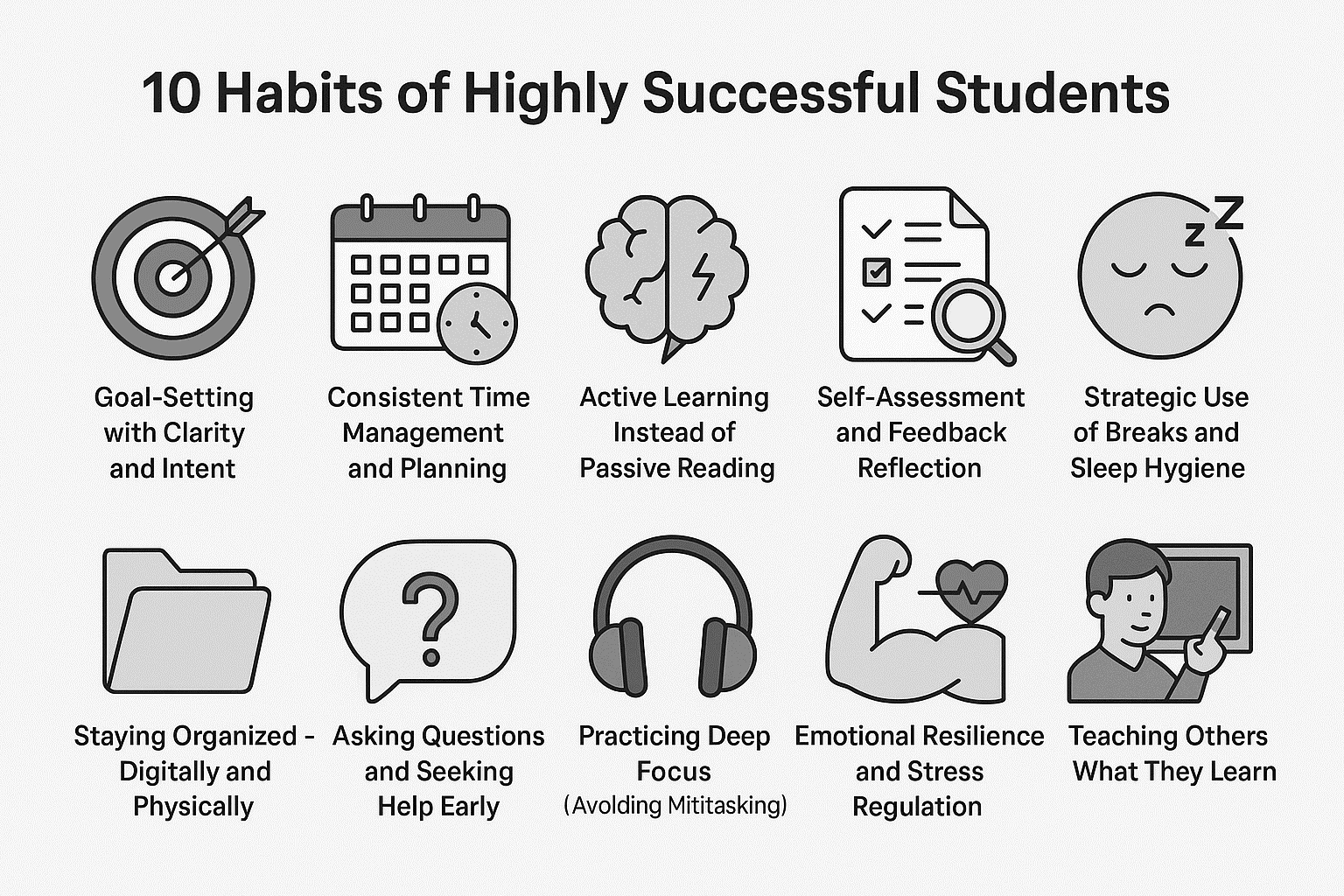

Being a student today is more demanding than ever. Between assignments, exams, part-time jobs, and personal commitments, it can feel like there’s never enough time in the day. Many students struggle not because they lack intelligence, but because they haven’t developed effective study habits.
The truth is, studying smarter—not harder—is the key to consistent academic success. When you build the right habits, you can improve your understanding, retain information longer, and reduce stress. This guide explores practical, easy-to-follow strategies that can completely transform the way you study.
Why Study Habits Matter More Than You Think
Good study habits are the foundation of academic achievement. They influence how well you understand material, how efficiently you complete assignments, and how confident you feel during exams.
Here’s why they are so important:
Better Time Management
You learn how to prioritize tasks and avoid last-minute stress.
Improved Retention
Consistent study routines help your brain store information more effectively.
Reduced Anxiety
Preparation reduces fear and boosts confidence.
Higher Grades
Structured studying leads to better performance overall.
Common Study Mistakes Students Make
Before building better habits, it’s important to recognize what might be holding you back.
1. Cramming at the Last Minute
This leads to short-term memorization, not real understanding.
2. Lack of a Study Plan
Without a clear plan, studying becomes inconsistent and ineffective.
3. Distractions
Phones, social media, and noise can break your focus.
4. Passive Learning
Simply reading notes without engaging doesn’t help much.
5. Skipping Breaks
Studying for long hours without rest reduces productivity.
Building a Strong Study Routine
Creating a consistent routine is one of the most effective ways to improve your academic performance.
Set Clear Goals
Start by defining what you want to achieve in each study session. Clear goals keep you focused and motivated.
Create a Study Schedule
Plan your week in advance. Allocate specific time slots for each subject and stick to them as much as possible.
Choose the Right Environment
Your study space should be quiet, comfortable, and free from distractions. A clean and organized space helps improve concentration.
Stay Consistent
Consistency is more important than intensity. Studying a little every day is better than cramming once a week.
Effective Study Techniques That Work
Not all study methods are equally effective. Here are some proven techniques that can make a real difference:
Active Recall
Test yourself regularly instead of just reading notes.
Spaced Repetition
Review material over time rather than all at once.
Mind Mapping
Visual diagrams help organize and connect ideas.
Practice Testing
Solving past papers improves understanding and exam readiness.
Teaching Others
Explaining concepts to someone else strengthens your knowledge.
Managing Time Like a Pro
Time management is a critical skill for students. Without it, even the best intentions can fall apart.
Use a Planner
Track assignments, deadlines, and study sessions.
Break Tasks into Smaller Steps
Large tasks can feel overwhelming, but smaller steps are easier to manage.
Prioritize Important Work
Focus on tasks that have the biggest impact on your grades.
Avoid Procrastination
Start early, even if it’s just a small step.
Staying Focused in a Distracted World
Distractions are one of the biggest challenges students face today. Here’s how to stay focused:
- Turn off notifications while studying
- Use apps that block distractions
- Study in short, focused sessions (like 25–30 minutes)
- Take regular breaks to recharge
Creating boundaries with your time and attention is essential for productivity.
Balancing Study and Life
Academic success is important, but so is your well-being. Maintaining a balance between studying and personal life is crucial.
Get Enough Sleep
Your brain needs rest to function properly.
Eat Healthy
Good nutrition supports better concentration and energy.
Stay Active
Exercise helps reduce stress and improve focus.
Take Breaks
Short breaks can actually boost productivity.
When Students Need Extra Help
Sometimes, even with the best study habits, students need additional support. This is completely normal.
You might need help if:
- You’re struggling to understand certain subjects
- You’re falling behind on assignments
- You feel overwhelmed or stressed
- You have multiple deadlines at once
In such situations, students often look for practical solutions online, including options like do my homework cheap to manage their workload more effectively without sacrificing quality.
How Professional Academic Support Can Help
Getting assistance from an expository essay writing service or similar academic support can be a smart choice when used responsibly. These services provide guidance, structure, and clarity, helping students improve their work and learn better.
Benefits include:
Expert Guidance
Professionals understand academic requirements and expectations.
Time Efficiency
You can focus on other important tasks.
Improved Quality
Well-structured content enhances your learning.
Reduced Stress
Knowing you have support can ease academic pressure.
Developing Long-Term Academic Skills
Good study habits don’t just help you pass exams—they prepare you for future success.
Critical Thinking
You learn how to analyze and evaluate information.
Problem-Solving Skills
You become better at tackling complex challenges.
Self-Discipline
Consistent habits build strong discipline over time.
Confidence
Success in academics boosts overall confidence.
Practical Daily Study Plan Example
If you’re unsure where to start, here’s a simple daily routine you can follow:
- Morning: Review notes from previous day
- Afternoon: Focus on new topics or lectures
- Evening: Practice problems or revise key concepts
- Night: Light review or planning for next day
This balanced approach ensures consistent progress without burnout.
Common Mistakes to Avoid
Even with a good plan, certain mistakes can slow you down:
- Studying without clear goals
- Ignoring difficult subjects
- Overloading yourself with too much work
- Skipping revision
- Not asking for help when needed
Being aware of these mistakes helps you stay on track.
Final Thoughts
Success in academics is not about studying longer hours—it’s about studying smarter. By building effective habits, managing your time well, and staying consistent, you can achieve better results with less stress.
Remember, every student’s journey is different. What matters most is finding what works for you and sticking to it. With the right strategies and mindset, you can take control of your studies and reach your full potential.
FAQs
1. What are the best study habits for students?
Consistent scheduling, active learning, and regular revision are some of the most effective habits.
2. How can I stay focused while studying?
Minimize distractions, use short study sessions, and take regular breaks.
3. How many hours should I study daily?
It depends on your workload, but 2–4 focused hours are usually effective.
4. Is it okay to ask for academic help?
Yes, seeking help can improve understanding and reduce stress.
5. Can study habits really improve grades?
Absolutely, good habits lead to better understanding and stronger performance.
Conclusion
Developing smart study habits is one of the most valuable investments you can make in your academic journey. It’s not about perfection—it’s about progress and consistency. By applying the strategies outlined in this guide, you can improve your focus, manage your time effectively, and achieve better results.
Stay committed, stay organized, and don’t hesitate to seek support when needed. With the right approach, academic success is well within your reach.