President Trump Threatens Tax on U.S. Companies Building Overseas AI Data Centers
President Trump issued a significant threat on November 20, 2026, indicating plans to impose a substantial tax on U.S. companies that construct data centers abroad. This declaration, made without specifying a rate or legal mechanism, introduces new uncertainty into the landscape of global artificial intelligence infrastructure development. The warning directly impacts major AI projects, particularly those in the Gulf region involving American partners and chips, such as the Amazon Web Services and HUMAIN AI Zone in Saudi Arabia, and OpenAI's Stargate UAE initiative.This potential policy shift represents a new dimension in the ongoing efforts by Washington to regulate and control access to advanced AI computing capabilities. While the U.S. already employs export licenses to dictate where advanced AI computing resources are located globally, a direct tax would broaden the scope of intervention, potentially impacting the financial viability and strategic decisions of American tech giants. The ambiguity surrounding the tax's coverage adds a layer of risk for companies financing and developing international data center campuses.
The proposed tax could ignite further debate over presidential versus congressional authority in trade and taxation. While Congress typically writes tax law, the White House could leverage tariff or sanctions powers to implement such a measure. This development signals an escalation in the geopolitical maneuvering surrounding AI, compelling companies to re-evaluate their global expansion strategies and consider the increased regulatory and financial hurdles involved in establishing AI infrastructure outside the United States.
President Trump Threatens Tax on U.S. Companies Building Overseas AI Data Centers
President Trump issued a significant threat on November 20, 2026, indicating plans to impose a substantial tax on U.S. companies that construct data centers abroad. This declaration, made without specifying a rate or legal mechanism, introduces new uncertainty into the landscape of global artificial intelligence infrastructure development. The warning directly impacts major AI projects, particularly those in the Gulf region involving American partners and chips, such as the Amazon Web Services and HUMAIN AI Zone in Saudi Arabia, and OpenAI's Stargate UAE initiative.
This potential policy shift represents a new dimension in the ongoing efforts by Washington to regulate and control access to advanced AI computing capabilities. While the U.S. already employs export licenses to dictate where advanced AI computing resources are located globally, a direct tax would broaden the scope of intervention, potentially impacting the financial viability and strategic decisions of American tech giants. The ambiguity surrounding the tax's coverage adds a layer of risk for companies financing and developing international data center campuses.
The proposed tax could ignite further debate over presidential versus congressional authority in trade and taxation. While Congress typically writes tax law, the White House could leverage tariff or sanctions powers to implement such a measure. This development signals an escalation in the geopolitical maneuvering surrounding AI, compelling companies to re-evaluate their global expansion strategies and consider the increased regulatory and financial hurdles involved in establishing AI infrastructure outside the United States.
Sources
forbes.com https://vertexaisearch.cloud.google.com/grounding-api-redirect/AUZIYQEnTTofmdFs4cEvxdSCZNCZfF1VB4S30Oy7JAmSm1ft2pqT6Yl1-f0KyQCjm1nHPnnVH8i0F2637jsx2jxsxh-JKz-mw2cHBgQXbkwox5CV3Es5wOAJXRFx6B4mzrJOaWSL0Q2hjWEtyLXe-IYm5bsUToDwQWXMvlyIyg38oyQ0ieTOQf12GZmO0vUbMBRgkzV9vGzG7p7HBi9bx0Ai69NC66Q0OmCLyGfagHzMatJ1bO-cBowIvr9mCQ9Fuq0qX2wSVyiTTsuv1mHDtgEfGA==
#USPolicy #AIInfrastructure #GlobalTech #DataCenters #Geopolitics
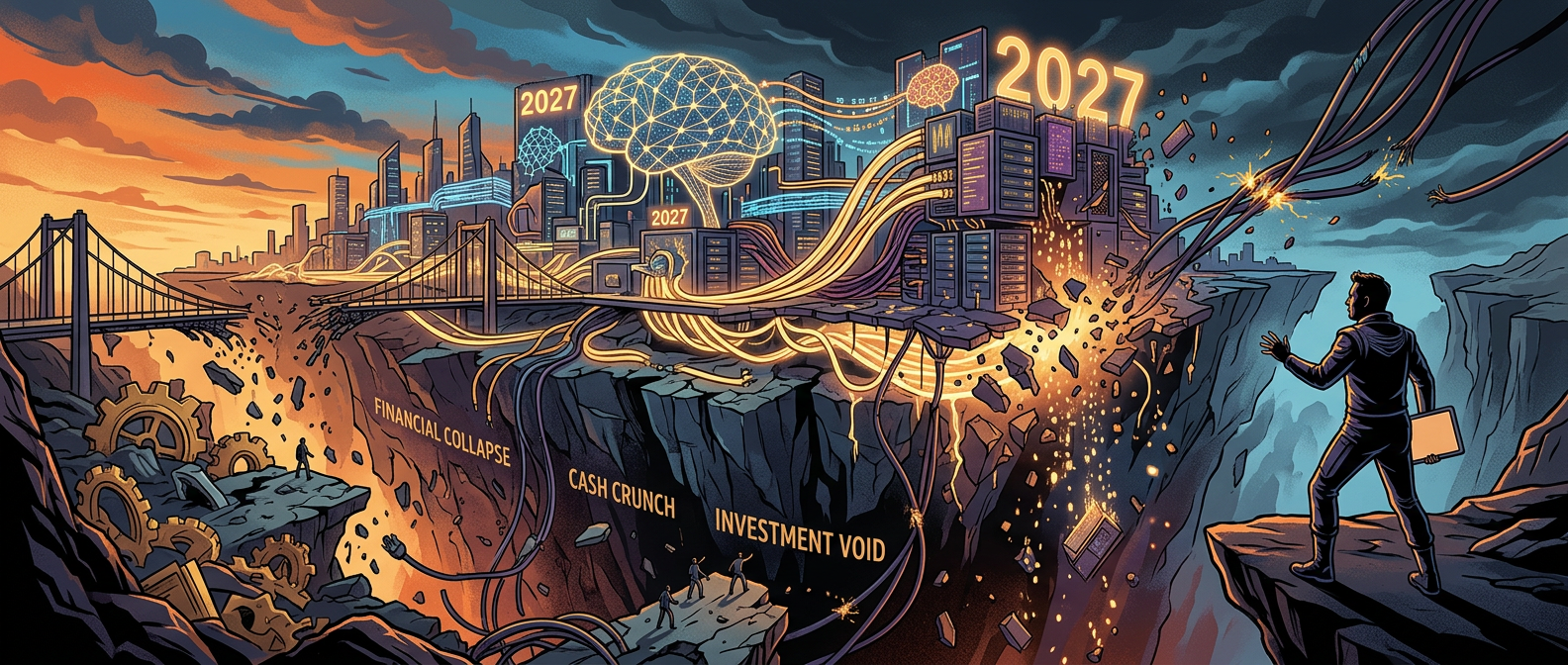
Elon Musk Warns of Looming AI Industry Cash Crunch in 2027
Elon Musk issued a stark warning on November 21, 2026, predicting that the artificial intelligence industry could face a significant cash crunch by 2027. He stated that hundreds of billions of dollars would be required to cover upfront computing costs before the industry's investments turn profitable. Musk further noted that debt markets are increasingly inaccessible for neocloud providers, which are newer cloud companies focused on renting AI computing power, especially if they lack substantial revenue streams beyond AI data centers.This forecast signals a critical juncture for the rapidly expanding AI sector. Musk anticipates a wave of consolidation or outright failures among over 200 firms operating in the AI data center space, attributing this to weakening investor confidence and tightening credit conditions. The warning highlights a fundamental mismatch between the immediate, colossal expenditures on AI compute infrastructure and the longer timeline required for these investments to generate returns. Goldman Sachs data indicates nearly $600 billion in global AI-related debt issuance through late 2026, with AI capital expenditures approaching $1 trillion for the year, underscoring the massive financial scale involved.
The implications of this potential cash shortage extend throughout the AI ecosystem, directly impacting the hardware supply chain. Bottlenecks in GPU availability and delays in securing power connections are expected to exacerbate the gap between spending and revenue, further stressing companies. While the industry has borrowed at a historic pace, Musk's assessment suggests that even these unprecedented capital injections might prove insufficient to bridge the financial timing gap, potentially reshaping the competitive landscape and leading to a more concentrated market as smaller, less capitalized entities struggle to survive.
Elon Musk Warns of Looming AI Industry Cash Crunch in 2027
Elon Musk issued a stark warning on November 21, 2026, predicting that the artificial intelligence industry could face a significant cash crunch by 2027. He stated that hundreds of billions of dollars would be required to cover upfront computing costs before the industry's investments turn profitable. Musk further noted that debt markets are increasingly inaccessible for neocloud providers, which are newer cloud companies focused on renting AI computing power, especially if they lack substantial revenue streams beyond AI data centers.
This forecast signals a critical juncture for the rapidly expanding AI sector. Musk anticipates a wave of consolidation or outright failures among over 200 firms operating in the AI data center space, attributing this to weakening investor confidence and tightening credit conditions. The warning highlights a fundamental mismatch between the immediate, colossal expenditures on AI compute infrastructure and the longer timeline required for these investments to generate returns. Goldman Sachs data indicates nearly $600 billion in global AI-related debt issuance through late 2026, with AI capital expenditures approaching $1 trillion for the year, underscoring the massive financial scale involved.
The implications of this potential cash shortage extend throughout the AI ecosystem, directly impacting the hardware supply chain. Bottlenecks in GPU availability and delays in securing power connections are expected to exacerbate the gap between spending and revenue, further stressing companies. While the industry has borrowed at a historic pace, Musk's assessment suggests that even these unprecedented capital injections might prove insufficient to bridge the financial timing gap, potentially reshaping the competitive landscape and leading to a more concentrated market as smaller, less capitalized entities struggle to survive.
Sources
kucoin.com https://vertexaisearch.cloud.google.com/grounding-api-redirect/AUZIYQGk7dbl_p5aW6SNcjN2qndqNxngczTWXnH4-9eVUxZBAgh7GZfoAqiGdOIBCBBuVv7Vt7b6fzOTtUj8TEtOQpM5oM04sLn6M4V-65G8bGWqGvIskNSnaikKtJaR-qWePAJM7lurnCN7lVh5OT1Mbgw0AbqAqg2gH2iqYabVFvP8CbSZDky0aGitn4EVMEpwYV-Ya2r9-_2SB89xufRYf2tv9pViKVj4pTcedg==
#AIIndustry #CashCrunch #TechEconomy #Neocloud #AIInvestment
UN Nations Initiate Process Towards International Regulation of Lethal Autonomous Weapons Systems
In a significant move toward controlling future warfare, countries at the United Nations have agreed to commence the development of an international instrument aimed at regulating lethal autonomous weapons systems (LAWS). The consensus was reached following five days of intense negotiations at the UN's Review Conference of the Convention on Conventional Weapons in Geneva, concluding in the early hours of Saturday, November 21, 2026. This decision marks a pivotal moment in global efforts to address the ethical and security implications of AI-powered weaponry, often dubbed 'killer robots'.The agreement sets a two-year timeline for the elaboration of this international instrument. While campaigners and non-governmental organizations had advocated for immediate, legally binding rules to prevent the delegation of life-or-death decisions to machines, key technological powers, including the United States and Russia, expressed reservations about overly restrictive measures. The resulting compromise reflects the complex balance between humanitarian concerns and the strategic interests of nations developing advanced military AI.
The forthcoming instrument will seek to define which categories of autonomous weapons should be prohibited under international humanitarian law, and which can be subject to regulation. This foundational work will involve detailed discussions to clarify the scope and enforceability of potential restrictions. According to Swiss diplomat Julien Thoni, the fact that major military powers have agreed to engage in this process is itself a substantial step forward, laying the groundwork for unprecedented global governance in this rapidly evolving technological domain.
The next phase will focus on fleshing out the specific provisions of the instrument and subsequently determining whether it will take the form of a binding treaty or another international legal framework. The outcome will have profound implications for the future of AI in military applications, aiming to ensure human control and accountability remain paramount as artificial intelligence capabilities continue to advance globally. This initiative underscores a collective recognition of the urgent need to establish norms and safeguards for AI weapons before their widespread proliferation.
UN Nations Initiate Process Towards International Regulation of Lethal Autonomous Weapons Systems
In a significant move toward controlling future warfare, countries at the United Nations have agreed to commence the development of an international instrument aimed at regulating lethal autonomous weapons systems (LAWS). The consensus was reached following five days of intense negotiations at the UN's Review Conference of the Convention on Conventional Weapons in Geneva, concluding in the early hours of Saturday, November 21, 2026. This decision marks a pivotal moment in global efforts to address the ethical and security implications of AI-powered weaponry, often dubbed 'killer robots'.
The agreement sets a two-year timeline for the elaboration of this international instrument. While campaigners and non-governmental organizations had advocated for immediate, legally binding rules to prevent the delegation of life-or-death decisions to machines, key technological powers, including the United States and Russia, expressed reservations about overly restrictive measures. The resulting compromise reflects the complex balance between humanitarian concerns and the strategic interests of nations developing advanced military AI.
The forthcoming instrument will seek to define which categories of autonomous weapons should be prohibited under international humanitarian law, and which can be subject to regulation. This foundational work will involve detailed discussions to clarify the scope and enforceability of potential restrictions. According to Swiss diplomat Julien Thoni, the fact that major military powers have agreed to engage in this process is itself a substantial step forward, laying the groundwork for unprecedented global governance in this rapidly evolving technological domain.
The next phase will focus on fleshing out the specific provisions of the instrument and subsequently determining whether it will take the form of a binding treaty or another international legal framework. The outcome will have profound implications for the future of AI in military applications, aiming to ensure human control and accountability remain paramount as artificial intelligence capabilities continue to advance globally. This initiative underscores a collective recognition of the urgent need to establish norms and safeguards for AI weapons before their widespread proliferation.
Sources
afp.com https://vertexaisearch.cloud.google.com/grounding-api-redirect/AUZIYQFY0RWOBZo7HjXxXYi5A3Z616ETP44zWFyxec6Oqz7f-FIbKc7VfK5m8UwvzcSrRnqr16p7hye6l5aqLGsz8n5pJVYe3s5IwuAEXYbi8uFuO9PHiP_oWXXGaVEUtZ96TmIS0SEd2DEASarz3iDuQwJLheojUfm26ROgrf3JOCM7
#AIRegulation #AutonomousWeapons #UnitedNations #GlobalSecurity #DigitalEthics
TCL CSOT Achieves World's First Mass Production of Ultrahigh-Mobility Oxide Display Technology
TCL CSOT, a prominent display manufacturer, announced on November 20, 2026, a significant technological breakthrough: the world's first mass production of ultrahigh-mobility oxide technology on an 8.6-generation line. This milestone signifies that high-mobility oxide technology has successfully surpassed the 50 cm² V⁻¹ s⁻¹ electron mobility threshold in large-scale manufacturing. The company highlighted that this advancement allows for the creation of premium displays featuring high refresh rates, superior resolution, and narrow bezels, all without the traditional compromises in power consumption or production costs.This leap forward by TCL CSOT holds substantial implications for the display industry and the broader digital technology sector. Historically, manufacturers have grappled with inherent trade-offs when aiming to optimize display performance metrics such as refresh rate, resolution, and energy efficiency. The successful mass production of ultrahigh-mobility oxide technology effectively resolves these long-standing challenges, facilitating the development of displays that offer exceptional image quality, enhanced power conservation, and widespread economic viability. It represents a pivotal transition from theoretical development to practical, large-scale manufacturing.
The widespread adoption of ultrahigh-mobility oxide technology is anticipated to rapidly integrate into a diverse array of display products. By leveraging the extensive capacity of TCL CSOT's 8.6-generation production line, these advanced displays are poised to become more accessible and affordable, potentially establishing new benchmarks for visual excellence across global markets. This development, rooted in extensive expertise and collaborative efforts with research institutions, establishes a robust foundation for subsequent product innovations and further scaling, promising enriched visual experiences for consumers worldwide.
TCL CSOT Achieves World's First Mass Production of Ultrahigh-Mobility Oxide Display Technology
TCL CSOT, a prominent display manufacturer, announced on November 20, 2026, a significant technological breakthrough: the world's first mass production of ultrahigh-mobility oxide technology on an 8.6-generation line. This milestone signifies that high-mobility oxide technology has successfully surpassed the 50 cm² V⁻¹ s⁻¹ electron mobility threshold in large-scale manufacturing. The company highlighted that this advancement allows for the creation of premium displays featuring high refresh rates, superior resolution, and narrow bezels, all without the traditional compromises in power consumption or production costs.
This leap forward by TCL CSOT holds substantial implications for the display industry and the broader digital technology sector. Historically, manufacturers have grappled with inherent trade-offs when aiming to optimize display performance metrics such as refresh rate, resolution, and energy efficiency. The successful mass production of ultrahigh-mobility oxide technology effectively resolves these long-standing challenges, facilitating the development of displays that offer exceptional image quality, enhanced power conservation, and widespread economic viability. It represents a pivotal transition from theoretical development to practical, large-scale manufacturing.
The widespread adoption of ultrahigh-mobility oxide technology is anticipated to rapidly integrate into a diverse array of display products. By leveraging the extensive capacity of TCL CSOT's 8.6-generation production line, these advanced displays are poised to become more accessible and affordable, potentially establishing new benchmarks for visual excellence across global markets. This development, rooted in extensive expertise and collaborative efforts with research institutions, establishes a robust foundation for subsequent product innovations and further scaling, promising enriched visual experiences for consumers worldwide.
Sources
kosmo.com.my https://vertexaisearch.cloud.google.com/grounding-api-redirect/AUZIYQFv467ervF4Po0yI2ceGARkRWkHxrHCsEM9HkxfABZTWEnujM7I0BeHmtdLTAg4-Xh4148KbBR3pyB1cm6gOujgRiX1kjSw0GWNOH6K9jlb-D5Z7u0ngdnq1L9F_NVkt_Mo4YKcHxI-Cr4EqRzXWAFKfp3MnWJK0v8R9YnT7dDTU73dHk87Oe22OM75yXtYZ69H-5G8KcydueAHBMjt_u8ZsH06RHrRdyDSwU6xz59-rwww81CQ5z9s4t1NycJV8JAasc8QxCQN0OzSbJIv88t-U2vksVDh9yR3zw==
#DisplayTechnology #SemiconductorManufacturing #DigitalInnovation