Hair Transplant in Dubai: Best Age and Eligibility Criteria
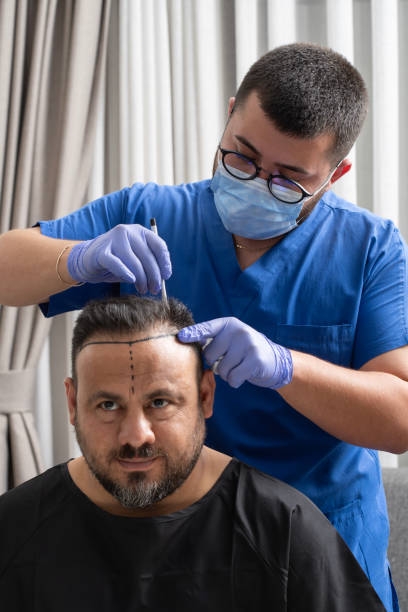
While advanced technology makes hair restoration more accessible than ever, the most critical factor in a successful Hair Transplant in Dubai is not "how" it is done, but "when" and for "whom." Clinically, a hair transplant is a permanent solution for a progressive problem. If a procedure is performed too early or on an unsuitable candidate, the long-term aesthetic can be compromised as the native hair continues to recede. Understanding the intersection of biological age, hair loss stability, and donor health is essential for ensuring that your restoration remains natural-looking for decades to come.
What is the Ideal Age for a Hair Transplant?
In clinical settings, we observe that age is a primary indicator of how predictable a patient’s hair loss pattern will be. While there is no "illegal" age for surgery, there is a "strategic" age window.
The clinical considerations for different age groups include:
-
The Under-25 Profile: Generally considered high-risk. At this stage, it is difficult to predict how far the hairline will eventually recede, which could leave surgical "islands" of hair later in life.
-
The 25 to 45 Window: Often considered the "Golden Era" for transplants. The hair loss pattern has usually declared itself, allowing for a strategic and durable design.
-
The 50+ Profile: Success depends largely on the quality of the donor area. As long as the hair at the back of the head is dense and healthy, age is not a barrier to excellent results.
-
Early Intervention: For younger patients, we often prioritize medical stabilization (like Minoxidil or Finasteride) before moving to surgical intervention.
Who is the Most Eligible Candidate for This Treatment?
Eligibility is determined by a "supply and demand" calculation of your scalp’s resources. Not everyone with thinning hair is a safe candidate for surgery.
What are the biological requirements for a successful graft?
The most eligible candidates possess a "stable" donor area—the hair at the back and sides of the head that is genetically resistant to balding. In clinical settings, we look for high follicle density (the number of hairs per square centimeter) and good hair caliber (the thickness of individual strands). A candidate with thick, coarse hair will achieve a much denser-looking result with fewer grafts than someone with very fine, wispy hair. Furthermore, the scalp must be free of active inflammatory conditions like psoriasis or seborrheic dermatitis.
What are the Actual Pain Levels During the Eligibility Exam?
The consultation and physical assessment are non-invasive, but they involve a detailed tactile analysis of your scalp’s health.
What sensations occur during a clinical scalp analysis?
Patients typically report that the exam is entirely painless. The clinician will use a "Trichoscope"—a handheld magnification tool—to look closely at your follicles. You will feel the light pressure of the device against your scalp. They may also perform a "pull test," where they gently tug on small sections of hair to check for active shedding. This helps determine if your hair loss is currently in a "resting" or "active" phase, which is a key factor in deciding if you are ready for surgery today or if you should wait.
Realistic Expectations: Understanding the "Donor Limit"
A common misconception is that a Hair Transplant in Dubai can provide an unlimited supply of new hair. In reality, you have a finite number of "permanent" follicles.
Why is protecting the donor area a safety priority?
In clinical settings, we must ensure we don't "over-harvest" the back of your head. If too many grafts are taken, the donor area will look thin, patchy, and unnatural—a condition that is very difficult to correct. A safe eligibility assessment involves calculating exactly how many grafts can be moved without compromising the look of the donor site. We often prioritize the frontal hairline first, as this creates the most significant visual change, saving remaining grafts for future sessions if the crown continues to thin over time.
Safety Considerations: Who Should Be Excluded?
Specific medical profiles and hair loss types are contraindicated for surgical restoration to prevent poor healing or graft rejection.
When is a hair transplant considered unsafe or ineffective?
-
Alopecia Areata: An autoimmune condition where the body attacks its own follicles. Surgery will not work as the immune system will likely attack the new grafts.
-
Uncontrolled Blood Pressure: High pressure can cause excessive bleeding during the micro-incisions, making it difficult for the grafts to "take."
-
Trichotillomania: A psychological condition involving compulsive hair pulling. Surgery is only an option once the underlying condition is fully managed.
-
Anesthesia Sensitivity: Patients with a history of severe reactions to local anesthetics require specialized hospital-based protocols.
-
Heavy Smoking: Nicotine constricts blood vessels, which can lead to poor graft survival and slow wound healing in the donor area.
Why Choose Tajmeels Clinic for Your Eligibility Assessment?
At Tajmeels Clinic, we believe that "No" can be the most important answer we give a patient. Our approach to a Hair Transplant in Dubai is rooted in long-term medical ethics. We utilize advanced digital trichoscopy to measure your donor density with mathematical precision, ensuring we never over-harvest your scalp. Our clinicians provide an honest roadmap, sometimes recommending medical therapy to strengthen your existing hair before considering a surgical move. By choosing Tajmeels Clinic, you are opting for a team that values your future appearance as much as your immediate transformation.
Genuine Patient Perspectives
"I went in at 22 wanting a new hairline, but the doctors at Tajmeels advised me to wait and start medical treatment first. I was frustrated then, but now at 26, my hair loss has stabilized and we just did a much smaller, more targeted transplant. I’m glad they didn't just take my money when I was too young." — Hamad F.
"I thought at 55 I was too old, but the exam showed my donor hair was actually very thick. The process was easy, and the recovery was much faster than I expected. It’s never too late if your donor area is still healthy." — Robert P.
Frequently Asked Questions
Is there an upper age limit for a hair transplant?
No, as long as you are in good health and have sufficient donor hair, you can have a transplant well into your 70s.
Can women be candidates for a hair transplant?
Yes, but the eligibility criteria differ as female hair loss is often more "diffuse" (spread out) than male pattern baldness.
Does the "Norwood Scale" determine if I'm eligible?
It helps classify your stage of loss, but even those at Norwood Stage 6 or 7 can be candidates if their donor area is robust.
What if I am completely bald?
If there is no hair at the back or sides of the head, a traditional transplant is not possible as there is no donor supply.
Can I use hair from another person?
No, your body would reject the foreign tissue. You must use your own hair follicles.
How do I know if my hair loss has "stabilized"?
A clinician can determine this by comparing photos over 6–12 months and performing a microscopic exam of the hair bulbs.

閱讀更多
If you want to buy aged Facebook accounts, you’re probably serious about getting results fast. You don’t want to waste time building a profile from scratch or waiting for Facebook to trust a brand-new account. You want real, ready-to-use, old Facebook accounts that work for ads, marketplace, or business. That’s what I’m here to help you with—plain, simple, and...
(圖/ 經濟部) 經濟部部長龔明鑫今(1)日再度邀請七大工商團體進行座談,距離上次(9月1日)意見交流僅隔三個月,展現經濟部迅速回應產業界需求的「行動力」。會中,經濟部報告多項政策推動進度,並與工商團體共同檢視及精進作法,為因應國際情勢變化及把握下一波經濟成長契機做好準備。 座談會聚焦人力資源需求、產業競爭力提升及海外市場拓展三大核心議題。人力需求方面,經濟部協調勞動部鬆綁移工政策,製造業提高本國勞工薪資可增加移工名額,移工上限提升至45%;旅宿業及商港碼頭業亦開放引進外國技術人力;資深移工轉任外國技術人力的上限也獲放寬,有助於紓緩產業缺工問題,同時提升本國勞工薪資。 MGBOX (圖/ 經濟部)...

Looking to buy Facebook aged accounts but unsure where to start? Whether you’re an advertiser, marketer, or entrepreneur, purchasing aged Facebook accounts can be a game-changer for your business. These accounts are highly valuable for running ads, accessing the Facebook Marketplace, or scaling your online ventures. But how do you ensure you’re buying the right ones? This guide will...

Maximizing storage is one of the biggest challenges in kitchen design, but it’s also where smart planning has the greatest payoff. IKEA has revolutionized kitchen storage with modular systems, clever interiors, and space-saving accessories that make kitchens more functional, organized, and visually appealing. Whether your space is compact or expansive, IKEA Kitchen Design provides...