Live Currency Exchange Rates: What Every Forex Trader Needs
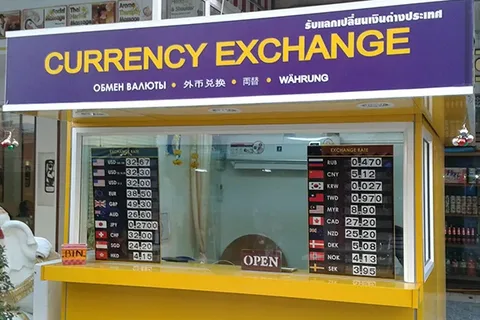
Let me ask you something real quick — have you ever placed a forex trade and then checked the rate again five minutes later, only to find it moved way more than you expected? Yeah, that happens a lot. And it's usually because traders either don't have access to live currency exchange rates or they're working off data that's already a few seconds old.
In the world of forex trading, seconds genuinely matter. A rate that was accurate a minute ago might already be outdated by the time you act on it. That's why live, real-time forex data isn't a "nice to have" — it's absolutely essential for anyone who takes trading seriously.
In this article, we're going to dig into why live currency exchange rates matter so much, what makes a good data source, and how traders, developers, and financial professionals can get access to the best tools available. If you're curious about where to get reliable, real-time forex data, stick around — we'll get to that too.
Why Live Currency Rates Matter More Than You Think
The forex market is the biggest financial market in the world — we're talking over $7 trillion traded every single day. It runs 24 hours a day, five days a week, across different time zones and financial hubs like London, New York, Tokyo, and Sydney. Things move fast.
When major news drops — like an interest rate decision from the Fed, a surprise jobs report, or a political event — forex rates can shift dramatically within milliseconds. If you're relying on delayed data, you're basically trading blind. You might think you're getting in at a good price, but by the time your order executes, the rate has already moved against you.
Here's a simple analogy: imagine trying to buy airline tickets using prices from yesterday's website. You'd probably end up paying more than you expected — or missing the deal entirely. That's exactly what happens when traders rely on stale forex data.
The Cost of Delayed Data
Delayed data doesn't just cause missed opportunities — it can cause actual financial losses. Slippage is a big one. That's when you place a trade expecting one price, but you actually get filled at a different (usually worse) price because the market moved between when you clicked "buy" and when the order executed.
For retail traders, this might mean a smaller profit or a slightly bigger loss. For institutional traders or algorithmic trading systems, even a few milliseconds of delay can mean the difference between a profitable strategy and one that bleeds money.
What Actually Makes a Live Forex Data Source Good?
Not all live data is created equal. There's a big difference between a platform that refreshes every 30 seconds and one that streams genuine tick-by-tick data in real time. When you're evaluating a forex data provider, here's what you should actually be looking at:
• Latency: How fast does the data arrive? Lower latency = more accurate rates.
• Coverage: Does it cover all the currency pairs you trade, including exotic pairs?
• Data Source Quality: Where does the data come from? Banks, exchanges, or aggregated market makers?
• Uptime and Reliability: Does the feed go down during high-volatility events when you need it most?
• Historical Data Access: Can you also pull historical rates for backtesting and analysis?
If a provider can't deliver on most of these, it's probably not the right fit for serious trading or development work. The good news is there are platforms built specifically to solve this problem.
Real-Time vs. Delayed Data: Know the Difference
It's worth clearing this up because a lot of beginners get confused. "Real-time" data means rates updated as they happen — often multiple times per second. "Delayed" data (usually 15-20 minutes behind) is what many free platforms offer. It's fine for research, but totally useless for live trading.
Some platforms also offer "near real-time" data, which might be refreshed every few seconds. That can work for longer-timeframe traders but isn't ideal for scalpers or anyone trading on short-term price action.
The Tools Every Serious Forex Trader Should Have
Access to live rates is just the starting point. To really trade well, you need a whole ecosystem of tools working together. Here's what that looks like in practice:
1. Live Currency Rate Feed
This is your foundation. Whether you're trading EUR/USD, GBP/JPY, or some exotic pair like USD/TRY, you need accurate, fast rates. Ideally delivered via WebSocket so your platform updates automatically without having to constantly refresh the page or make new API calls.
2. Economic Calendar
This one is huge and a lot of beginner traders overlook it. An economic calendar shows you when major data releases are scheduled — things like U.S. Non-Farm Payrolls, CPI inflation data, central bank interest rate decisions, and GDP reports. These events cause big moves, and knowing when they're coming lets you prepare or avoid getting caught on the wrong side.
Trading without an economic calendar is kinda like driving through a city without knowing where the traffic lights are. You might be fine, or you might walk into a red light at 100mph.
3. Forex Signals
Forex trading signals are basically trade ideas generated either by experienced analysts or automated systems. They tell you which pair to trade, what direction (buy or sell), and often include entry price, stop loss, and take profit levels. For newer traders, signals can be a valuable learning tool. For experienced ones, they serve as a useful second opinion.
The key thing is to use signals from reputable sources backed by solid data — not random social media tips.
4. Historical Exchange Rate Data
Want to know how USD/JPY behaved during the 2008 financial crisis? Or how the pound moved in the weeks around Brexit? Historical data lets you research past behavior, test trading strategies, and build models. It's essential for quantitative analysts, algorithm developers, and anyone building backtested trading systems.
Access to 30+ years of historical currency data gives you a huge edge when building and validating strategies.
5. Currency Converter and Rate API
For developers and fintech companies, having a reliable currency rates API is the backbone of a lot of financial applications. Whether you're building a travel app, an e-commerce platform with multi-currency support, or a financial dashboard for clients — you need an API that's accurate, fast, and well-documented.
Who Actually Needs Live Forex Rate Data?
The short answer? A lot of people. Let's break it down by audience:
Forex Traders and Financial Analysts
This is the most obvious group. Retail and institutional traders need live rates to execute trades, monitor positions, and manage risk. Financial analysts use rate data to build reports, compare currency performance, and advise clients. For both groups, accuracy and speed are non-negotiable.
Developers and Programmers
If you're building anything that involves international money — payment processing, currency conversion, financial dashboards, trading bots — you need a solid forex data API. You want one that's easy to integrate, has good documentation, supports multiple programming languages, and gives you both real-time and historical data.
Platforms like vunelix.com deliver data through RESTful API, JSON API, and WebSocket — accessible via HTTP in Python, PHP, Java, Android, CURL, and more. That kind of flexibility matters a lot when you're building across different tech stacks.
Fintech Companies and Online Brokers
If your business model involves showing currency rates to users — whether you're a broker, an exchange platform, or a fintech startup — you absolutely need a reliable data source. Showing wrong rates doesn't just frustrate users; it can expose your business to legal and financial risk.
What you want is a provider that sources data from multiple exchanges and financial institutions, so even if one source has an issue, your rates stay accurate. Coverage across 180+ currencies and 2,000+ forex pairs means you can support almost any user, anywhere in the world.
Website Owners and Content Publishers
Even if you're not a trader or developer, you might run a website where showing live rates adds value for your audience. Travel blogs, expat communities, international shopping sites — all of these benefit from embedding a live currency widget or pulling rates via API to display to visitors.
A Platform Built for Real-Time Forex Data: Vunelix.com
Okay, let's talk about tools. Because knowing what you need is one thing — finding a platform that actually delivers it is another.
Vunelix.com is a financial data and analysis platform built for the kind of people we've been talking about — traders, developers, fintech companies, brokers, and financial professionals. It's not just another data aggregator; it's a full-featured ecosystem for tracking and analyzing global financial markets.
Here's what it brings to the table:
• Live currency exchange rates for 180+ currencies
• 2,000+ forex currency pairs with real-time and historical data
• 6,000+ cryptocurrency pairs
• 50,000+ stock data points from 30 countries
• 30+ years of historical exchange rate data
• Economic calendar with key market events
• Forex trading signals
• Financial news — over 500,000 articles across markets and industries
• Currency converter and rates API with WebSocket support
The data comes from leading financial institutions, central banks, and market data providers all around the world. That's the kind of sourcing that actually gives you confidence in the numbers you're seeing.
And compared to competitors like TradingView, CoinGecko, or CoinMarketCap — which each do their own thing well — Vunelix stands out by combining forex, crypto, stocks, economic calendars, and news all in one platform, with developer-friendly API access built in from day one.
Building With Forex Data: A Developer's Perspective
Let's say you're building a multi-currency payment app. Your users need to know what they're paying — in their currency, not just USD. You need to pull live forex rates, convert them in real time, and display the result instantly. If your data is off by even a fraction, your users notice.
Here's what a developer's ideal forex API setup looks like:
1. WebSocket connection for live rate streaming (no constant polling needed)
2. REST endpoints for historical data queries
3. JSON response format for easy parsing
4. Wide language support (Python, PHP, Java, Android, CURL)
5. Reliable uptime SLA so your app doesn't go down when the market gets wild
This is pretty much what Vunelix.com is built to provide. Their API is HTTP-accessible, which means you can start integrating in whatever language you're already working in. No need to switch stacks or learn new tools.
Tips for Getting the Most Out of Live Forex Rate Data
Having access to live data is great, but using it well is a skill. Here are some practical tips that can actually make a difference:
Watch the Economic Calendar Every Day
Before you open any trade, check what's happening on the economic calendar. If there's a major data release in the next 30 minutes, be very careful. Rates can spike unpredictably, and if you're already in a position, your stop loss might get hit before the market settles back down.
Use Historical Data to Test Your Strategy First
Before you risk real money, backtest your strategy. Pull historical exchange rate data for the currency pair you want to trade and simulate how your strategy would've performed in the past. This doesn't guarantee future results, but it's way better than going in blind.
Don't Chase the Rate — Understand the Move
When you see a currency pair spiking hard on your live feed, the natural instinct is to jump in and ride the wave. Resist that urge until you understand why it's moving. Is it a news release? A central bank announcement? Thin liquidity during off-hours? Knowing the reason changes whether that move makes sense to trade.
Set Alerts, Don't Stare at Screens
Good trading platforms let you set price alerts so you get notified when a currency rate hits a specific level. Use that feature. Staring at charts all day leads to emotional decisions. Alerts keep you informed without burning you out.
Conclusion:
The forex market doesn't wait for anyone. Rates move, events happen, and opportunities open and close in seconds. Whether you're a trader trying to catch the next EUR/USD move, a developer building a fintech app, or a financial analyst putting together a market report — having access to accurate, live currency exchange rates is the baseline.
Everything else — good strategy, solid risk management, smart analysis — builds on top of that foundation. If your data is bad, everything downstream suffers.
That's why choosing the right data platform matters so much. You want something that's fast, comprehensive, reliable, and easy to integrate — whether you're trading manually, running algorithms, or building the next generation of financial apps.
If you're ready to level up your forex data setup, check out vunelix Real-time rates, historical data, economic calendars, forex signals, and a developer-friendly API — all in one place. Built for people who take the markets seriously.
FAQs: Live Currency Exchange Rates for Forex Traders
Q1. What are live currency exchange rates and why are they important?
Live currency exchange rates are the current, real-time prices at which one currency can be exchanged for another. They update continuously throughout the trading day based on supply and demand in the global forex market. For traders, using live rates means you're acting on accurate, current pricing — not data that's already outdated. Even a few seconds of delay can result in slippage, missed entries, or inaccurate conversions in financial applications.
Q2. How often do live forex rates update?
In a genuine real-time data feed, forex rates can update multiple times per second. This is what professional traders and algorithmic systems rely on. Some lower-tier platforms refresh every 15-30 seconds, and free platforms often offer data delayed by 15-20 minutes. For active trading, only true real-time feeds — ideally via WebSocket streaming — are suitable.
Q3. What is a forex data API and how do developers use it?
A forex data API is an interface that allows software applications to programmatically request and receive currency exchange rate data. Developers use it to integrate live or historical forex rates into their apps, websites, trading bots, or financial tools. A good API returns data in a structured format like JSON, supports multiple programming languages, and offers WebSocket connections for real-time streaming. Platforms like Vunelix.com provide exactly this kind of developer-ready API, accessible via Python, PHP, Java, CURL, and Android.
Q4. What's the difference between forex signals and live rates?
Live forex rates are raw price data — they tell you what a currency pair is currently worth. Forex signals are trade recommendations — they tell you whether to buy or sell a specific pair, at what price, and with suggested stop loss and take profit levels. Signals are generated either by experienced traders or automated algorithms, usually based on technical analysis of live rate data and market indicators. Both are useful tools, but they serve different purposes.
Q5. Can I access historical currency exchange rate data for backtesting?
Yes — and you definitely should if you're developing a trading strategy. Historical exchange rate data lets you simulate how your strategy would have performed over past market conditions, helping you identify weaknesses before risking real money. Platforms like Vunelix.com offer over 30 years of historical forex data across 2,000+ currency pairs, making it one of the most comprehensive historical databases available for traders and quant developers.
Q6. How do I display live currency rates on my website?
The easiest way is to use a currency rates API that returns data you can display dynamically on your site. You make HTTP requests to the API, receive the current rates in JSON format, and render them on your frontend. For live updates without constant page refreshes, WebSocket connections are ideal — they push rate updates to your site automatically. Vunelix.com offers this exact setup, making it straightforward for website owners and developers to embed live forex rate displays with minimal coding effort.
Q7. How many currency pairs does Vunelix.com cover?
Vunelix.com provides live and historical data for 2,000+ forex currency pairs and over 180 individual currencies. Beyond forex, it also covers 6,000+ cryptocurrency pairs and 50,000+ stocks from 30 countries. Whether you're trading majors like EUR/USD or GBP/JPY, minors, or more exotic pairs, the coverage is comprehensive enough for virtually any trading or development use case.
Q8. Is Vunelix.com suitable for beginners or only professionals?
Both, honestly. Beginner traders can use the platform to track live rates, follow forex signals, and learn how to read economic calendars. More experienced traders and developers can take advantage of the full API suite, historical data access, and WebSocket streaming for professional-grade applications. The platform is designed to scale with your needs, so you don't have to outgrow it as you progress.
About Vunelix.com
Vunelix.com is a financial news and data platform providing real-time and historical data for global financial markets. Its services include live currency exchange rates, forex signals, economic calendars, financial news, indicators, and a comprehensive API. With data sourced from leading financial institutions and central banks, Vunelix serves brokers, developers, traders, fintech companies, and financial professionals through RESTful API, JSON API, and WebSocket delivery.
Categories
Read More
Overhead cranes, also known as bridge or ceiling-mounted cranes, are industrial lifting systems designed to move heavy loads horizontally across a facility's workspace, typically suspended from rails or beams attached to the building structure. Overhead Cranes Market Size and Share The Overhead Cranes Market Size is projected to reach US$ 9,162.21 million by...

The global Water Soluble Fertilizer market is experiencing significant growth, driven by the increasing need for high-efficiency crop nutrition, the expansion of controlled-environment agriculture, and a global push towards sustainable farming practices. As per Market Research Future, the market is projected to grow substantially, with various industry analyses indicating a strong...