FUE Hair Transplant in Dubai: Precision Follicle Placement
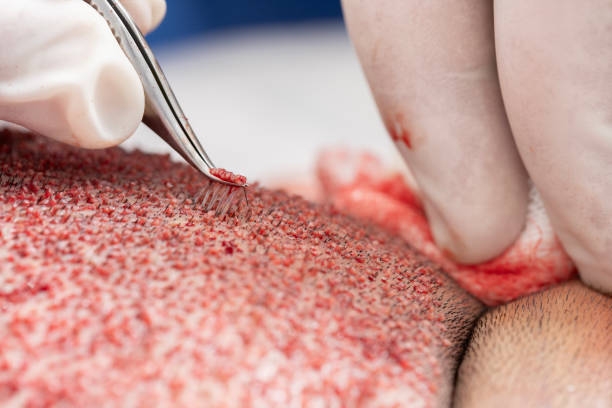
The success of a hair restoration procedure is measured in millimeters and degrees. While extracting healthy follicles is the first step, the final aesthetic outcome depends entirely on Precision Follicle Placement. An FUE hair transplant in Dubai is no longer just about filling "empty spaces"—it is about replicating the complex, multidirectional growth patterns of the human scalp.
In clinical settings, we observe that even a high number of surviving grafts can look artificial if the placement is not meticulously planned. This guide explores the technical adjustments required for natural results, the physical sensations of the implantation phase, and the milestones of your healing journey.
The Mathematics of Natural Hair Placement
Implantation is an architectural task. Every follicle must be placed at a specific depth and angle to ensure it receives adequate blood supply while matching the surrounding native hair.
How do practitioners adjust placement settings?
To achieve a "seamless" look, surgeons calibrate the following clinical parameters for every graft:
-
Implantation Depth: Grafts are typically placed $3.5mm$ to $4.5mm$ deep. If placed too shallow, they may "pop" out or dry out; if too deep, they can cause "pitting" or inflammation (folliculitis).
-
Coronal and Sagittal Angles: Surgeons adjust the lateral and vertical tilt of each follicle. In the hairline, this angle is often as low as 15 degrees, while it increases toward the crown.
-
Density Shading: We utilize "Gradient Density," placing roughly 45-50 grafts/$cm^2$ in high-visibility areas and tapering the density as we move toward the existing hair to avoid a "wall of hair" effect.
Is Precision Implantation Painful?
What are the actual sensations during this phase?
Once the scalp is fully anesthetized, the placement phase is generally the most relaxing part of the day for the patient.
Step-by-Step Patient Sensations:
-
The "Numbing" Re-up: If the procedure is long, you may feel a slight "awakening" sensation as the local anesthetic wears off. A quick, painless booster injection is usually administered to keep you comfortable.
-
The "Tapping" Sensation: You will feel a repetitive, light pressure or "tapping" on your scalp. Many patients describe this as a rhythmic, non-painful sensation that often leads to them falling asleep.
-
Auditory Cues: You might hear a faint "click" or "pop" sound as the grafts are placed into the micro-channels. This is simply the sound of the instrument interacting with the skin and is completely normal.
"I was terrified of the 'holes' being made, but I honestly couldn't feel a thing. The most I felt was the surgeon's hand resting on my forehead for stability. It was much more comfortable than a dental cleaning." — Omar
Safety Considerations: Who is Not a Candidate?
Are there reasons to avoid precision placement?
Precision work requires a stable environment. We may advise against or delay the procedure if:
-
Unstable Donor Hair: If you are experiencing "DUPA" (Diffuse Unpatterned Alopecia), your donor hair is not stable. Moving it will not result in permanent density.
-
Uncontrolled Scalp Inflammation: Conditions like active Psoriasis or Lichen Planopilaris create a hostile environment for new grafts, leading to low survival rates.
-
Heavy Smoking: Nicotine significantly reduces the oxygen levels in the blood. In precision "dense-packing," this lack of oxygen can lead to graft "necrosis" or failure to take.
-
Recent Use of Blood Thinners: Excessive bleeding during placement can "float" the grafts out of their precisely angled channels before they can anchor.
Precision Comparison: FUE vs. DHI
| Placement Feature | Standard FUE | DHI (Direct Hair Implantation) |
| Technique | Pre-made channels + placement | Simultaneous channel & placement |
| Tool Used | Fine Forceps / Micro-blades | Choi Implanter Pen |
| Angle Control | High (Depends on surgeon's slit) | Superior (Locked into the pen) |
| Graft Handling | Minimal | Ultra-Minimal |
| Best For | Large areas, general coverage | Hairline refinement, high density |
| Healing Time | 7–10 days | 5–7 days |
The Precision Healing Timeline
How long does it take for the grafts to "lock" in?
The first 72 hours are the "Golden Window" for graft anchoring.
-
Days 1–3: The grafts are held in place only by fibrin (a natural "biological glue"). You must avoid all contact with the recipient area.
-
Days 4–7: The micro-incisions begin to contract, physically "locking" the follicle into the scalp. You will see tiny scabs forming around the base of each hair.
-
Day 10: The "Anchor Point." By this stage, the grafts are physically secure. You can begin gentle circular massage during washing to encourage the scabs to fall off.
-
Month 1: The grafts have "taken," but the hair shafts will now shed. This is a sign that the follicle is entering the resting phase before producing new, permanent hair.
FAQs
Can I wear a hat after precision placement?
Not for the first 5 days. A hat can compress the grafts or change their carefully planned angle. After day 5, a very loose-fitting "trucker" hat may be allowed with surgeon approval.
Does the "precision" affect how fast it grows?
While it doesn't necessarily speed up growth, precision ensures that when the hair does grow, it does so in the correct direction, which provides better visual "coverage" even with fewer hairs.
Is there a limit to how many grafts can be placed in one spot?
Yes. If we "over-pack" an area, the grafts compete for the same limited blood supply. We follow a "biological limit" to ensure a 90-95% survival rate.
Will the "channels" leave visible holes?
No. The channels are smaller than 1mm. As they heal, they contract and become invisible to the naked eye, even under close inspection.
Why Choose Tajmeels Clinic?
At Tajmeels Clinic, we believe that an FUE hair transplant in Dubai should be a "one-and-done" procedure. Our surgeons utilize high-magnification loops and specialized Sapphire blades to create recipient channels that are barely larger than the follicle itself. This minimizes tissue trauma and maximizes "graft-to-skin" contact, which is the key to high survival rates. We don't just aim for growth; we aim for an aesthetic result that respects your natural hair flow, facial symmetry, and long-term aging process.
分类
閱讀更多
(圖/ 總統府) 賴清德總統31日上午主持「中華民國115年1月份將官晉任授階典禮」,親自為晉任將官授階,並在致詞中強調,面對中國威權擴張與對區域安全的持續脅迫,國軍將官肩負更關鍵的責任,必須持續強化戰備整備、提升指揮效能,確保國家安全與區域和平穩定。 總統首先向此次晉任的將官及其眷屬表達祝賀與感謝,指出晉任不僅是對過去表現的肯定,更代表國家對其肩負更重責任的期待。他期勉晉任將官秉持初衷,持續帶領部隊前行,成為推動國軍革新與提升國防韌性的關鍵力量。 MGBOX (圖/ 總統府)...
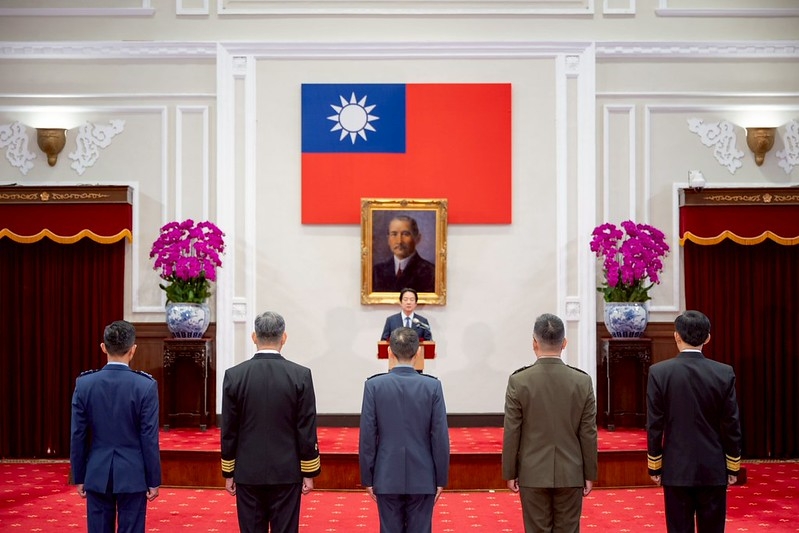
(圖/ 總統府) 賴清德總統今(5)日上午前往彰化縣參訪聚隆纖維股份有限公司芳苑廠,並與紡織產業代表進行座談,展現政府對中小企業及傳統產業的重視。總統表示,中小微企業是臺灣經濟與就業的核心,面對關稅與國際競爭挑戰,政府已完成與美方談判,並推出總額930億元的支持方案,未來將持續傾聽業界心聲,透過政策與制度建置,協助產業提升競爭力,帶動臺灣經濟穩健成長。 (圖/ 總統府) 總統致詞指出,政府在強化國防、深化外交及穩健處理兩岸關係之際,也將推動經濟發展列為施政重點,目標是讓國家更安全、經濟更進步、人民生活更好。他說,關稅是各產業共同面臨的重要挑戰,經過政府與民間攜手談判,相關結果已底定為15%且不疊加,有助於拉平臺灣與日本、韓國等競爭國家的條件,讓產業進入較為公平的競爭環境。...

If you want to buy sport guest posting services, you’re in the right place. Our sport guest posting services help you get your brand on top sports blogs that accept guest posts. This means more eyes on your business, better search rankings, and real connections with sports fans. Everything is user-friendly, 100% unique, and plagiarism free—so you can focus on what matters.✅...