Deep Grease Kitchen Cleaning Services for Commercial Kitchens
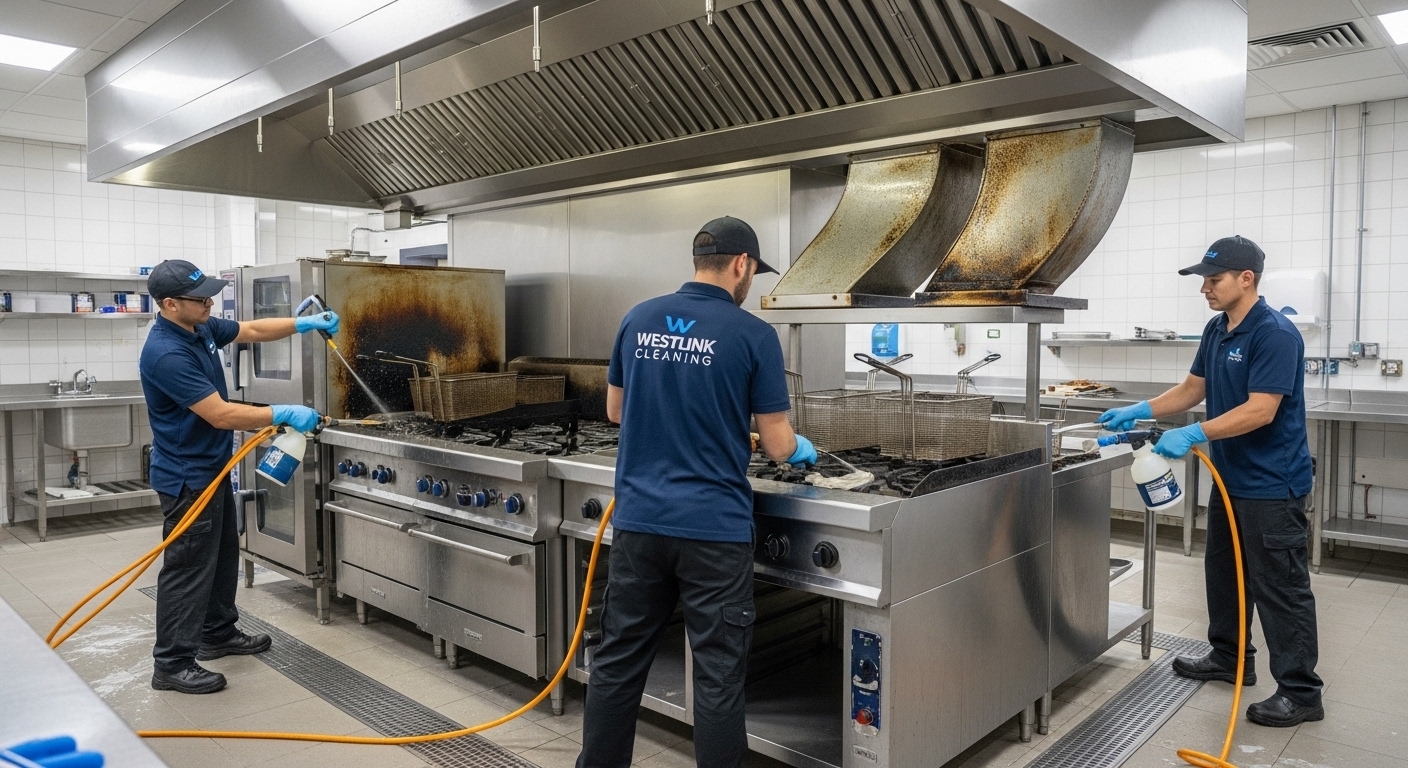
Deep Grease Kitchen Cleaning Services for Commercial Kitchens
Grease buildup represents a persistent and serious problem in commercial kitchens where high-volume cooking generates continuous accumulation that threatens safety, compromises hygiene, and creates regulatory compliance challenges. Restaurant owners, café managers, and hospitality professionals face escalating difficulties from grease deposits that routine cleaning cannot adequately address, leading to fire hazards, equipment degradation, and sanitation violations. Deep grease kitchen cleaning services play a vital role in maintaining hygienic, safe, and efficient kitchens by eliminating stubborn deposits through intensive, systematic approaches that go far beyond daily maintenance capabilities. Professional deep cleaning expertise provides the specialized equipment, industrial-strength chemicals, and proven methodologies necessary to protect businesses from the severe consequences of inadequate grease management.
Understanding Why Grease Becomes a Persistent Problem
Commercial kitchen grease accumulation creates unique challenges that distinguish it from residential cooking residues and require specialized understanding for effective management. Recognizing why grease becomes so problematic helps kitchen managers appreciate the necessity of professional deep cleaning intervention.
The Continuous Nature of Grease Generation
Commercial kitchens generate grease continuously during operating hours through multiple cooking methods and processes. Frying releases aerosolized oil particles that become airborne on cooking vapors. Grilling produces grease-laden smoke that deposits throughout kitchen spaces. Sautéing, roasting, and other high-heat cooking methods all contribute splatter and vapor containing fats and oils. Unlike residential kitchens with intermittent use, commercial operations run for extended periods daily—often 10-16 hours—meaning grease generation never stops. This continuous production overwhelms routine cleaning efforts, with new deposits forming faster than standard maintenance can remove them, creating accumulation that compounds over weeks and months.
Chemical Transformation Through Heat Exposure
Fresh grease remains relatively manageable, but repeated heat exposure causes chemical changes transforming it into increasingly difficult material. Through polymerization, grease molecules bond together forming harder compounds resembling varnish or plastic. This transformation accelerates on surfaces near cooking equipment and in areas exposed to radiant heat or hot air. After sufficient heat exposure and time, polymerized grease becomes rock-hard, darkly discolored, and virtually impossible to remove with household-strength degreasers or standard cleaning tools. This chemical transformation explains why grease accumulation progressively worsens—older deposits resist cleaning while new grease continues layering on top.
Hidden Accumulation in Inaccessible Areas
Grease accumulates in numerous hard-to-reach locations where routine cleaning cannot address it effectively. Inside equipment—beneath fryer heating elements, behind oven panels, within range burner assemblies—grease collects in spaces daily cleaning never reaches. In exhaust systems, grease deposits deep within ductwork far beyond access panels. On high ceilings, upper wall sections, and behind equipment, grease accumulates where standard cleaning tools cannot reach. These hidden deposits create persistent contamination sources that reinfect cleaned areas, undermine overall sanitation efforts, and create fire hazards that intensify unnoticed until professional deep grease kitchen cleaning addresses them comprehensively.
Common Areas Impacted by Heavy Grease
Commercial kitchens contain numerous locations where grease accumulation creates specific problems requiring professional deep cleaning attention. Understanding these common problem areas helps operators recognize the comprehensive scope of necessary work.
Cooking Equipment Contamination
Ovens, grills, fryers, and other cooking equipment suffer the most severe grease accumulation through direct exposure to cooking processes. Oven interiors develop thick carbonized deposits on walls, doors, racks, and heating elements from splattered fats undergoing repeated heating. Grills accumulate grease on cooking surfaces, drip trays, and surrounding areas that becomes increasingly difficult to remove as it carbonizes. Fryers develop hard grease deposits on exteriors, control panels, and adjacent surfaces from oil vapor and occasional spillage. Ranges, salamanders, and specialty cooking equipment all collect grease that progressively degrades performance, creates smoke during operation, and poses increasing fire hazards without professional removal.
Ventilation System Grease Buildup
Kitchen hoods, exhaust ducts, and ventilation systems accumulate the most dangerous grease deposits as cooking vapors pass through these pathways. Hood interiors and filters become saturated with grease requiring professional extraction and cleaning beyond filter replacement. Inside exhaust ductwork, grease condenses on interior surfaces building deposits that restrict airflow while creating severe fire risks. Exhaust fans collect grease on blades and housings reducing efficiency and creating mechanical strain. The National Fire Protection Association identifies grease-laden exhaust systems as primary causes of devastating restaurant fires, making professional deep cleaning of ventilation components absolutely critical for safety and insurance compliance.
Wall, Ceiling, and Splash Zone Grease
Walls, ceilings, and splash zones accumulate airborne and splattered grease creating both hygiene problems and fire hazards often overlooked during routine cleaning. Walls adjacent to cooking equipment develop thick grease layers from direct splatter and vapor deposition that darken and harden over time. Ceiling surfaces above cooking zones collect grease from rising heated air carrying aerosolized particles. Splash zones—areas immediately surrounding fryers, grills, and ranges—receive the heaviest direct contamination. Even walls and ceilings distant from active cooking areas accumulate grease films from airborne particles circulating throughout kitchen spaces. These vertical and overhead deposits represent flammable material that can propagate fires while harboring bacteria and creating visible sanitation deficiencies.
Floor, Sink, and Drainage Grease
Floors, sinks, and drainage areas collect grease through different mechanisms creating operational problems and safety hazards. Kitchen floors become contaminated from drippings, splatter, tracking, and cleaning runoff, developing grease films that create dangerous slip hazards for staff. Sinks accumulate grease from dishwashing operations and equipment cleaning, with grease mixing with food particles and soap residue. Drainage systems collect grease that solidifies in pipes forming blockages that slow or completely obstruct flow, causing backups and producing foul odors. Professional deep grease kitchen cleaning addresses these horizontal and below-surface accumulations that mopping and general maintenance cannot eliminate.
What Deep Grease Kitchen Cleaning Services Include
Professional commercial cooking area cleaning services specializing in deep grease removal provide comprehensive solutions addressing severe accumulation through intensive, systematic methodologies. These specialized services employ industrial equipment, powerful chemicals, and expert techniques unavailable to general cleaning staff.
Equipment and Surface Degreasing
Professional degreasing of cooking equipment and surfaces employs multi-step processes using commercial-strength chemicals and specialized tools. Deep cleaning begins with equipment disassembly—removing oven racks, fryer baskets, range grates, and other components for separate intensive treatment. Specialists apply heated industrial-grade degreasers that require extended contact times allowing chemical action to penetrate and dissolve polymerized grease. Components may be soaked in heated degreasing tanks maintaining solutions at temperatures maximizing grease breakdown. High-temperature steam cleaners, pressure washers, and specialized scraping tools then physically remove loosened deposits. This intensive approach restores equipment to near-original cleanliness while improving heating efficiency and eliminating fire hazards from carbonized residues.
Exhaust System Deep Cleaning
Thorough hood and exhaust system cleaning to reduce fire risk addresses the most critical safety concern in commercial kitchen grease management. Professional kitchen cleaning services specializing in exhaust cleaning access the complete ventilation pathway from hood interiors through ductwork to rooftop exhaust terminations. Using high-pressure washing equipment generating 3000+ PSI, industrial steam systems, and powerful degreasers, technicians systematically remove grease from all components hood interiors, filters, grease collection cups, accessible ductwork sections, and exhaust fans. This work follows NFPA 96 or equivalent standards specifying cleaning frequencies and methodologies based on cooking volume and types. Proper deep exhaust cleaning eliminates flammable fuel throughout the most dangerous fire propagation pathway in commercial kitchens.
Vertical and Overhead Surface Cleaning
Wall, ceiling, and splash area cleaning to remove built-up grease completes comprehensive kitchen decontamination. Specialists apply commercial-strength degreasers to vertical and overhead surfaces using appropriate methods for different materials FRP panels, painted drywall, ceramic tile, stainless steel, ceiling tiles. These powerful chemicals penetrate polymerized grease layers during extended contact times. Technicians then employ pressure washing, steam cleaning, or intensive scrubbing to remove loosened contamination. Scaffolding, aerial lifts, or extension equipment allows safe access to high ceilings and upper wall sections. This thorough vertical and overhead cleaning eliminates grease deposits that fuel fire spread while addressing visible hygiene deficiencies that trigger inspector citations.
Floor and Drainage System Cleaning
Floor, sink, and drain cleaning to prevent blockages and odors addresses grease in horizontal and below-surface areas using specialized techniques. Commercial floor scrubbers with powerful degreasing solutions remove grease films making surfaces dangerously slippery. For drainage systems, specialists employ multiple approaches enzymatic treatments biologically breaking down grease, hydro-jetting using high-pressure water to scour pipe interiors, mechanical augering for severe blockages, or chemical treatments dissolving grease accumulations. Sinks and floor drains receive thorough degreasing eliminating biofilm buildup that harbors bacteria and produces persistent odors. This comprehensive lower-level cleaning ensures complete grease removal rather than merely redistributing contamination.
Quality Verification and Documentation
Post-clean inspection to ensure compliance with hygiene standards provides accountability distinguishing professional services from inadequate cleaning attempts. Deep cleaning specialists verify work completeness through systematic visual inspection using standardized checklists covering all addressed areas. Many provide detailed photographic documentation showing before-and-after conditions for equipment, exhaust systems, walls, ceilings, and other areas receiving intensive treatment. Some employ quantifiable verification methods like ATP testing confirming surface cleanliness meets measurable standards. This quality assurance documentation supports restaurants during health inspections, insurance reviews, and fire safety audits while giving owners confidence that deep cleaning actually achieved necessary comprehensive results.
Benefits of Deep Grease Cleaning Services
Professional deep grease cleaning delivers substantial benefits extending beyond surface appearance to impact safety, compliance, equipment performance, operational efficiency, and business reputation. These advantages justify regular investment in expert deep cleaning services.
Critical Risk Reduction
Reducing fire hazards and contamination risks protects businesses from catastrophic events that destroy establishments and harm people. Professional deep grease removal eliminates the primary fuel source for kitchen fires that annually cause hundreds of millions in property damage while potentially causing injuries or fatalities. Removing grease deposits also eliminates bacteria reservoirs harboring pathogens that threaten food safety, preventing foodborne illness outbreaks with devastating legal, financial, and reputational consequences. These fundamental risk reductions provide enormous value as single incidents prevented more than justify years of professional cleaning investment.
Regulatory Compliance Support
Supporting compliance with food safety regulations and HACCP guidelines prevents violations, fines, and operational shutdowns from grease-related deficiencies. Health inspectors examine equipment, exhaust systems, walls, ceilings, and floors for grease accumulation during facility assessments, citing violations for visible contamination. Professional commercial kitchen sanitation services ensure all areas meet inspection standards established by regulatory authorities through systematic deep cleaning. Their documented cleaning schedules and completion certificates demonstrate comprehensive grease management programs satisfying health departments, fire safety authorities, and insurance carriers. This compliance support protects operating permits and business continuity.
Operational Performance Enhancement
Improving kitchen efficiency, staff safety, and equipment lifespan creates tangible operational and financial benefits. Removing grease from floors eliminates slip hazards causing injuries and workers' compensation claims. Degreased equipment heats more efficiently and uniformly, improving cooking performance while reducing energy consumption and utility costs. Clean exhaust systems move air more effectively, improving air quality and temperature control making kitchens more comfortable during demanding shifts. Equipment maintained through regular deep cleaning operates reliably with fewer breakdowns disrupting service during critical periods. These performance improvements support smoother operations when efficiency directly impacts revenue and customer satisfaction.
Business Protection and Reputation
Enhancing overall kitchen hygiene and restaurant reputation provides competitive advantages and long-term business protection. Grease accumulation causes mechanical wear, corrosion, and heating inefficiency shortening equipment lifespan requiring expensive premature replacement. Professional deep cleaning maintains equipment in better condition extending useful service life and delaying capital expenditures. Comprehensive kitchen cleanliness also enhances customer confidence whether from open kitchen visibility, perfect health inspection scores, or reputation for high standards supporting positive reviews, word-of-mouth recommendations, and customer loyalty in competitive markets. Clean facilities also support premium positioning and higher price points justified by demonstrable quality commitments.
Tips for Selecting Reliable Deep Cleaning Services
Selecting qualified professional kitchen cleaning services for deep grease removal requires evaluating providers based on demonstrated expertise, appropriate capabilities, and proven reliability. The following criteria help identify genuinely professional specialists capable of delivering comprehensive results.
Commercial Kitchen Expertise
Experience with high-volume commercial kitchens indicates familiarity with severe grease challenges, demanding operational requirements, and food service sanitation standards. Providers regularly servicing established restaurants understand different equipment types, various grease deposit characteristics, appropriate removal techniques for diverse surfaces, and food safety considerations for commercial environments. Ask potential services about their client portfolio, years of experience specifically with deep grease cleaning, typical project scope and duration, capability handling facilities comparable to yours in cooking volume and equipment complexity, and understanding of health department expectations.
Professional Products and Equipment
Use of professional-grade, food-safe, and eco-friendly cleaning products ensures effective grease removal while maintaining safety and environmental responsibility. Quality restaurant kitchen cleaning services invest in heated degreasing equipment, industrial steam cleaners operating at temperatures exceeding 200°F, high-pressure washers generating 3000+ PSI, and commercial-strength chemicals formulated specifically for polymerized grease dissolution. Food-safe products meeting regulatory requirements ensure deep cleaning doesn't introduce harmful residues into food preparation environments. Eco-friendly solutions demonstrate professional commitment to both effective results and sustainable operations minimizing environmental impact.
Verified Credentials and Reputation
Positive client reviews and relevant certifications provide third-party validation of deep grease cleaning expertise and service quality. References from other hospitality businesses confirm whether providers actually deliver thorough grease elimination achieving comprehensive results or leave jobs partially completed requiring additional work. Certifications in food safety practices, specialized training in kitchen hood cleaning from organizations like IKECA (International Kitchen Exhaust Cleaning Association), or professional association memberships indicate ongoing education and adherence to professional standards. Online reviews reveal whether services consistently achieve complete grease removal meeting customer expectations or generate complaints about incomplete work or unprofessional conduct.
Scheduling Flexibility and Communication
Flexible scheduling to minimize operational downtime ensures deep cleaning doesn't disrupt revenue-generating service periods or force extended closures. Deep grease cleaning requires substantial time, generates significant debris, and may temporarily disable multiple equipment pieces making careful scheduling coordination essential. Reliable services work during off-hours, overnight periods, or scheduled maintenance windows, coordinate closely with kitchen managers to sequence work minimizing disruption, and complete projects within agreed timeframes. They communicate proactively about work requirements, expected duration, debris management, temporary equipment unavailability, and any issues requiring attention ensuring smooth coordination with restaurant operations.
Protecting Your Business Through Professional Deep Grease Cleaning
Professional deep grease kitchen cleaning provides essential protection against the most serious threats facing commercial food service establishments kitchen fires destroying businesses, food safety violations triggering shutdowns, equipment failures disrupting operations, and sanitation deficiencies damaging reputations. The specialized expertise, inadequate grease management leads to health code violations, legal liability, insurance The investment in professional deep grease kitchen cleaning consistently proves far less expensive than consequences of neglect whether measured in fire damage restoration costs, health department fines, equipment replacement expenses, increased insurance premiums, lost revenue from forced closures, or reputational damage from publicized violations. Smart restaurant owners recognize that expert deep grease management forms the foundation of comprehensive commercial kitchen sanitation, fire safety compliance, regulatory compliance, and operational excellence in the demanding food service industry.
分类
閱讀更多
Buy Instagram Accounts Bulk Are you looking to expand your online presence and reach a wider audience on Instagram? The challenge of growing a substantial following can be daunting, but fear not – there is a solution that holds great promise. In this article, we will delve into the world of buying Instagram accounts in bulk and explore the myriad benefits this strategy can offer aspiring...

(圖/ 臺北市立動物園) 大貓熊們接連進入「假孕」期,大貓熊「圓寶」生日許「星」願成為今夏最受矚目的動物園話題。6月28日迎來6歲生日的「圓寶」,近期已出現活動量降低、進食減少及睡眠時間增加等典型假孕行為,與「圓圓」、「圓仔」一同進入年度生理調適階段。 臺北市立動物園表示,大貓熊假孕期間通常會呈現少吃、少動及休息時間增加等特徵,因此動物園將於7月2日重新開園後,呼籲民眾參觀大貓熊館時放低音量,以友善方式陪伴大貓熊度過敏感時期。 (圖/ 臺北市立動物園) 園方也利用歲修期間進行館舍改善工程,包括更新室內活動場地地板及戶外活動區牆面,希望在秋季到來前,進一步提升大貓熊生活環境品質,提供更舒適的棲息空間。 雖然「圓寶」正逐步進入假孕階段,但保育團隊仍特別為牠準備充滿巧思的生日驚喜。今年以「太空冒險」為主題打造行為豐富化環境,希望藉由探索與覓食刺激,提高圓寶活動意願,同時維持身心健康。...