Quick & Effective Heavy Grease Kitchen Cleaning Tips
Introduction
Heavy grease buildup is an unavoidable reality in busy commercial kitchens, where continuous high-volume cooking at elevated temperatures generates persistent layers of oil, fat, and carbonized residue. Every minute of operation adds to the accumulation, as cooking vapors rise, condense, and settle on equipment, ventilation systems, and structural surfaces throughout the kitchen. While daily cleaning addresses surface-level issues, heavy grease requires more strategic approaches that balance thoroughness with the time constraints of operational food service.
Quick and effective cleaning methods are essential for commercial kitchens that cannot afford extended downtime yet must maintain the high safety and hygiene standards required by health regulations. Understanding practical techniques for addressing heavy grease helps restaurant owners and kitchen managers maintain compliant, safe, and efficient operations without disrupting service or overwhelming staff.
Common Areas Affected by Heavy Grease
Cooking Equipment
Ovens, grills, fryers, and other cooking equipment bear the brunt of grease exposure due to direct contact with fats and oils at extreme temperatures. Interior surfaces develop thick, baked-on layers that interfere with heat distribution and create fire risks. External surfaces accumulate splatter and vapor condensation that attracts dust and debris, creating stubborn deposits. These high-use areas require frequent attention to prevent grease from reaching levels that compromise equipment performance and food safety.
Ventilation Systems
Kitchen hoods, exhaust fans, and ventilation systems collect grease as cooking vapors pass through filters, plenums, and ductwork. This buildup occurs continuously during cooking operations and often goes unnoticed until filters become visibly saturated or airflow diminishes noticeably. Grease in ventilation systems presents the highest fire risk in commercial kitchens and requires regular maintenance to prevent dangerous accumulation.
Structural Surfaces
Walls, ceilings, and splash zones surrounding cooking areas accumulate grease from both direct contact and airborne particles. Areas directly adjacent to fryers, grills, and ranges receive heavy deposits, while more distant surfaces collect lighter but still significant layers over time. Upper surfaces like ceilings often receive less frequent cleaning, allowing grease to build up until it becomes saturated and begins dripping onto food preparation areas below.
Floors and Drainage
Floors, sinks, and drainage areas collect grease that falls, splashes, or washes from other surfaces during cooking and cleaning operations. Floor grease creates immediate slip hazards for staff moving quickly in tight spaces. Grease in drains solidifies as it cools, gradually restricting flow and creating blockages that can cause backups during peak service periods. These areas require consistent attention to maintain both safety and functionality.
Quick & Effective Grease Cleaning Tips
Regular Surface Wipe-Downs
Consistent cleaning represents the single most effective strategy for managing heavy grease preventing accumulation is far easier than removing hardened deposits. Implementing end-of-shift wipe-downs of all cooking equipment surfaces, splash zones, and high-contact areas prevents grease from undergoing the heat-polymerization process that makes it difficult to remove. Training staff to recognize and address grease promptly, while it remains soft and soluble, reduces the time and effort required for deep cleaning sessions.
Use of Food-Safe Degreasers
Deploying appropriate food-safe degreasers makes routine cleaning more effective without compromising food safety standards. Quality commercial degreasers formulated for kitchen use break down grease molecules efficiently, allowing staff to remove deposits quickly during regular cleaning shifts. Keeping spray bottles of properly diluted degreaser at key stations encourages immediate spot-cleaning when grease appears. Choosing products that work effectively at room temperature eliminates heating requirements and speeds the cleaning process during busy service periods.
High-Temperature or Steam Cleaning
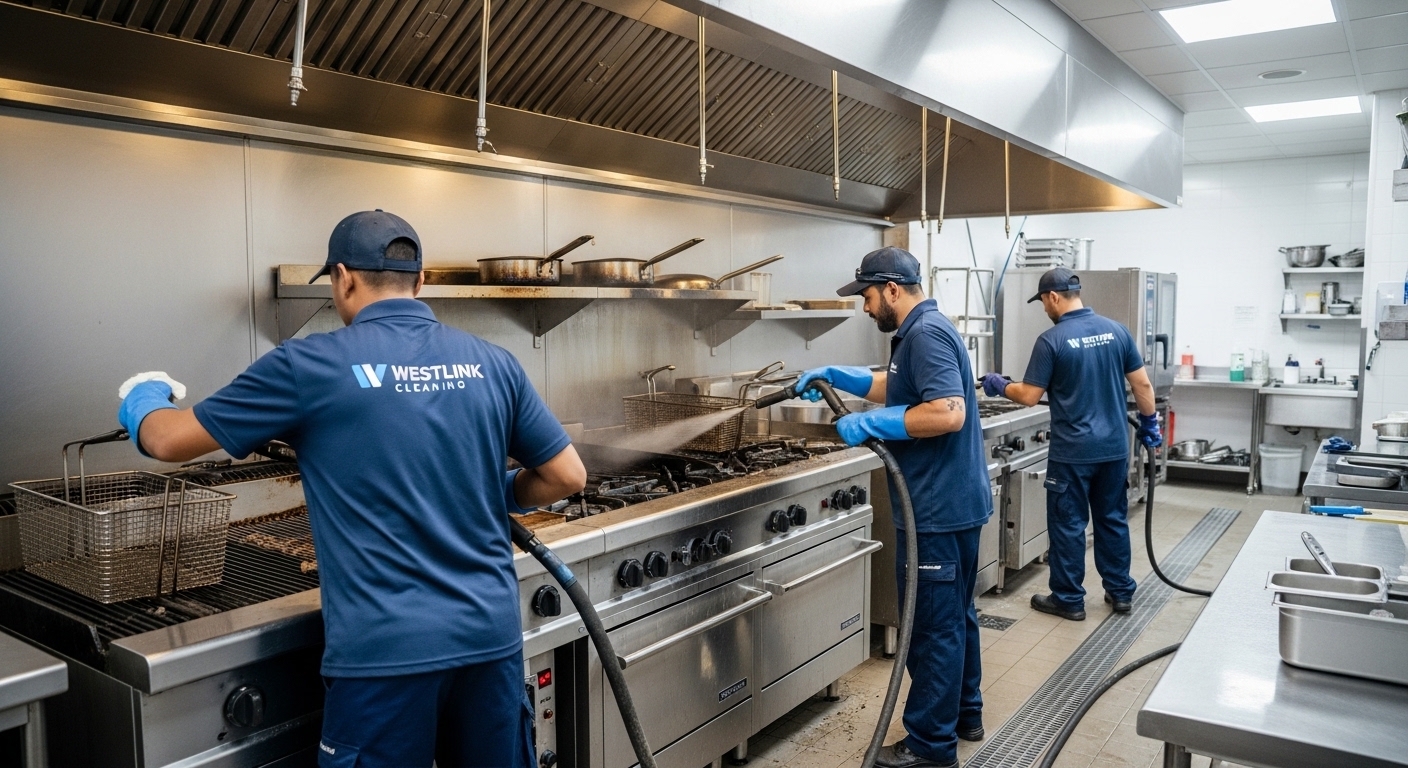
High-temperature or steam cleaning methods leverage heat to loosen stubborn grease and sanitize surfaces simultaneously, providing two critical benefits in one operation. Portable steam cleaners allow staff to quickly address problem areas without extensive setup or lengthy chemical contact times. The heat melts polymerized grease, making it easier to wipe away, while the high temperature kills bacteria and other pathogens. This approach works particularly well for equipment interiors, tight spaces, and food-contact surfaces where chemical residues must be avoided.
Targeted Deep Cleaning
Focusing resources on high-risk and high-use areas maximizes the impact of limited cleaning time. Developing a rotating schedule that prioritizes the most critical zones range hoods, fryer areas, grill surrounds ensures these locations receive intensive attention regularly. This targeted deep cleaning approach prevents catastrophic buildup in dangerous areas while allowing less critical surfaces to follow extended cleaning cycles. Identifying problem zones through regular inspection and directing extra effort to these locations prevents small issues from becoming major problems.
Proper Ventilation Maintenance
Reducing airborne grease buildup through proper ventilation maintenance addresses the source of much surface contamination. Cleaning or replacing hood filters on recommended schedules maintains proper airflow and grease capture efficiency. Ensuring exhaust fans operate correctly prevents grease-laden air from recirculating into the kitchen. Monthly inspection of accessible ventilation components allows early detection of grease accumulation before it becomes excessive, and timely professional hood cleaning prevents the dangerous buildup that leads to fires.
When to Consider Professional Cleaning
Persistent or Hardened Grease
When regular cleaning cannot remove persistent or hardened grease, professional intervention becomes necessary. Grease that has polymerized through repeated heat exposure often cannot be dissolved by standard kitchen degreasers or removed through manual scrubbing without damaging underlying surfaces. Professional kitchen cleaning services employ industrial-strength chemicals and specialized equipment designed specifically for these challenging deposits, achieving results that exceed what kitchen staff can accomplish with standard cleaning supplies.
Hard-to-Reach or High-Risk Areas
Grease buildup in hard-to-reach or high-risk areas requires professional expertise and equipment for safe, thorough removal. Exhaust ductwork, the interiors of complex equipment, spaces behind permanently mounted appliances, and ceiling voids above cooking equipment all accumulate grease but cannot be easily accessed during routine cleaning. Commercial cooking area cleaning services have the tools, training, and protocols to safely access these areas, remove accumulated grease, and document the work for compliance purposes.
Health Inspections and Compliance
Preparing for health inspections or compliance checks often reveals grease issues that demand immediate professional attention. Inspectors specifically evaluate grease control as an indicator of overall sanitation practices, and heavy accumulation can trigger violations regardless of other cleanliness measures. Professional services can rapidly address problematic areas, provide the documentation health departments require, and ensure the kitchen meets all applicable codes. Many establishments schedule professional deep cleaning in advance of scheduled inspections to ensure compliance.
Benefits of Efficient Grease Cleaning
Risk Reduction and Safety
Efficient grease cleaning dramatically reduces fire and contamination risks that threaten both people and property. Eliminating grease fuel sources prevents the rapid fire spread through exhaust systems that causes catastrophic kitchen fires. Removing grease deposits that harbor bacteria reduces foodborne illness risks and cross-contamination potential. Clean, grease-free floors eliminate the slip hazards that cause the majority of kitchen injuries. These safety improvements protect staff, customers, and the business itself from devastating consequences.
Regulatory Compliance
Effective grease management supports food safety standards and HACCP compliance required for legal food service operations. Health departments use grease accumulation as a key indicator when evaluating overall sanitation practices, and violations can result in reduced inspection scores, mandatory corrections, or operational restrictions. Restaurant kitchen cleaning protocols that address grease systematically demonstrate management commitment to maintaining compliant operations and create documentation that satisfies regulatory requirements.
Operational Excellence
Clean kitchens improve staff safety and kitchen efficiency by creating better working conditions and ensuring equipment operates at peak performance. Grease-free surfaces allow staff to work faster and more safely, while clean equipment heats properly, cooks evenly, and consumes less energy. Ventilation systems function correctly, maintaining comfortable working temperatures and proper air quality. These operational improvements translate directly to better service, lower costs, and higher employee satisfaction.
Professional Environment
Maintaining a clean, professional kitchen environment enhances reputation, attracts quality employees, and supports customer confidence. Staff take pride in working in well-maintained facilities where management invests in proper equipment and cleaning. Customers who glimpse kitchen areas or learn about sanitation practices through inspection scores or reviews develop trust in establishments known for cleanliness. The competitive advantage of a spotless kitchen extends far beyond basic compliance.
Tips for Choosing Reliable Cleaning Support
Verify Commercial Experience
When selecting support for tasks beyond routine cleaning, prioritize services with demonstrated experience in commercial and high-volume kitchens similar to your operation. Providers familiar with restaurant environments understand the urgency of working efficiently, the importance of maintaining food safety during cleaning, and the specific grease challenges different cooking styles present. Ask potential services about their experience with your type of establishment and request references from similar operations.
Evaluate Products and Methods
Assess the professional-grade, eco-friendly cleaning products and methods each service employs. Quality providers use commercial formulations designed specifically for commercial kitchen sanitation that achieve superior results while meeting food safety requirements. Inquire about their commitment to environmental responsibility and worker safety modern cleaning solutions deliver industrial strength without harsh fumes or harmful residues. Understanding their systematic approach to grease removal provides confidence in consistent, reliable results.
Research Credentials and Feedback
Seek services with industry certifications from recognized professional organizations that verify technical training and adherence to standards. These credentials indicate commitment to professional development and quality service delivery. Positive client feedback from other restaurant operators offers valuable insights into reliability, quality, and customer service. Don't hesitate to request references and follow up with those contacts to verify satisfaction and performance.
Assess Scheduling Flexibility
Flexible scheduling demonstrates understanding that support services must work around operational demands without disrupting business. Quality providers accommodate overnight cleaning, early morning service, or scheduling during slow periods to minimize kitchen downtime. Clear communication about timing, access requirements, and coordination with kitchen staff indicates professionalism and helps ensure smooth service delivery that complements rather than complicates operations.
Conclusion
Managing heavy grease in commercial kitchens requires a balanced approach combining effective daily practices with strategic professional support. Quick, consistent attention to grease while it remains manageable prevents the accumulation that creates serious safety hazards and compliance issues. Understanding which tasks kitchen staff can handle efficiently and when to engage professional services maximizes results while optimizing resource allocation.
The practical tips outlined from regular surface maintenance to targeted deep cleaning to proper ventilation care provide actionable strategies that busy kitchens can implement immediately. Combined with professional food safety cleaning services for the most challenging applications, these approaches create comprehensive grease management programs that protect people, property, and business success. In commercial food service, where cleanliness directly impacts safety, compliance, and reputation, effective grease control isn't optional it's fundamental to professional kitchen operations.
