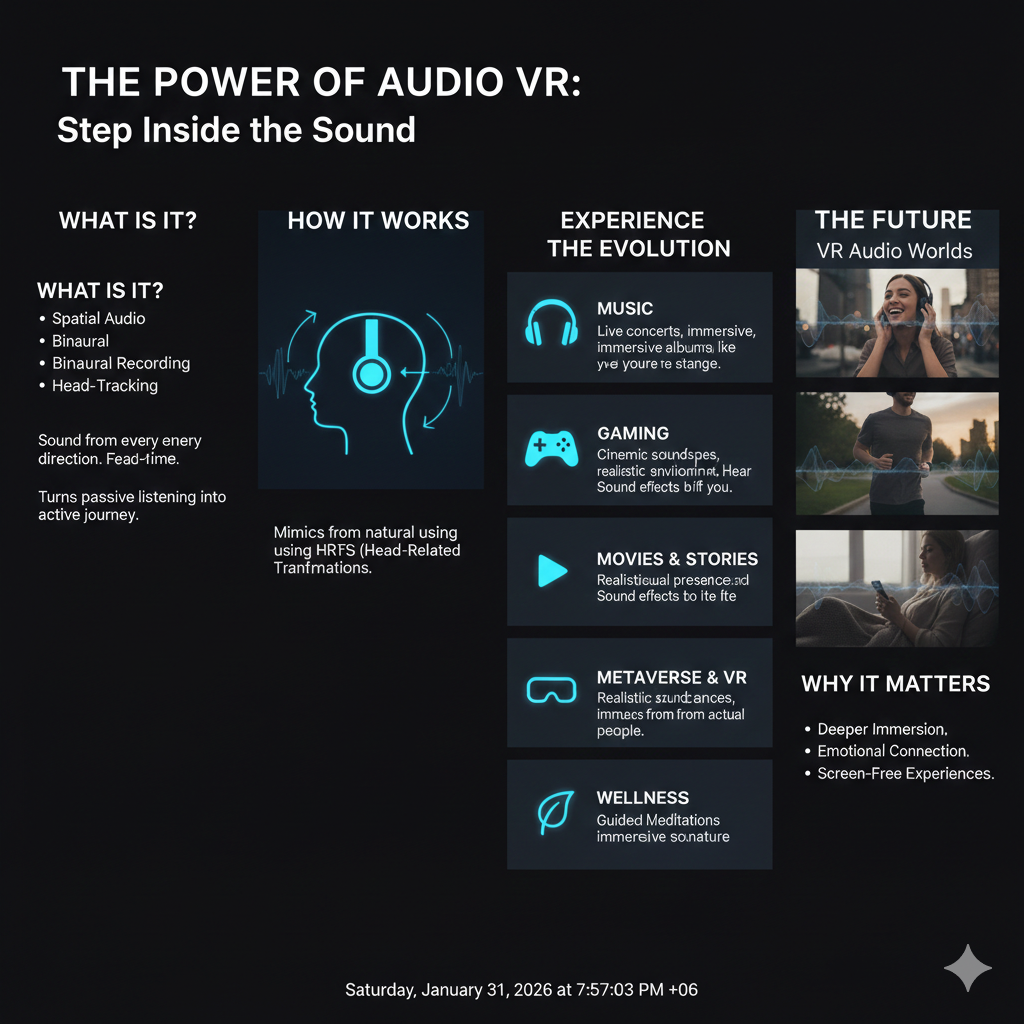

Sound has always played a powerful role in how we experience the world—from music and movies to gaming and meditation. But traditional audio has limits.
Even with high-quality headphones or surround sound systems, listeners are still aware that sound is coming from speakers. Audio VR (Virtual Reality Audio), also known as spatial or immersive audio, is changing that completely. It doesn’t just let you hear sound—it places you inside it.
What Is Audio VR?
Audio VR refers to advanced sound technology that recreates how humans naturally hear in real life. Instead of sound coming from left or right channels, audio is positioned in a 3D space around the listener. Sounds can come from above, behind, below, or any direction, and they move realistically as the listener turns their head.
This is achieved using techniques like:
-
Spatial audio
-
Binaural recording
-
Head-tracking technology
-
3D sound modeling
When paired with VR headsets, AR devices, or even modern headphones, Audio VR creates an incredibly lifelike listening experience.
How Audio VR Works
At the core of Audio VR is an understanding of how our ears and brain process sound. In the real world, sound reaches each ear at slightly different times and intensities depending on direction and distance. Audio VR mimics these subtle differences digitally.
Using algorithms called HRTFs (Head-Related Transfer Functions), sound is processed to match how it would naturally interact with the shape of your head and ears. When you move your head, the audio shifts in real time, maintaining realism and immersion.
How Audio VR Is Changing Listening Experiences
1. Music Feels More Alive
With Audio VR, music is no longer flat or confined. Instruments can feel like they’re placed around you—vocals in front, drums behind, guitars off to the side. Live concert recordings become especially powerful, making listeners feel like they’re standing in the crowd or on stage with the artist.
Major platforms and artists are already experimenting with immersive mixes to offer fans a deeper emotional connection to music.
2. Gaming Becomes More Immersive
Audio VR has had a massive impact on gaming. Players can hear footsteps approaching from behind, explosions echoing from above, or enemies moving in specific locations. This isn’t just more immersive—it improves gameplay by giving players spatial awareness that traditional stereo audio can’t provide.
In competitive gaming, Audio VR can even offer a tactical advantage.
3. Movies and Storytelling Feel Cinematic at Home
Audio VR brings cinema-level sound design into personal spaces. Instead of sound effects feeling “attached” to speakers, they exist in the scene. A helicopter can fly overhead, rain can fall around you, and whispers can feel uncomfortably close.
For storytelling, this creates a stronger emotional impact and deeper engagement, especially in horror, drama, and sci-fi genres.
4. Virtual Reality and Metaverse Experiences Feel Real
In VR environments and the metaverse, Audio VR is essential. Without realistic sound, virtual worlds feel artificial. With spatial audio, voices sound like they’re coming from actual people standing nearby, and environments feel believable.
This has huge implications for:
-
Virtual meetings
-
Online events
-
Social VR platforms
-
Virtual classrooms
Sound becomes a key element of presence and realism.
5. Meditation, Fitness, and Therapy Are Transformed
Audio VR is also being used in wellness and fitness spaces. Guided meditations can place users in forests, oceans, or mountaintops using immersive soundscapes. In fitness apps, trainers’ voices can feel more personal and motivating, especially during VR workouts.
In therapy and mental health applications, immersive audio helps reduce stress, improve focus, and support exposure therapy in controlled environments.
Audio VR Beyond Headsets
While VR headsets showcase Audio VR at its best, the technology is no longer limited to them. Many modern headphones, earbuds, smartphones, and smart speakers now support spatial audio formats. This means immersive sound is becoming accessible to everyday listeners—not just tech enthusiasts.
As hardware improves, Audio VR will feel more natural, more personalized, and more widely adopted.
Challenges and Limitations
Despite its promise, Audio VR still faces challenges:
-
Not all content is optimized for immersive audio
-
High-quality experiences often require compatible devices
-
Poor implementation can feel unnatural or distracting
However, as creators gain experience and tools improve, these limitations are shrinking rapidly.
The Future of Audio VR
Audio VR is not just a trend—it’s a fundamental shift in how we interact with sound. As streaming platforms, gaming studios, and content creators continue to adopt immersive audio, listeners will expect more than basic stereo sound.
In the near future, Audio VR may become the default way we experience music, movies, fitness content, and virtual worlds—making sound more emotional, more realistic, and more human than ever before.
Final Thoughts
Audio VR is redefining listening by turning sound into an experience rather than a background element. Whether you’re a music lover, gamer, fitness enthusiast, or casual listener, immersive audio has the power to change how you connect with content.
We’re no longer just listening to sound. we’re stepping inside it.