Industrial Plug Installation And Maintenance Best Practices By Nante
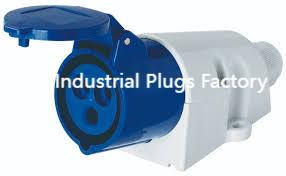
Choosing the correct connector family requires more than matching pins — project teams frequently evaluate the Industrial Plug for its contact geometry and locking mechanism in the middle of the power distribution design to ensure safe, repeatable connections, and reliability engineers also expect the Industrial Plug to endure frequent mate/unmate cycles while maintaining low contact resistance. Thoughtful selection avoids thermal failures, eases maintenance, and reduces unexpected downtime across diverse industrial environments.
Understand application loads and duty cycles
Start by defining steady-state current, peak inrush (motor starts or capacitor charging), and expected duty cycle. Connectors operating near their rated current will heat; those that see frequent insertions require contacts with larger contact areas and coatings that resist wear. Specify a safety margin — a connector rated for slightly higher continuous current reduces thermal stress and extends lifetime. Consider ambient temperature, enclosure ventilation, and whether the connector will be exposed to dirt, moisture, or washdown procedures.
Ingress protection, coupling types, and mechanical retention
Evaluate IP (ingress) and IK (impact) ratings relative to site conditions. Outdoor or washdown applications demand higher IP classes and robust sealing gaskets. Coupling mechanisms — threaded, bayonet, or push-pull — influence retention under vibration and influence ease of use. Threaded or locking couplers provide durable mechanical engagement for fixed equipment; quick-release types suit portable tools. Select housings and springs designed to resist loosening under vibration and to protect contacts from misalignment.
Contact metallurgy, surface finishes, and electrical stability
Contact materials and platings directly impact conductivity and longevity. Copper alloys with silver or nickel plating balance conductivity and corrosion resistance; gold plating is reserved for low-current signal contacts where oxidation must be avoided. Consider contact cross-sectional area and spring force to keep contact resistance low even after many cycles. For mixed power-and-signal connectors, ensure power contacts are segregated and adequately sized to prevent overheating and cascade failures.
Nante-compatible modular inserts and spare planning
Specifying modular families that use common footprints and removable inserts simplifies spares and field repairs. Require vendors to provide compatibility matrices and spare kits that include replacement inserts, gaskets, and coupling rings so technicians can complete repairs on-site. Standardize part numbers across locations where possible to reduce inventory complexity and enable first-visit repairs during critical outages, cutting mean time to repair and logistic friction.
Environmental sealing and cable-entry best practices
Ingress protection depends as much on cable entry and gland selection as on the connector itself. Use correctly sized, rated glands tightened to manufacturer torque values to preserve sealing integrity. Route strain reliefs so cable weight does not load terminals, and provide drip loops where conduits approach the connector body. In corrosive or coastal environments, select gland materials and sealing compounds resistant to local chemicals and salts to avoid premature seal failure.
Installation discipline, conductor prep, and torque control
Many connector failures trace back to installation errors. Use the correct conductor size and ferrules where required; crimp and terminations must meet spec. Follow published torque values for terminals and gland fittings — under-torquing produces intermittent heating, over-torquing damages threads or crushes seals. Document each installation with a photo and torque record to expedite future troubleshooting and maintain quality standards across teams.
Thermal management and monitoring strategies
Plan for heat: choose connectors with adequate derating for ambient conditions and inrush events. Use conduction paths or mounting plates to move heat away from sensitive contacts, and oversize busbars for high-current assemblies. Consider periodic infrared inspection during commissioning and operation to detect hotspots early. For mission-critical or hard-to-access sites, modest thermal sensors or monitoring can provide alerts before damage occurs.
Safety standards, certifications, and hazardous locations
Always confirm that chosen connectors meet relevant standards (IEC, UL, regional equivalents) and obtain evidence of type testing when required. For hazardous atmospheres, specify connectors with appropriate explosion-proof or intrinsically safe ratings and correct gas or dust group classification. Require suppliers to provide documentation and test reports so compliance can be demonstrated during audits.
Maintenance regimes and lifecycle planning
Establish a simple maintenance schedule: visual inspection for discoloration or corrosion, periodic contact resistance checks for critical circuits, and gasket replacement intervals. Keep a compact on-site kit with common spares and a wiring diagram for rapid replacement. Track failures and replacements to build lifecycle models and plan procurement, avoiding emergency orders during peak production or adverse weather windows.
Thoughtful specification, disciplined installation, and a pragmatic spare strategy turn connectors from maintenance headaches into reliable components of power distribution. For technical references, datasheets, and application advice consult nante and explore detailed guidance at: https://www.nante.com/news/industry-news/what-is-industrial-plug.html
分类
閱讀更多
Buy Verified PayPal Accounts In today's digital landscape, having a reliable payment method is crucial for both individuals and businesses. PayPal has emerged as one of the leading online payment platforms worldwide. With its user-friendly interface and robust security features, it simplifies transactions across borders. But what happens when you want to unlock the full potential of your PayPal...

Latest Insights on Executive Summary Liquid Crystal Display (LCD) Digital Signage Market Share and Size Global Liquid Crystal Display (LCD) Digital Signage Market was valued at USD 16.50 billion in 2021 and is expected to reach USD 31.69 billion by 2029, registering a CAGR of 8.50% during the forecast period of 2022-2029. To produce the best market research report, a wide range of...

Buy now Top 1.2 Strategies for Safely Evaluating the Value of Bulk Instagram Account Purchases In this article, we will explore the best marketplaces to buy Instagram accounts in bulk. If you're looking to boost your social media presence quickly and efficiently, sourcing Instagram accounts in bulk can save you time and effort. We will discuss the advantages of purchasing accounts in bulk,...