

Introduction
A professional Waterproofing Specialist in Singapore uses different materials to protect buildings from water leakage, moisture, and structural damage. From liquid membranes to cementitious coatings, choosing the right solution is essential for long-lasting waterproofing. Companies like Allseal Waterproofing PTE Ltd use suitable materials based on each property's needs.
Understanding Professional Waterproofing Materials
Waterproofing is an important part of maintaining residential, commercial, and industrial properties. Buildings are regularly exposed to rain, humidity, water pressure, and moisture. Without proper protection, water can penetrate walls, floors, roofs, balconies, and concrete structures.
Professional waterproofing specialists use specialised materials designed to create protective barriers against water. However, not every material works for every surface or situation. The selection depends on factors such as the location of the leakage, surface condition, building structure, and exposure to water.
Let's explore the most commonly used waterproofing materials and understand how they help protect properties.
1. Liquid Waterproofing Membranes
Liquid waterproofing membranes are among the most widely used materials in modern waterproofing projects. They are applied in liquid form using rollers, brushes, or spray equipment. Once applied, the liquid dries and forms a continuous protective membrane over the surface.
Key benefits include:
-
Creates a seamless waterproof barrier.
-
Covers irregular surfaces and corners effectively.
-
Provides flexibility to accommodate minor structural movement.
-
Can be applied to roofs, balconies, bathrooms, and concrete surfaces.
-
Helps prevent water penetration and moisture damage.
Liquid membranes are particularly useful in areas where traditional sheet materials may be difficult to install. Proper surface preparation and application thickness are important to achieve reliable results.
2. Cementitious Waterproofing Coatings
Cementitious waterproofing is another commonly used solution, especially for concrete structures. These materials typically consist of cement-based compounds mixed with specialised additives that improve water resistance.
After mixing, the coating is applied directly to prepared concrete or masonry surfaces.
Where are cementitious coatings used?
-
Bathrooms and toilets.
-
Water tanks.
-
Swimming pools.
-
Basement walls.
-
Concrete floors.
-
Internal wet areas.
One of the main advantages of cementitious waterproofing is its compatibility with concrete surfaces. It provides a protective coating that helps reduce water penetration.
However, some cementitious systems have limited flexibility. Therefore, specialists must assess whether the material is suitable for areas exposed to structural movement or cracking.
3. Polyurethane Waterproofing Membranes
Polyurethane (PU) waterproofing membranes are popular because of their flexibility, durability, and ability to form seamless protective layers.
These materials are generally applied in liquid form and cure into an elastic membrane. Their flexibility makes them suitable for surfaces that may experience minor expansion, contraction, or movement.
Common applications include:
-
Rooftops.
-
Exposed balconies.
-
Terraces.
-
Concrete decks.
-
Certain external structures.
Polyurethane membranes can provide excellent waterproofing performance when installed correctly. However, exposure to sunlight, moisture conditions during application, and compatibility with the substrate must be considered.
A professional assessment helps determine whether a particular PU system is appropriate for the project.
4. Bituminous Waterproofing Membranes
Bituminous waterproofing materials are widely used in construction, particularly for roofs, foundations, and underground structures.
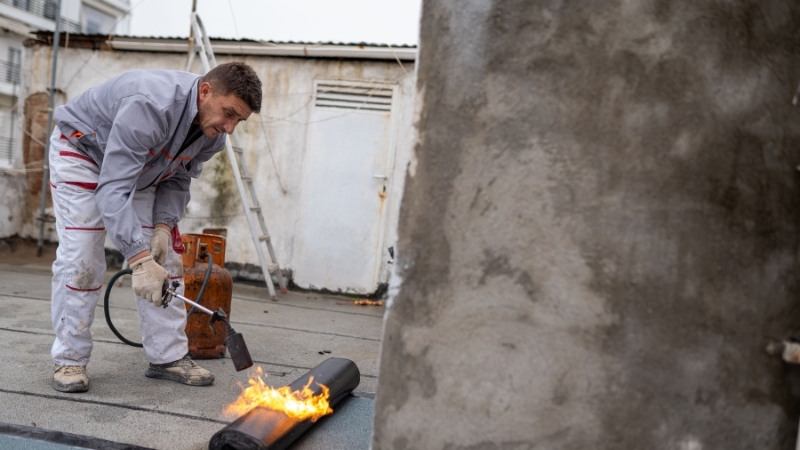
These products are manufactured using bitumen, a petroleum-based material known for its water-resistant properties. They are available in different forms, including torch-applied membranes, self-adhesive sheets, and liquid bituminous coatings.
Important advantages include:
-
Strong resistance to water penetration.
-
Suitable for many roofing and foundation applications.
-
Good adhesion when applied to compatible surfaces.
-
Available in different application systems.
-
Provides durable protection when properly installed.
Bituminous membranes are particularly useful for certain flat roofs and below-ground waterproofing applications.
However, the installation method must be selected carefully. Some systems require specialised equipment and trained professionals to ensure safe and effective application.
5. Acrylic Waterproofing Coatings
Acrylic waterproofing coatings are water-based products commonly used on exposed roofs and exterior surfaces.
They form a flexible protective coating after drying and can help reduce water penetration. Certain products also provide reflective properties that help reduce heat absorption on exposed roof surfaces.
Benefits of acrylic waterproofing include:
-
Easy application using brushes or rollers.
-
Good flexibility for suitable applications.
-
Available in different colours.
-
Can help protect exposed roof surfaces.
-
Some formulations offer UV resistance.
Acrylic coatings are generally suitable for selected exposed surfaces, depending on the manufacturer's specifications. However, they are not necessarily appropriate for areas with continuous water immersion or significant water pressure.
Choosing the correct formulation is essential for long-term performance.
6. Epoxy Waterproofing Coatings
Epoxy coatings are known for their strong adhesion, hardness, and chemical resistance. They are commonly used to protect concrete surfaces in industrial and commercial environments.
Unlike flexible waterproofing membranes, many epoxy systems cure into a hard, relatively rigid protective layer.
Common applications include:
-
Industrial flooring.
-
Commercial facilities.
-
Concrete surfaces.
-
Selected water containment structures.
-
Areas requiring chemical-resistant protection.
Epoxy coatings can provide excellent surface protection when the substrate is properly prepared. However, their limited flexibility means they may not be suitable for surfaces that experience significant movement or cracking.
A waterproofing professional can determine whether epoxy is appropriate for a particular application.
7. Crystalline Waterproofing Materials
Crystalline waterproofing products are specially formulated materials that react with moisture and components within concrete to form insoluble crystalline structures in its pores and capillaries.
This process helps reduce the pathways through which water can penetrate concrete.
Where are crystalline waterproofing products used?
-
Concrete basements.
-
Foundations.
-
Water tanks.
-
Concrete retaining walls.
-
Underground structures.
One advantage of crystalline waterproofing is that certain systems become integrated into the concrete rather than functioning only as a surface coating.
However, their effectiveness depends on the concrete condition, product formulation, and application requirements. They are not a universal replacement for every type of waterproofing membrane.
8. Waterproofing Sealants
Sealants are important materials used to protect joints, gaps, and small openings where water can enter a building.
Professional specialists commonly use silicone, polyurethane, and other specialised sealants depending on the surface and application.
Common uses include:
-
Window and door joints.
-
Expansion joints.
-
Wall connections.
-
Bathroom fittings.
-
Roof penetrations.
-
Gaps around pipes.
Sealants provide flexibility and help prevent water from entering vulnerable connection points.
However, using the wrong sealant can lead to poor adhesion, premature failure, or recurring leakage. Specialists must consider the surface material, movement requirements, and exposure conditions before selecting a product.
9. Waterproofing Injection Grout
Injection waterproofing materials are used to address certain types of water leakage through cracks, joints, and voids in concrete structures.
Depending on the problem, specialists may use polyurethane injection resins, epoxy injection materials, or other specialised grouting compounds.
Common applications include:
-
Concrete cracks.
-
Basement leakage.
-
Construction joints.
-
Underground structures.
-
Certain water seepage problems.
Polyurethane injection materials are often used to control active water leakage because some formulations expand or react with moisture.
Epoxy injection materials, on the other hand, are generally selected for specific structural crack repair applications where bonding and strength restoration are required.
The correct material depends on the type of crack, water conditions, and whether the issue is structural or non-structural.
10. Waterproofing Protection Boards and Drainage Sheets
Waterproofing does not always involve coatings and membranes alone. Some projects also require protective boards and drainage materials to support the waterproofing system.
Protection boards help prevent physical damage to waterproofing membranes during construction activities or backfilling.
Drainage sheets help manage water movement and reduce water accumulation against certain below-ground structures.
Their main functions include:
-
Protecting waterproofing membranes.
-
Reducing the risk of mechanical damage.
-
Supporting drainage systems.
-
Managing water around foundations.
-
Improving the overall performance of suitable waterproofing assemblies.
These materials are particularly useful in basement and foundation waterproofing projects.
How Do Professionals Choose the Right Waterproofing Material?
Selecting waterproofing materials requires more than simply choosing a product with a good reputation. Professional specialists evaluate several factors before recommending a suitable solution.
1. Identify the Source of Water Leakage
The first step is identifying where the water is coming from. Leakage may originate from roof surfaces, plumbing connections, external walls, bathrooms, balconies, or underground structures.
Applying waterproofing materials without identifying the source may only provide temporary relief.
2. Evaluate the Surface Condition
The condition of the surface plays an important role in material selection. Cracks, loose concrete, damaged coatings, dirt, and moisture can affect the performance of waterproofing products.
Professionals inspect the substrate and recommend appropriate preparation and repair work before application.
3. Consider Environmental Conditions
Singapore's tropical climate brings frequent rainfall, high humidity, and warm temperatures. These conditions can influence the performance and installation requirements of waterproofing materials.
A suitable product should be selected based on its ability to withstand the environmental conditions of the application area.
4. Check Material Compatibility
Not all waterproofing products are compatible with every substrate or existing coating. Specialists consider adhesion, flexibility, curing conditions, and compatibility with other construction materials.
Using incompatible products may result in peeling, cracking, or premature waterproofing failure.
5. Consider Long-Term Maintenance
The initial application cost is not the only factor worth considering. Property owners should also evaluate expected durability, maintenance requirements, accessibility, and repair considerations.
A properly selected waterproofing system can help reduce recurring leakage problems and unnecessary repair expenses.
Why Professional Waterproofing Application Matters
Even high-quality waterproofing materials may fail when they are applied incorrectly. Surface preparation, application thickness, curing time, detailing, and workmanship all influence the final result.
A professional Waterproofing Specialist in Singapore understands how different products perform under specific conditions and can recommend an appropriate system for each project.
Professional application also helps ensure that important areas, such as corners, joints, drainage outlets, and pipe penetrations, receive proper attention.
Allseal Waterproofing PTE Ltd understands the importance of selecting suitable waterproofing materials and applying appropriate solutions to address different water leakage challenges. Working with experienced professionals helps property owners make informed decisions about protecting their buildings.
Common Mistakes to Avoid When Selecting Waterproofing Materials
Choosing the wrong waterproofing product can result in repeated repairs and unnecessary expenses. Here are some mistakes property owners should avoid:
-
Choosing products based only on price: Cheaper materials may not provide the performance required for a particular application.
-
Ignoring the source of leakage: Waterproofing the wrong area may not solve the underlying problem.
-
Using interior products outdoors: Some materials are not designed to withstand direct sunlight and harsh weather conditions.
-
Skipping surface preparation: Dust, loose particles, and unsuitable moisture conditions can affect adhesion.
-
Applying insufficient coating thickness: Following the manufacturer's application specifications is essential.
-
Ignoring joints and corners: These areas often require additional attention and specialised detailing.
-
Neglecting professional inspection: A proper assessment helps identify the most suitable waterproofing approach.
Avoiding these mistakes can improve the reliability and lifespan of a waterproofing system.
Final Thoughts
Different waterproofing materials serve different purposes, from liquid membranes and cementitious coatings to polyurethane systems, sealants, and injection grouts. The right choice depends on the building structure, leakage source, and environmental conditions.
Before starting a waterproofing project, consult a Waterproofing Specialist in Singapore who can assess your property and recommend an appropriate solution. Allseal Waterproofing PTE Ltd can help property owners explore suitable waterproofing options for better building protection.



