How to Find Wholesale Suppliers in India Online

Introduction
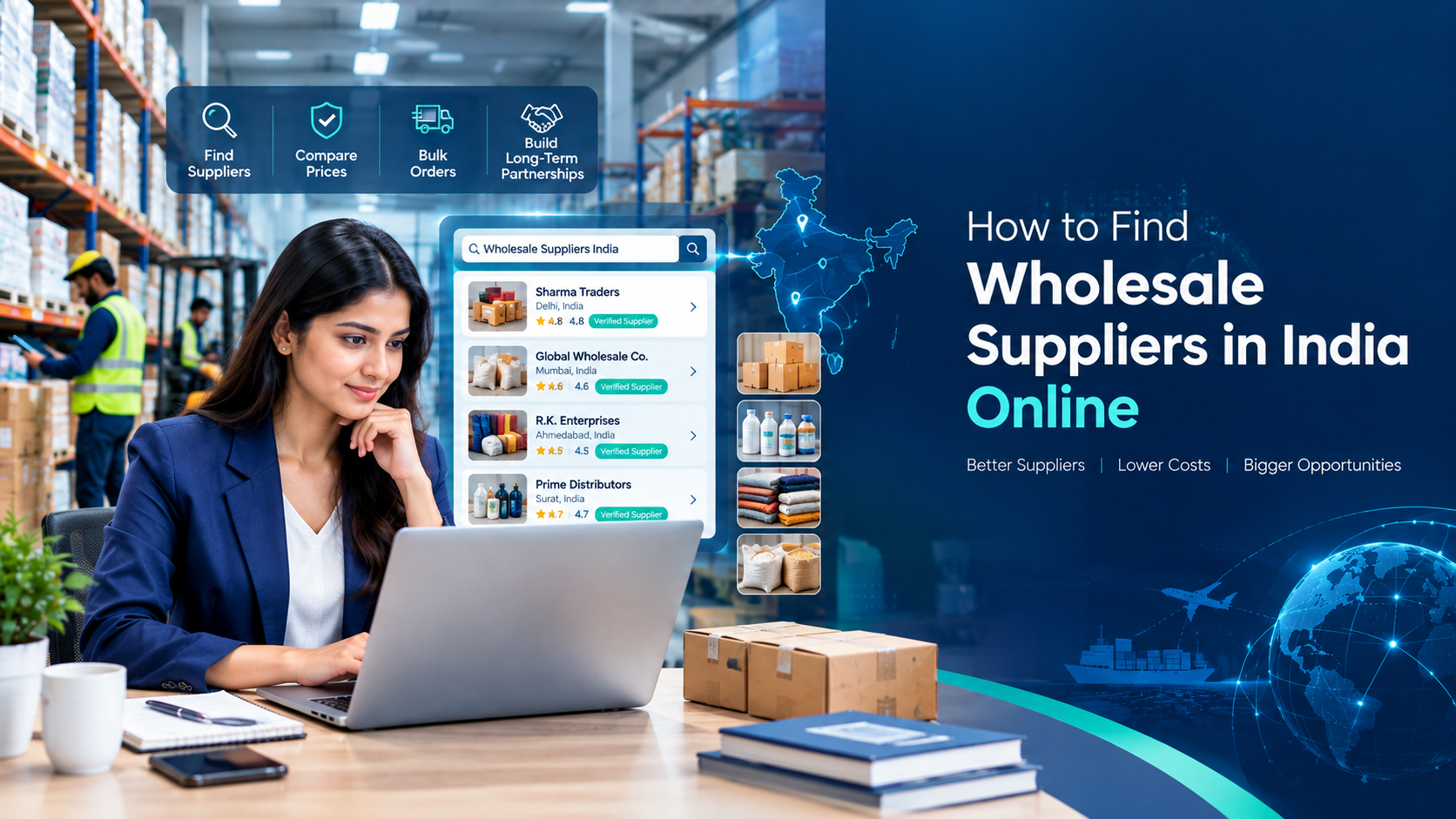
Finding the right wholesale supplier is one of the most important decisions for retailers, distributors, resellers, and growing businesses. The supplier you choose can affect your product quality, profit margins, delivery schedules, and customer satisfaction.
Many businesses search online for wholesale suppliers in India because digital platforms make it easier to discover different companies and compare their product offerings.
However, finding a supplier is not simply about choosing the lowest price. Businesses also need to consider product quality, minimum order quantities, communication, delivery arrangements, and supplier reliability.
This guide explains how to find wholesale suppliers online and make better sourcing decisions.
Why Businesses Search for Wholesale Suppliers Online
Traditional sourcing methods often involve visiting wholesale markets, contacting distributors, or relying on recommendations from other business owners.
These methods can still be valuable, but online sourcing provides another way to discover suppliers beyond a business's immediate network.
An online wholesale marketplace can help buyers explore product categories, identify potential manufacturers, and contact businesses to request quotations.
For example, a retailer looking for home furnishing products may want to compare several suppliers before placing a bulk order. A small manufacturer may need raw materials from a different city. Online research helps these businesses create a shortlist before starting detailed discussions.
Step 1: Identify the Products You Need
Before searching for suppliers, define your requirements.
Write down the product name, specifications, materials, sizes, colours, quality standards, and quantity you need.
For example, searching for packaging suppliers is too broad if you specifically require food-grade packaging for a particular product.
A more detailed search helps you find businesses that are more relevant to your needs.
Consider these questions:
-
What exact product do I need?
-
What quantity will I purchase?
-
What quality or certification requirements apply?
-
Do I need a manufacturer, wholesaler, or distributor?
-
What is my target purchasing budget?
-
Where should the products be delivered?
Clear answers will make supplier comparisons easier.
Step 2: Search for Relevant Suppliers Online
Use product-specific searches rather than relying only on broad terms.
For example, a buyer might search for textile wholesalers in India, bulk packaging manufacturers, industrial equipment suppliers, or wholesale home decor products.
You can explore business directories, industry associations, company websites, trade exhibitions, and B2B marketplaces.
The objective is to build a list of potential suppliers rather than choosing the first company that appears in the search results.
A B2B platform can be especially useful when you want to explore multiple businesses and product categories from one place.
Step 3: Compare Manufacturers, Wholesalers, and Distributors
These business types may serve different purchasing needs.
Manufacturers produce goods directly. They may be suitable for businesses seeking custom products, larger quantities, or specific manufacturing requirements.
Wholesalers purchase products in bulk and resell them to retailers or other businesses. They may offer a range of products from different brands or manufacturers.
Distributors typically supply products through established distribution arrangements. Their product availability and territory coverage depend on the brands and agreements they represent.
The right option depends on your product, order quantity, budget, and delivery requirements.
If you need a customised product, contacting a manufacturer may be appropriate. If you need smaller quantities of standard products, a wholesaler may be more suitable.
Step 4: Check the Supplier's Business Information
Before sharing an order or making a payment, examine the information available about the supplier.
Review the company website, business address, product catalogue, contact details, and business history where available.
For Indian businesses, you may also check relevant registration details and tax information where applicable.
Do not assume that a professional-looking website or marketplace profile automatically proves a company's reliability.
For significant orders, request business references, product samples, or supporting documents where appropriate. Verify any certifications or registrations that are important for your product category.
Step 5: Compare Prices Beyond the Product Cost
The cheapest quotation may not be the most economical option.
When comparing wholesale suppliers in India, calculate the total cost of purchasing and receiving the products.
Consider:
-
Unit price
-
Minimum order quantity
-
Packaging costs
-
Shipping and transportation
-
Applicable taxes
-
Payment terms
-
Inspection or testing costs
-
Return, replacement, or damage policies
For example, one supplier may quote a lower unit price but require a much larger order. Another may charge slightly more while offering a more suitable quantity and delivery arrangement.
Compare quotations on the same specifications so that you are evaluating equivalent products.
Step 6: Request Samples Before Large Orders
If product quality is important, request a sample whenever practical.
Check the material, dimensions, finish, packaging, functionality, and other specifications relevant to your product.
For products that require testing or certification, confirm the applicable requirements before purchasing.
A sample does not eliminate every risk, but it can help identify quality issues before committing to a larger order.
Step 7: Confirm Payment and Delivery Terms
Before placing an order, get the important details in writing.
Confirm the quantity, product specifications, unit price, total cost, dispatch timeline, delivery responsibilities, and payment schedule.
For new suppliers, be cautious about requests for unusual payment arrangements or pressure to transfer money immediately.
Use appropriate payment protections where available, particularly for large orders or transactions with unfamiliar businesses.
For international sourcing, also confirm shipping responsibilities, customs requirements, insurance where relevant, and the documentation needed for the transaction.
How Can a B2B Marketplace Help?
A B2B marketplace provides a digital environment where businesses can explore suppliers, products, and potential commercial connections.
Rather than relying entirely on offline contacts, buyers can use marketplace listings to begin researching companies that may meet their sourcing requirements.
However, the availability of supplier information, enquiry tools, and verification features differs between platforms. Buyers should check the features of each platform and independently evaluate suppliers before making a purchase.
Businesses can explore the GlobPulse B2B marketplace to learn about its marketplace offering and potential business connections.
Businesses interested in membership options can review the GlobPulse plans page and check the current features and terms before deciding whether a plan meets their requirements.
Tips for Building Long-Term Supplier Relationships
Finding a supplier is only the beginning. Long-term relationships can make sourcing more consistent and efficient.
Communicate your requirements clearly, share realistic order forecasts, and pay according to agreed terms.
Provide feedback about product quality and delivery performance. If your business expects to increase order volumes, discuss production capacity and lead times in advance.
Maintain records of quotations, purchase orders, invoices, and agreed product specifications.
It is also wise to maintain alternative suppliers for important products. Depending entirely on one supplier can expose your business to shortages or delays.
Common Supplier-Sourcing Mistakes
Avoid choosing suppliers based only on low prices. Poor quality, hidden costs, and unreliable delivery can outweigh the initial savings.
Do not place a large order without understanding the supplier's terms. Avoid assuming that every online listing is accurate or that every supplier has been independently verified.
Another mistake is failing to specify product requirements. Vague instructions can lead to misunderstandings about quality, dimensions, packaging, or delivery.
Finally, keep communication professional and document important agreements.
Conclusion
Finding wholesale suppliers in India requires research, comparison, and careful evaluation. Businesses should define their requirements, compare quotations, check available business information, and confirm payment and delivery terms before placing orders.
Online directories and B2B marketplaces can help buyers discover potential suppliers, but proper due diligence remains essential.
By combining online research with clear communication and supplier evaluation, businesses can build a more organised and reliable sourcing process.

 Chinese (Traditional)
 Chinese (Simplify)