BIS Certificate, BIS Certification, BIS License Complete Guide
Introduction
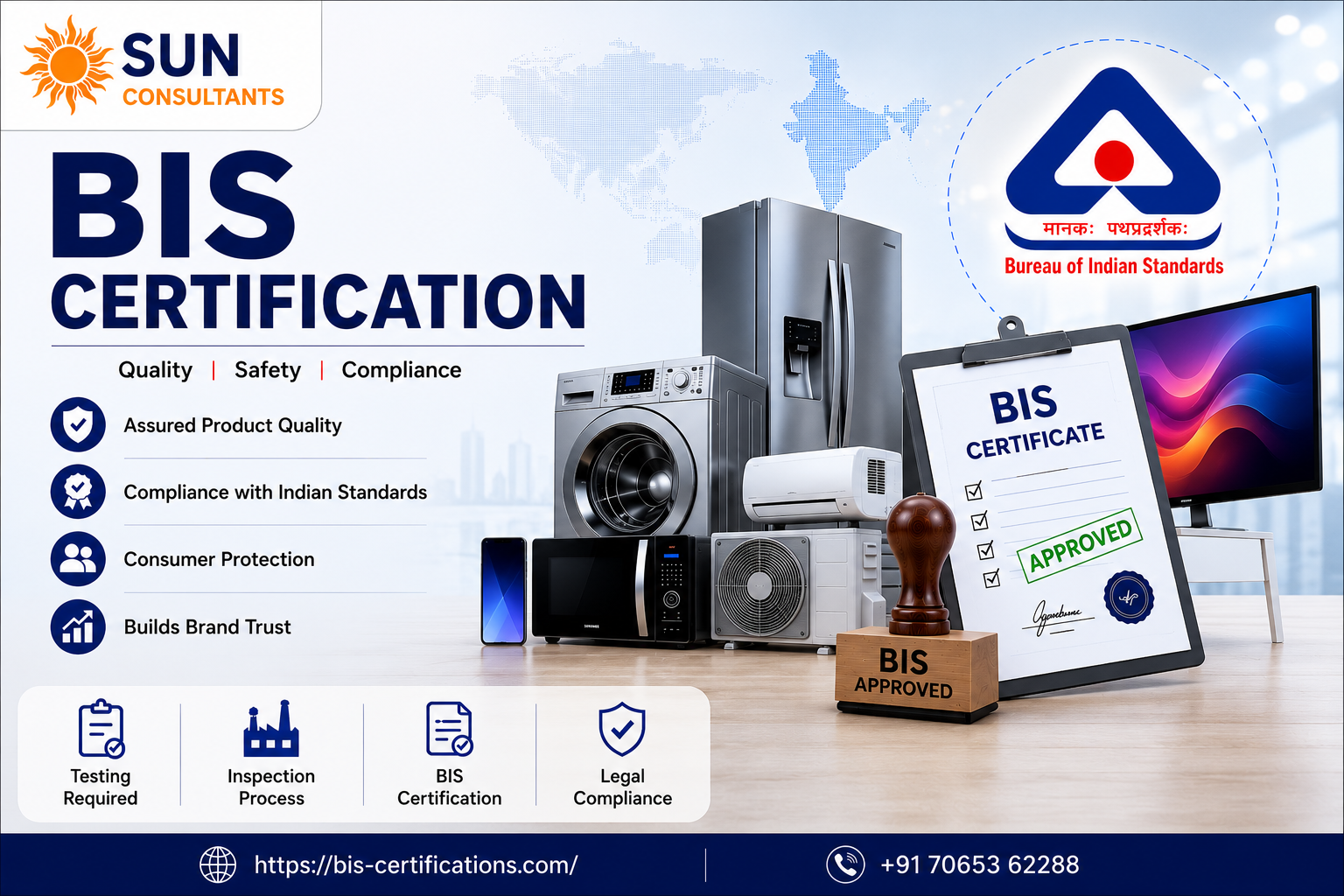
If you want to manufacture, import, or sell regulated products in India, obtaining a BIS Certificate is often a mandatory requirement. The BIS Certification system ensures that products meet Indian quality and safety standards before reaching consumers. Whether you are an Indian manufacturer or a foreign manufacturer, understanding the process of obtaining a BIS License or BIS Licence is essential for legal compliance and smooth market access. This guide explains everything you need to know about BIS certification, its benefits, eligibility, application process, required documents, and why compliance with BIS standards is important.
What is a BIS Certificate?
A BIS Certificate is an official approval issued by the Bureau of Indian Standards (BIS). It confirms that a product complies with the applicable Indian Standards (IS) and satisfies quality, safety, and performance requirements. Many products covered under Quality Control Orders (QCOs) must obtain BIS approval before they can be manufactured, imported, distributed, or sold in India. A valid BIS certificate helps businesses demonstrate compliance while increasing consumer confidence in product quality.
What is BIS Certification?
BIS Certification is the process through which products are evaluated and approved according to Indian Standards. The certification process generally includes:
-
Product testing in BIS-recognized laboratories
-
Document verification
-
Factory inspection (where applicable)
-
Compliance assessment
-
Grant of certification
The certification scheme depends on the product category and applicable regulations.
Difference Between BIS Certificate and BIS License
Although these terms are often used interchangeably, they have slightly different meanings.
|
BIS Certificate |
BIS License |
|
Confirms product compliance with Indian Standards. |
Official authorization allowing manufacturers to use the BIS Standard Mark. |
|
Issued after successful evaluation. |
Granted after fulfilling all certification requirements. |
|
Demonstrates regulatory compliance. |
Allows legal manufacturing or sale of regulated products. |
Many businesses also use the spelling BIS Licence, which refers to the same approval.
Who Needs a BIS License?
A BIS License may be required for:
-
Indian manufacturers
-
Foreign manufacturers exporting to India
-
Importers dealing with regulated products
-
Businesses covered under Quality Control Orders
-
Manufacturers of mandatory BIS products
Before launching a product in the Indian market, businesses should verify whether BIS certification is mandatory for their product category.
Benefits of Obtaining a BIS Certificate
Obtaining a BIS Certificate provides several advantages, including:
1. Legal Compliance
It ensures compliance with Indian regulations and Quality Control Orders.
2. Better Market Acceptance
Certified products are trusted by distributors, retailers, and customers.
3. Improved Product Quality
The certification process promotes adherence to recognized quality standards.
4. Consumer Confidence
Customers are more likely to purchase products carrying approved quality marks.
5. Reduced Business Risks
Compliance helps avoid penalties, shipment delays, product recalls, and legal complications.
6. Competitive Advantage
A BIS-certified product often enjoys greater credibility compared to non-certified alternatives.
Documents Required for BIS Certification
The exact documentation depends on the applicable certification scheme, but commonly required documents include:
-
Business registration documents
-
Manufacturing unit details
-
Product specifications
-
Quality management documents
-
Factory layout
-
Manufacturing process details
-
Raw material information
-
Product test reports
-
Trademark documents (if applicable)
-
Authorized representative details (for foreign manufacturers)
Accurate documentation helps reduce processing delays.
Step-by-Step BIS Certification Process
The process for obtaining BIS Certification generally includes the following stages:
Step 1: Product Identification
Determine the applicable Indian Standard and certification scheme.
Step 2: Documentation Preparation
Collect all technical and legal documents required for the application.
Step 3: Product Testing
Submit product samples to a BIS-recognized laboratory for testing.
Step 4: Application Submission
Submit the complete application with supporting documents.
Step 5: Factory Inspection
For certain schemes, BIS officials conduct an inspection of the manufacturing facility.
Step 6: Compliance Review
BIS reviews the test reports, inspection findings, and submitted documents.
Step 7: Grant of BIS License
After successful verification, BIS issues the BIS License, allowing the manufacturer to use the applicable BIS Standard Mark.
Why BIS Compliance is Important
Compliance with BIS standards protects consumers from unsafe and substandard products. It also helps manufacturers maintain consistent production quality while meeting regulatory requirements.
Without mandatory BIS approval, regulated products may face:
-
Import restrictions
-
Customs clearance issues
-
Product seizure
-
Sales prohibition
-
Financial penalties
-
Regulatory action
Obtaining certification before entering the market helps businesses avoid these challenges.
Common Industries Requiring BIS Certification
Several industries require a BIS Certificate, including:
-
Electrical equipment
-
Electronics
-
Steel products
-
Cement
-
Chemicals
-
Household appliances
-
Construction materials
-
Automotive components
-
Medical devices (selected products)
-
Consumer goods
The applicable requirements vary depending on the product category and notified standards.
How Long Does BIS Certification Take?
The timeline depends on several factors, including:
-
Product category
-
Testing duration
-
Accuracy of submitted documents
-
Factory inspection schedule
-
Certification scheme
-
BIS processing time
Proper planning and complete documentation can significantly reduce delays.
Common Reasons for Application Delays
Businesses often experience delays due to:
-
Incorrect documentation
-
Incomplete application forms
-
Test report discrepancies
-
Product non-compliance
-
Delayed laboratory testing
-
Missing technical information
Preparing documents carefully before submission improves the chances of faster approval.
Maintaining Your BIS License
Receiving a BIS License is not the final step. Manufacturers must continue to maintain compliance by:
-
Following applicable Indian Standards
-
Maintaining consistent product quality
-
Cooperating during surveillance inspections
-
Conducting periodic product testing
-
Keeping manufacturing records updated
Continuous compliance helps ensure uninterrupted certification validity.
Conclusion
A BIS Certificate is an essential requirement for many products entering the Indian market. Through the BIS Certification process, manufacturers demonstrate compliance with Indian quality and safety standards while improving customer trust and regulatory acceptance. Whether you require a BIS License or BIS Licence, understanding the certification requirements, preparing proper documentation, and following the correct application process can make the approval journey smoother. Businesses that prioritize compliance not only meet legal obligations but also strengthen their reputation and gain a competitive advantage in the marketplace.
分类
閱讀更多
(圖/ 行政院) 行政院長卓榮泰今(4)日出席「2026年台灣燈會TECH WORLD館」記者會表示,臺灣於大阪世博展出的TECH WORLD館,成功向國際展現臺灣的科技實力、自然之美與生命力量。隨著大阪世博圓滿落幕,在政府與各界通力合作下,TECH WORLD館也成功「Take Home」,將於今年在嘉義縣舉辦的「2026台灣燈會」中重現,讓國人不出國門即可親身感受屬於臺灣的榮耀與創新能量。 (圖/ 行政院) 卓榮泰指出,稍早觀賞大阪世博TECH WORLD館紀錄片時深受感動,該館不僅呈現臺灣科技創新與自然景觀,也融合深厚文化底蘊與與世界接軌的先進科技,為觀眾帶來傳統與現代交織的嶄新體驗。 他說明,TECH...

🎓 PG – First Year (Indian National) Master of Engineering (ME) at Terna Engineering College Pursuing a Master of Engineering (ME) is a significant step toward technical mastery, research excellence, and leadership in the engineering domain. The PG – First Year (Indian National) ME program at Terna Engineering College, Navi Mumbai is thoughtfully designed to help graduates deepen...