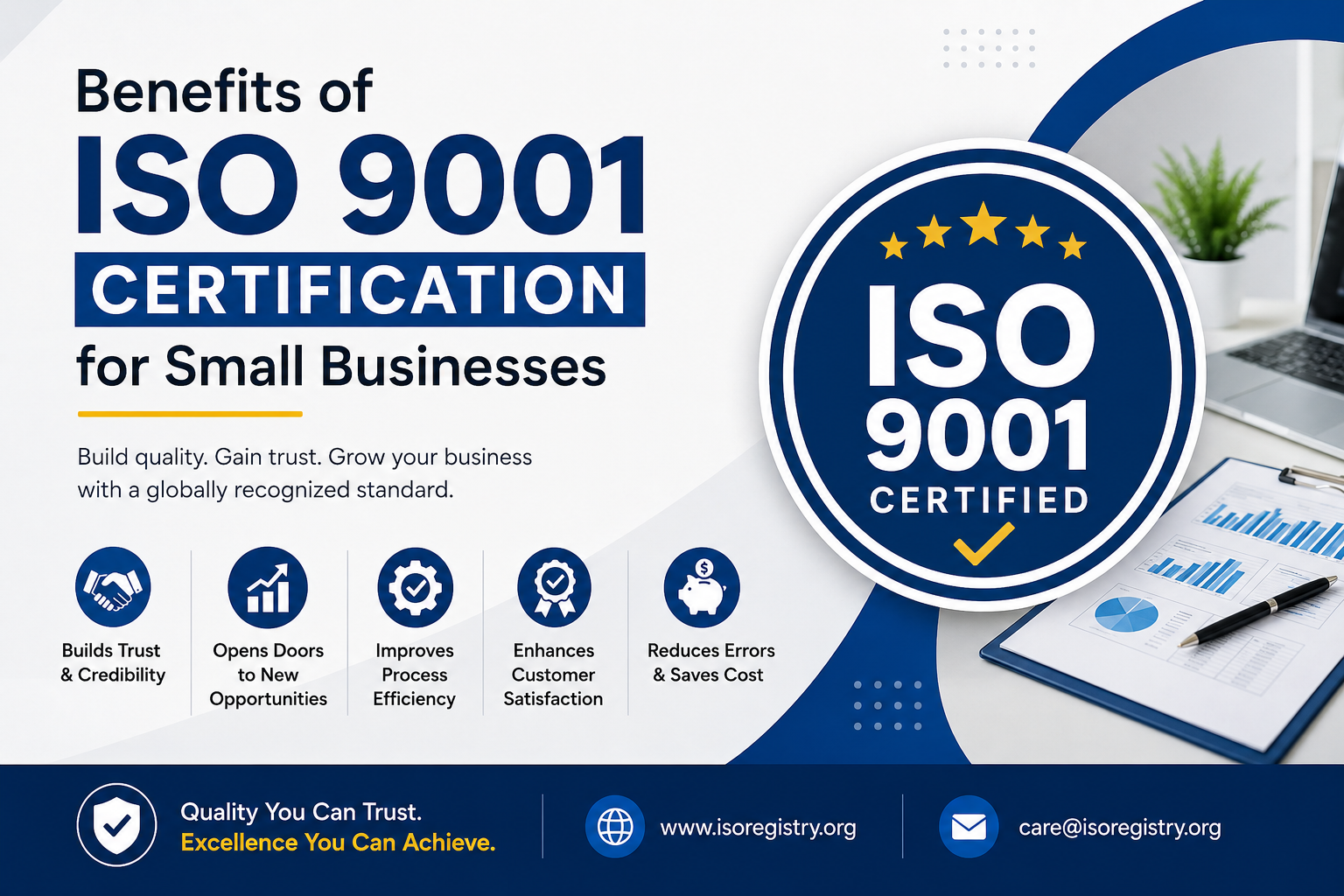
Benefits of ISO 9001 Certification for Small Businesses
A lot of small business owners assume ISO is only for the big players. It isn't. If you're trying to grow, get noticed by better clients, or just look more serious in your market, ISO 9001 can actually move the needle. It happens to be the most used quality management standard out there, and no, you don't need a huge factory or a hundred employees to qualify for it. Any business that wants things to run smoother, with fewer headaches, can use it. So let's get into why it matters.
What exactly is ISO 9001?
It's a quality management standard, basically. In plain terms, it lays out how a business should organize its processes so that whatever product or service you're giving out stays consistent. It won't micromanage how you run your company day to day, but it gives you a structure to lean on, especially useful when you're taking on more clients than before and things start getting messy.
For most small businesses, this means one thing mainly. Writing down processes that until now only existed in the owner's head. Not the most exciting task, sure, but once it's actually done, things change quite a bit.
Why Small Businesses Should Care
Here's the thing. Big clients and government departments often filter out vendors that aren't certified, even before looking at pricing or product quality. So for a small business trying to compete with bigger names, not having ISO 9001 can quietly close doors you didn't even know were shut.
Then there's the internal mess most small teams run on without even realizing it. Someone remembers this task, someone handles that client, nothing's written anywhere. Fine, until that one person goes on leave. Or quits. ISO 9001 pushes a bit of order into that chaos, and truthfully, most small businesses hit a point where they need exactly this kind of push.
Key Benefits
-
Builds trust with bigger clients and opens doors to tenders you couldn't access before
-
Keeps work consistent no matter who's handling it, even if staff changes
-
Cuts down on errors and rework, which quietly saves money over time
-
Improves customer satisfaction because service quality stays predictable
-
Gives you a competitive edge over non certified competitors in your space
How Does the Certification Actually Work?
People assume it's a huge process. For a small setup, honestly, it's not that heavy.
-
First, figure out where you currently stand against the ISO 9001 requirements.
-
Close whatever gaps show up, get your workflows on paper, and train the team accordingly.
-
Run the system for a while internally before the actual audit, this helps catch issues early.
-
Get audited by an accredited certification body and receive your certificate once approved.
Step two tends to eat up the most time for small businesses, mostly because nobody really enjoys sitting down and documenting everything. Once that's out of the way though, the rest moves fairly quickly.
Mistakes Small Businesses Often End Up Making
One mistake, treating the certificate as just a marketing tool. Yes it helps with credibility, but if the actual processes behind it are weak, that gap shows up eventually, usually in front of a client at the worst possible time.
Another one, rushing the documentation just to get it over with. Half done paperwork causes more confusion later, especially during audits or when new staff joins and has nothing solid to follow.
And sometimes businesses pick the cheapest certification body without checking their credibility. That can backfire, a certificate that isn't taken seriously in the industry doesn't really help you win the trust you were going for in the first place.
Conclusion
This certificate isn't just something big corporations chase after. Small businesses that think that way usually end up missing out on opportunities they didn't even know were there. Winning bigger clients, running things smoother behind the scenes, it all ties back to this one decision. If you're serious about scaling your business without things falling apart along the way, this is one investment worth making early.
Looking for professional ISO certification services? Visit ISO Registry to get started.