How Reliable Are Wire Forming Springs?

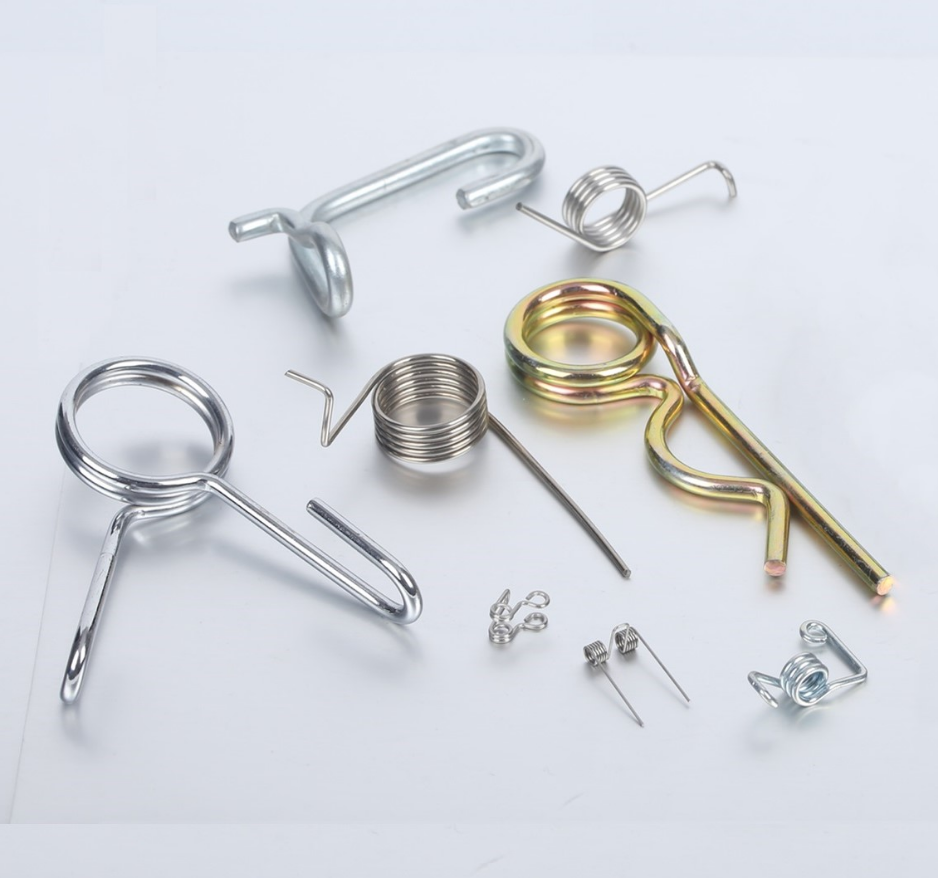
Mechanical reliability often depends on components that receive little attention during equipment design. Springs are one of these components. Although they occupy only a small amount of installation space, they influence positioning accuracy, vibration control, retention force, and repeated movement throughout the operating life of machinery. A carefully engineered Stainless Steel Wire Forming Spring can provide stable elastic performance across thousands or even millions of operating cycles while maintaining resistance to corrosion and mechanical wear.
Unlike standard compression or extension springs, wire forming springs are designed around the specific geometry of a product. Instead of producing force through tightly wound coils alone, the spring wire is bent into customized shapes that perform several mechanical functions simultaneously. A single wire form may serve as a locating clip, locking arm, retaining bracket, contact spring, or guide mechanism. This flexibility allows engineers to simplify product assemblies while reducing the total number of components.
The service life of a Stainless Steel Wire Forming Spring depends on several engineering factors rather than material selection alone. Wire diameter, bending radius, working stress, operating temperature, installation method, and environmental conditions all contribute to long-term durability.
Material grade is usually the starting point of spring design. Common stainless spring materials include SUS302, SUS304, SUS316, and 17-7PH stainless steel. These materials are manufactured specifically for spring applications under standards such as ASTM A313, which defines chemical composition, tensile strength requirements, and mechanical testing methods for stainless spring wire.
Each material offers different characteristics.
Grade 302 provides high tensile strength and reliable elastic recovery for general industrial equipment.
Grade 304 combines corrosion resistance with balanced mechanical properties, making it suitable for food processing equipment, household appliances, automation systems, and commercial machinery.
Grade 316 contains molybdenum, improving resistance to chloride exposure and chemical environments. It is commonly selected for marine equipment, pharmaceutical devices, and outdoor installations.
17-7PH stainless steel offers relatively high strength after precipitation hardening and is often chosen for demanding fatigue applications where repeated loading is expected.
Wire diameter also influences spring behavior. Manufacturers commonly produce wire forming springs using diameters from 0.20 mm to approximately 8.00 mm. Smaller diameters are frequently used in electronic devices, miniature switches, and medical instruments. Larger diameters provide greater structural rigidity for industrial machinery, agricultural equipment, transportation systems, and heavy mechanical assemblies.
Spring geometry requires careful balance. Sharp bends may increase localized stress concentration, while excessively large bending radii consume unnecessary installation space. Modern CNC wire forming equipment allows engineers to optimize bend locations with high repeatability, helping reduce stress concentration while maintaining compact product dimensions.
Dimensional accuracy remains an important quality characteristic during production. Typical manufacturing capabilities include:
Wire diameter tolerance between ±0.01 mm and ±0.03 mm.
Linear dimensional tolerance around ±0.10 mm.
Angular tolerance of approximately ±1° to ±2°.
Smooth surface finish without burrs.
Consistent bend positioning throughout production batches.
These tolerances help ensure that every spring fits correctly into automated assembly lines without requiring additional adjustment.
Fatigue resistance is another critical performance indicator. Unlike static components, springs experience repeated loading and unloading throughout their operating life. Each movement subjects the material to alternating stress. Designing below the material's elastic limit helps prevent permanent deformation while extending operational life. Laboratory fatigue testing may involve hundreds of thousands or even millions of loading cycles depending on application requirements.
Stress relieving is frequently performed after wire forming. This heat treatment reduces residual forming stress and improves dimensional stability. For precipitation-hardening materials such as 17-7PH, additional aging treatment develops the required mechanical properties after forming. ASTM A313 also specifies mechanical testing and material requirements for stainless spring wire used in these applications.
Surface quality directly affects fatigue performance. Even very small scratches or surface defects may become initiation points for fatigue cracks under repeated loading. Manufacturers therefore pay close attention to wire cleanliness, forming tools, lubrication, and handling procedures during production.
Passivation is often applied after manufacturing to improve corrosion resistance. This chemical treatment removes free iron contamination from the stainless surface and promotes formation of a stable chromium oxide layer. The result is improved protection against moisture, industrial chemicals, and outdoor exposure.
Operating temperature should also be considered during product development. Stainless wire forming springs generally perform well across a broad temperature range. Many industrial applications operate between -40°C and 200°C depending on material grade, while specialized alloys may tolerate even higher temperatures for limited service conditions. Engineers evaluate both thermal expansion and potential reduction in spring force before finalizing a design.
Numerous industries rely on the Stainless Steel Wire Forming Spring because of its adaptability.
Automation equipment uses formed springs for indexing systems, safety guards, positioning mechanisms, and sensor retention.
Automotive assemblies incorporate them into locking devices, cable guides, fuel system retainers, electrical connectors, and interior mechanisms.
Medical equipment benefits from stainless steel's corrosion resistance in diagnostic instruments, laboratory devices, and fluid control assemblies.
Electrical products use formed springs to provide contact pressure, cable retention, and switch actuation.
Agricultural machinery employs durable wire forms that tolerate vibration, dust, and changing weather conditions.
Another design advantage lies in weight reduction. Because one formed wire component can often replace several individual brackets or clips, manufacturers may reduce assembly time, inventory requirements, and fastening hardware. This approach contributes to more efficient production without increasing mechanical complexity.
Quality control procedures usually include incoming raw material verification, dimensional inspection, spring force measurement, visual surface examination, hardness testing, tensile testing, and corrosion evaluation. Production records allow manufacturers to maintain consistency across different manufacturing batches and provide traceability for industrial customers.
As engineering products continue moving toward compact structures and automated assembly, customized wire forming solutions are becoming increasingly valuable. A thoughtfully designed Stainless Steel Wire Forming Spring combines corrosion resistance, stable elasticity, precise dimensional control, and long fatigue life within a single mechanical component. Supported by suitable material selection, precision CNC forming, controlled heat treatment, and comprehensive quality inspection, these springs continue to play an important role in modern industrial equipment across a wide range of operating environments.

 English
 Chinese (Simplify)
