The Critical Role of Observability in Modern DevOps
In the rapidly evolving APAC DevOps Market, observability has transitioned from a niche concern to a critical requirement for maintaining stable and resilient digital services. Unlike traditional monitoring, which simply informs an IT team that a system is down, observability utilizes granular telemetry—logs, metrics, and traces—to provide deep, actionable insights into why a system is failing. For organizations across the Asia-Pacific region, which are grappling with rapid digital growth and diverse, hybrid cloud architectures, the ability to observe and analyze complex microservices behavior is the definitive marker of a successful, mature DevOps implementation. As the complexity of digital stacks continues to grow, the ability to debug issues in real-time is not just an operational benefit; it is a fundamental strategic requirement that determines the customer experience and the long-term viability of the application itself.
Technically, building an observability framework requires a unified data collection layer that can ingest vast streams of disparate information from the infrastructure, the network, and the application layer itself. This ingestion layer must be highly scalable, capable of processing event streams in real-time, and equipped with analytical tools that can correlate these events to detect root causes automatically. Once implemented, these observability platforms allow developers to treat their system as a dynamic, living organism that can be queried and diagnosed with the same precision as traditional database environments. This shift allows for a "fail-fast, recover-faster" culture, where teams can push code into production with confidence, knowing that any issue can be instantly identified and resolved before it has any meaningful impact on the user experience.
Furthermore, the integration of intelligent analytical platforms within these DevOps infrastructures allows for unprecedented visibility into operational performance. Modern, observability-focused platforms are equipped with sophisticated dashboarding tools that allow leadership to visualize the entire global IT footprint in real-time, identifying regional performance variations, emerging software bugs, and potential areas for service improvement. This software-defined approach allows leadership to manage multiple distributed project sites from a single centralized console, effectively eliminating the need for fragmented, siloed management approaches that slow down the engineering process. As machine learning algorithms continue to evolve, these management platforms are becoming increasingly intelligent, enabling predictive analysis that alerts management to potential component failure before they result in significant outages.
Looking toward the future, the global market is set to witness sustained expansion as generative AI becomes the standard for internal software diagnostics. As applications like automated incident documentation, real-time code analysis, and smart, decentralized project coordination demand higher efficiency, the proximity of intelligence to the development workflow becomes non-negotiable. Modern, AI-augmented solutions are uniquely positioned to meet this requirement by enabling the deployment of high-performance virtual service chains that are capable of responding to developer needs with human-like precision. The ongoing investment in digital infrastructure will further accelerate this demand, making digital observability systems the backbone of the next generation of global connectivity, ensuring that operators can effectively monetize the new, complex services emerging in the competitive era.
Top Trending Reports:
Mobile Augmented Reality Market
South Korea Mobile Augmented Reality Market
Spain Mobile Augmented Reality Market
Uk Mobile Augmented Reality Market
Categories
Read More
(圖/ 海巡署) 外籍運毒客橫行引發跨境治安警戒升高,海巡署聯手美國HSI強力反制機場毒品走私行動全面升級。台美執法單位透過跨國情資交換與聯合偵辦,成功瓦解多起人體夾帶毒品犯罪網絡,成為近年跨境緝毒合作的重要成果。 外籍運毒客橫行、海巡署聯手美國HSI強力反制跨境毒品犯罪,台灣與美國執法單位在機場毒品查緝合作上持續深化,針對人體夾帶與行李走私等隱密運毒手法展開精準打擊,有效壓制跨國毒品滲透。 (圖/ 海巡署) 海洋委員會海巡署偵防分署今(19)日召開「機場跨境運毒成果聯合記者會」,由管碧玲親自主持,並邀集最高檢察署、海巡署、美國國土安全調查署(HSI)、桃園地檢署、關務署及警政署等單位共同出席,展現跨機關與國際執法合作的強度與決心。 (圖/ 海巡署 管碧玲主委)...

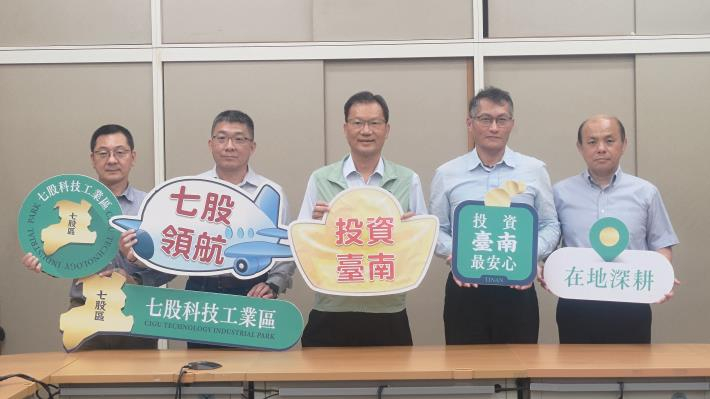
(圖/ 臺南市政府) 臺南市政府公告,七股科技工業區自114年9月25日起展開第六次土地標售及標租作業,截止時間為12月31日中午12時。本次招商採雙軌策略,提供「產業用地標售」與「產業用地標租」兩種選擇,分別滿足長期資產布局及輕資產經營模式的企業需求。 七股科技工業區全區面積141.15公頃,其中產業用地出售74.8公頃、出租10公頃。自啟動招商以來,園區已完成五次標售,引進38家企業,出售面積約38公頃,總投資金額預計超過290億元,預估可創造6,000個以上就業機會。入駐企業以電子零組件、金屬製品及塑膠製品為主,初步形成高附加價值、低污染產業聚落。 MGBOX (圖/ 臺南市政府)...