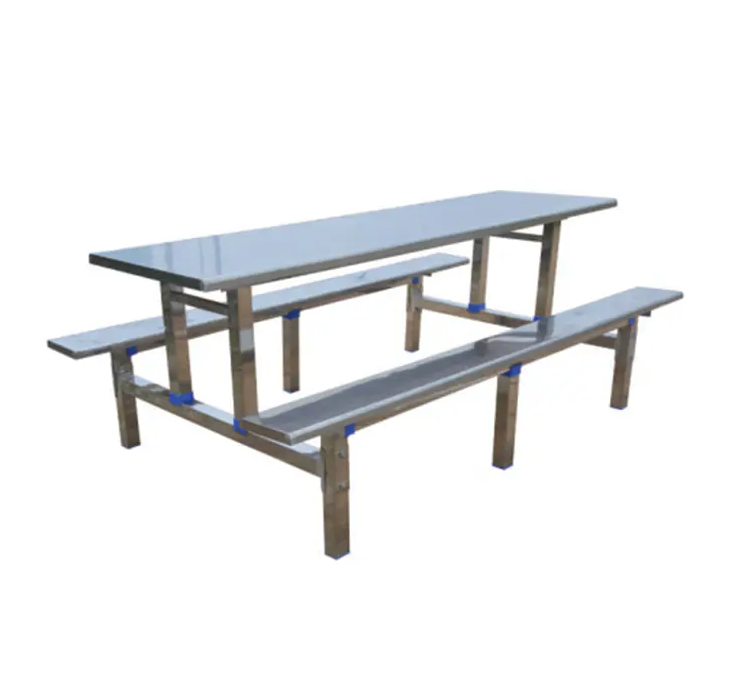

A canteen is not just a room with food in it. It is one of the few spaces in a school, workplace, or public building where people genuinely choose to slow down, sit together, and take a breath between whatever they were doing before and whatever comes next. The canteen dining table and chairs sitting in that room have a bigger role in that experience than most people give them credit for.
Think about what a canteen dining table actually has to do. It needs to seat a rotating cast of people throughout the day — students with trays and bags, office workers with laptops and lunches, visitors who just want somewhere to sit. The surface takes spills, sliding trays, and the occasional enthusiastic elbow. It gets wiped down dozens of times a day with cleaning fluids that would destroy a domestic kitchen table in a season. A well-made canteen table handles all of this without complaint, which is why materials like melamine-faced chipboard, steel-reinforced edges, and powder-coated steel frames have become industry staples for commercial dining furniture.
The chairs that accompany canteen dining tables carry their own set of demands. Stacking ability is one of the first practical considerations — a canteen that seats 200 people needs somewhere to put 200 chairs when the floor needs cleaning or the space is reconfigured for another purpose. Stackable canteen chairs, whether made from moulded polypropylene, steel tube frames with upholstered seats, or solid timber, are designed with this reality in mind. The stacking height, the grip points for lifting, and the stability of the stack once formed all feed into how practical the chair is in daily operation.
Comfort matters more than it is sometimes given credit for in a canteen setting. The assumption that people are only sitting for twenty minutes, so comfort is secondary, underestimates how much a genuinely uncomfortable chair shapes a person's attitude toward the whole space. A seat with a slight curve that supports the lower back, a chair height that works comfortably with the table, and armrests that do not obstruct getting in and out — these small ergonomic details accumulate into a dining environment that people find naturally pleasant to occupy. Canteen dining table and chair that invites people to sit a little longer also tends to encourage conversation, which is no small thing in a shared space.