Energy Scavenging Systems – Technologies, Applications, and Market Outlook

The Energy Scavenging Systems market has witnessed remarkable growth as industries and consumers seek alternative power sources that are sustainable, maintenance-free, and autonomous. Energy scavenging systems, also referred to as energy harvesting systems, convert ambient energy from the environment—such as mechanical vibrations, thermal gradients, solar energy, and electromagnetic fields—into usable electrical energy. These systems are essential for low-power devices in remote, hard-to-access, or IoT-enabled applications where conventional batteries are inefficient or impractical.
The Energy Scavenging Systems market is expanding due to several technological and market trends. The proliferation of IoT devices, wearable electronics, and wireless sensors has created a critical demand for autonomous power solutions. These devices require continuous operation, which traditional batteries cannot always reliably provide. Energy scavenging systems offer a practical, eco-friendly solution, significantly reducing maintenance costs and minimizing environmental impact.
Key Technologies and Applications
-
Vibration-Based Scavenging
Vibration energy scavenging is one of the most widely adopted technologies. Machines, vehicles, and industrial equipment produce mechanical vibrations that can be converted into electrical energy. This technology is extensively used in structural health monitoring, factory automation, and remote industrial sensors. -
Piezoelectric Energy Scavenging
Piezoelectric materials generate electricity when subjected to mechanical stress. This technology is used in wearable devices, medical implants, industrial sensors, and other applications that require small, autonomous power sources. Innovations in materials science have increased the efficiency and durability of piezoelectric energy harvesters. -
Thermoelectric Energy Scavenging
Thermoelectric systems capture waste heat from industrial processes or environmental temperature gradients and convert it into electricity. This technology is particularly useful in industrial applications where temperature differences are consistently available. -
Solar and RF Energy Scavenging
Solar energy scavenging powers remote devices, especially outdoor sensors and smart infrastructure, while RF (radio frequency) energy harvesters convert ambient electromagnetic signals into usable power for low-energy electronics.
Regional Insights
Asia-Pacific dominates the energy scavenging systems market due to industrial growth, smart city initiatives, and government support for renewable energy. North America and Europe are innovation-driven regions focusing on hybrid systems, IoT integration, and industrial applications. Emerging economies in Latin America and the Middle East are increasingly investing in energy scavenging systems for industrial and urban infrastructure.
Future Outlook
The Energy Scavenging Systems market is expected to continue growing as industries adopt autonomous and sustainable power sources. Hybrid systems, combining multiple energy sources, and integration with IoT and smart sensors will drive future expansion. Companies focusing on R&D and energy-efficient technologies are poised to capture significant opportunities.
FAQs
-
What are energy scavenging systems?
-
Systems that capture ambient energy and convert it into electrical power for low-power devices.
-
-
Which applications benefit most from energy scavenging systems?
-
Industrial monitoring, IoT devices, wearable electronics, and smart infrastructure.
-
-
Which regions are leading adoption?
-
Asia-Pacific, followed by North America and Europe.
-
More Related Reports:
subsea umbilical risers and flowline market
閱讀更多
Buy Verified Bybit Accounts ➤Telegram: @TopSMMShops01 ➤WhatsApp: +1(848) 468–5888 ➤E-mail: support@topsmmshops.com https://topsmmshops.com/product/buy-verified-bybit-accounts/ Features of Our Buy Verified ByBit Accounts–➤ 100% Satisfaction & Recovery Guarantee ➤ Fully Verified Profiles – Ready to use ➤ 100% USA-verified ByBit accounts ➤...

Buying Verified Cash App Accounts in 2025: Everything You Need to Know Have you ever considered buying a verified Cash app account? You’re not alone. 💥💥💥💥💥💥💥💥💥💥💥💥💥💥💥💥💥💥💥 💥💥💥💥💥💥💥💥💥💥💥💥💥💥💥💥💥💥💥 **** If you want to more information just contact now- ➥24 Hours Reply/Contact ➤Telegram: @SmmTopPva ➤WhatsApp: +1(660)9531538 Visit : https://smmtoppva.com...

Top 17 Site Buy Verified PayPal Accounts: A Step-by-Step Guide SMMTOPSHOPIT always provide high-quality service that guarantee, safe and 100% customer satisfaction. Your results are our goal and your satisfaction is our priority. To that end, we look forward to providing the best quality service to our customers. Our accounts are fully verified and social service from US, UK, CA, AU more...

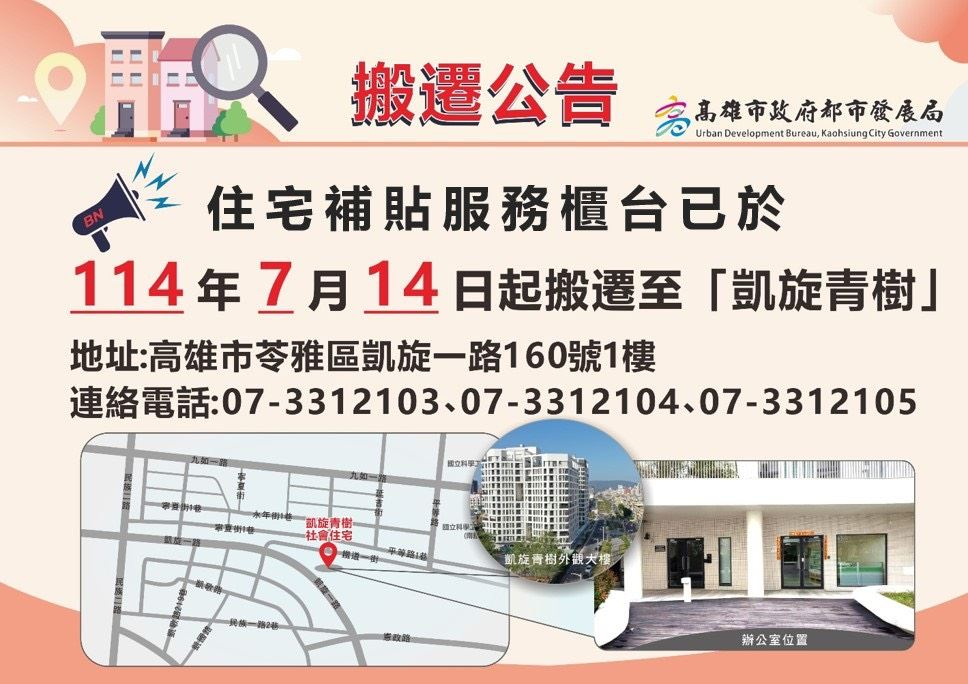
(圖/ 高雄市政府都市發展局) 高雄市政府都市發展局為提升民眾辦理住宅補貼的便利性,自7月中旬起將住宅補貼服務據點遷移至苓雅區凱旋青樹社會住宅A棟(凱旋一路160號),新址鄰近台鐵民族站,設有機車停車場,提供租屋民眾更友善、便捷的洽公環境。 都市發展局局長吳文彥表示,市府持續推動「安居高雄」政策,積極落實中央推動的「300億元擴大租金補貼專案計畫」,內容涵蓋增額租金補貼、育兒租金補貼及社會住宅租金折減等多項措施。截至7月為止,已有超過9萬戶家庭受惠,補貼申請仍持續受理中。 (圖/ 高雄市政府都市發展局) 都發局指出,新址將整合現場申辦、諮詢與案件進度查詢等功能,優化服務流程與辦公環境,提升市民體驗。針對交通方式、申辦資格或補件事宜,如有疑問,可致電 (07) 331-2103、2104、2105 洽詢,或至高雄市都市發展局官網查詢。...