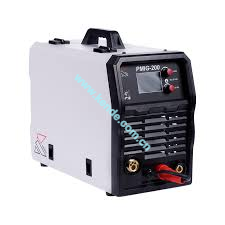
How Does A Pulse MIG Welder Lower Rejection Rates In Vehicle Manufacturing? KenDe Clarifies

A Pulse MIG Welder operating on an automotive assembly line delivers measurable productivity gains over conventional welding equipment. Traditional MIG welding produces continuous current that overheats thin gauge materials used in car bodies. This overheating forces operators to pause between welds, allowing panels to cool. Do you know how a unit from kende transforms this workflow into uninterrupted production?
The pulsed waveform alternates between a high peak current and a low background current. This alternating pattern creates a spray transfer mode without raising the base material temperature. One droplet of molten metal detaches from the wire during each pulse cycle. The detachment happens without short-circuiting, which eliminates spatter generation. Spatter requires post-weld cleaning, a non-value-added operation that consumes labor hours. A welder producing spatter-free joints removes this cleaning step entirely from the manufacturing sequence.
Heat input control represents the second productivity mechanism. Automotive body panels use zinc-coated steel with thickness below one millimeter. Conventional MIG welding deposits enough heat to vaporize the zinc coating adjacent to the weld zone. Vaporized zinc creates porosity defects that fail quality inspection. Repairing these defects requires grinding and rewelding, doubling the labor per joint. A Pulse MIG Welder applies heat precisely when the droplet transfers. The background current drops to nearly zero between pulses, allowing the panel surface to maintain its coating integrity.
Reduced distortion accelerates downstream assembly operations. Welding heat causes metal expansion and contraction, pulling panels out of alignment. A door frame that warps after welding requires hydraulic pressing before hinge installation. This pressing operation adds thirty seconds per door across a shift producing four hundred vehicles. A system with pulse parameters optimized for thin sheet applies only the thermal energy needed for fusion. The resulting distortion measures less than half that of conventional welding. Panels fit directly into fixturing without corrective pressing.
Operator fatigue decreases with pulse welding, sustaining productivity through full shifts. Traditional MIG welding produces a loud, harsh arc sound and visible ultraviolet radiation. These conditions increase welder eye strain and hand tremor over eight hours. A pulsed unit operates with a softer arc characteristic and reduced glare. Operators maintain steady torch positioning for longer periods without micro-adjustments. Steadier hands produce consistent weld bead profiles, lowering visual inspection time. Quality control checks pass more units on first inspection, avoiding offline repair stations.
https://www.kende.com.cn/product/mig-mag/ includes pulse parameter presets for common automotive alloys. The product listing shows recommended settings for galvanized steel, aluminum, and high-strength low-alloy sheets. Buyers can request weld procedure specifications before equipment purchase. Factory engineers provide pulse program development for unique material combinations. Each welding system undergoes waveform verification before shipment. Why accept conventional welding speeds when pulse technology offers measurable assembly line gains?