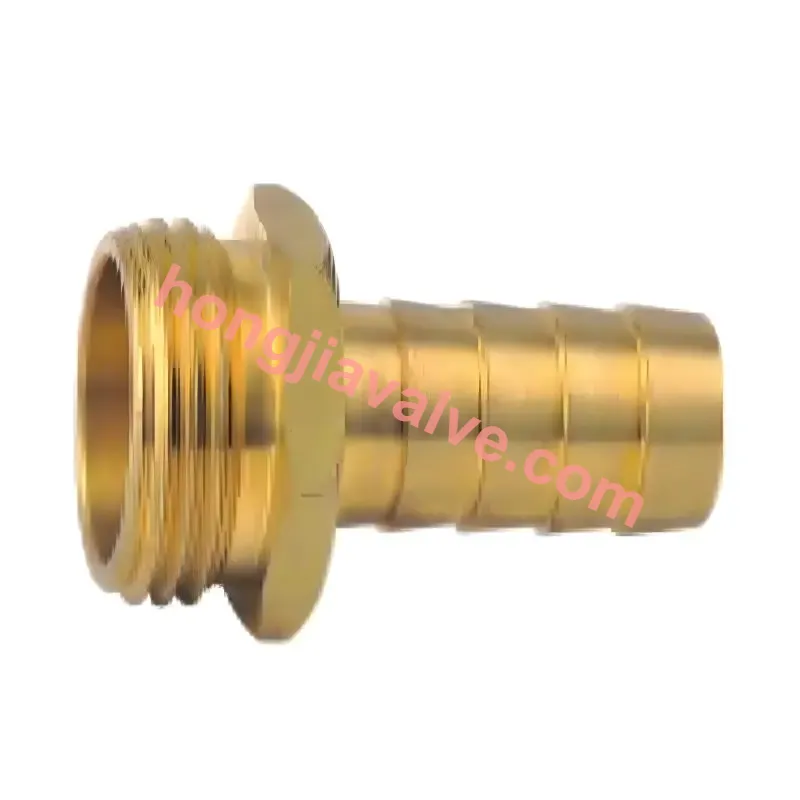
HongJia Quick Joint – How HongJiavalve Engineers a Double Seal That Protects Operators and Equipment

A hydraulic system operates under intense pressure, and any disconnection of a fluid line during maintenance or equipment change-out carries the risk of spraying hot oil onto nearby workers or the floor. A quick joint from hongjiavalve, manufactured by HongJia, comes in two common configurations that look similar from the outside but behave very differently when uncoupled. The single-shut-off design contains a valve only on the supply side, so when the coupling separates, the pressurized line seals itself while the downstream side drains its remaining fluid onto the ground. The double-shut-off design places a valve in both halves of the coupling, meaning neither side loses fluid and no spill occurs at all, so which design would a safety-conscious facility choose for a hydraulic line located above sensitive electronics or food processing equipment?
The internal mechanism of a single-shut-off coupling relies on a spring-loaded poppet valve in the male or female half that closes when the two halves separate. This arrangement works adequately for applications where the downstream line contains only a small volume of fluid or where a minor spill causes no harm, such as in a low-pressure air line or a water hose. However, in a hydraulic system, the downstream line may hold several liters of oil under residual pressure, and when the coupling opens, that oil escapes instantly. The escaping fluid creates a spray that can travel across a room, coating surfaces, creating slip hazards, and potentially causing fires if it contacts hot equipment. A single-shut-off configuration also allows air to enter the downstream line, which then requires bleeding before the system can operate again.
The double-shut-off design eliminates both problems by placing a sealing mechanism in each half of the coupling. When the operator pushes the two halves together, both valves open, allowing fluid to flow freely through the connection. When the operator pulls the coupling apart, both valves close simultaneously, trapping fluid in the supply line and in the downstream line. No fluid escapes from either side, and no air enters the downstream circuit. HongJia's double-shut-off version uses precision-machined brass bodies and stainless steel springs that withstand thousands of connection cycles without losing seal integrity. The valves close before the coupling halves fully separate, so even a partial disconnection does not produce a leak.
The choice between single and double shut-off affects not only safety but also system efficiency and maintenance cost. A single-shut-off coupling spills fluid every time an operator disconnects a tool or a hose, and over a workday, those small spills add up to a significant volume of lost hydraulic oil. Replacing that oil costs money, and disposing of oil-soaked rags or absorbent materials adds environmental compliance expenses. A double-shut-off quick joint from HongJiavalve prevents every drop of that loss, paying for its higher initial price through reduced fluid purchases and cleanup labor. Facilities that handle expensive synthetic hydraulic fluids or environmentally sensitive lubricants find the double-shut-off design essential because a single large spill could trigger reporting requirements and fines.
The physical effort required to connect and disconnect each design also differs. A single-shut-off coupling often requires the operator to push against full system pressure when connecting because the downstream line may contain trapped pressure. A double-shut-off coupling, by contrast, isolates pressure on both sides, so the connection force remains low regardless of system pressure. HongJia's double-shut-off version includes a smooth push-to-connect action and a positive locking sleeve that prevents accidental separation under vibration or tension. Operators can connect and disconnect lines with one hand, even in tight spaces or while wearing gloves, reducing fatigue and speeding up equipment changeovers.
Another advantage of the double-shut-off design appears when multiple hydraulic lines run in parallel, such as on a mobile machine or a factory automation cell. A single-shut-off coupling on a return line may spill fluid that then contaminates the exterior of adjacent pressure lines, making them slippery and difficult to handle. The double-shut-off design keeps every connection dry and clean, so operators can grip lines securely and identify color codes or labels without wiping away oil first. HongJia's quick couplings come with optional color bands or laser-etched markings that remain readable because no fluid ever contacts the outer surface during disconnection.
For hydraulic applications involving food-grade oils or water-based fluids used in food processing plants, a double-shut-off design is not a luxury but a requirement. Any spill onto a production floor risks contaminating products, triggering costly recalls, and shutting down entire lines for cleaning. HongJiavalve manufactures its couplings from materials compatible with food-grade fluids and offers configurations that meet hygiene standards for wash-down environments. The double-shut-off design ensures that when a worker disconnects a hose for cleaning or replacement, no fluid reaches the floor, the equipment, or the product.
To see how HongJia's double-shut-off quick joint compares to single-shut-off designs for your specific hydraulic application, visit their product catalog at https://www.hongjiavalve.com/product/quick-joint-series/ where you will find dimensional drawings, pressure ratings, and material options for each configuration. A single shut-off leaves one side of your line unprotected and one spill waiting to happen. A double shut-off seals both ends completely, protecting your crew, your equipment, and your floor. When high-pressure hydraulic fluid can cause serious injury or costly downtime, would you trust a coupling that only seals half of the connection?