Trump Maintains Hormuz Blockade Until Iran Deal — Global Shipping and Oil Markets at Risk

US Refuses to Lift Hormuz Blockade Without Agreement
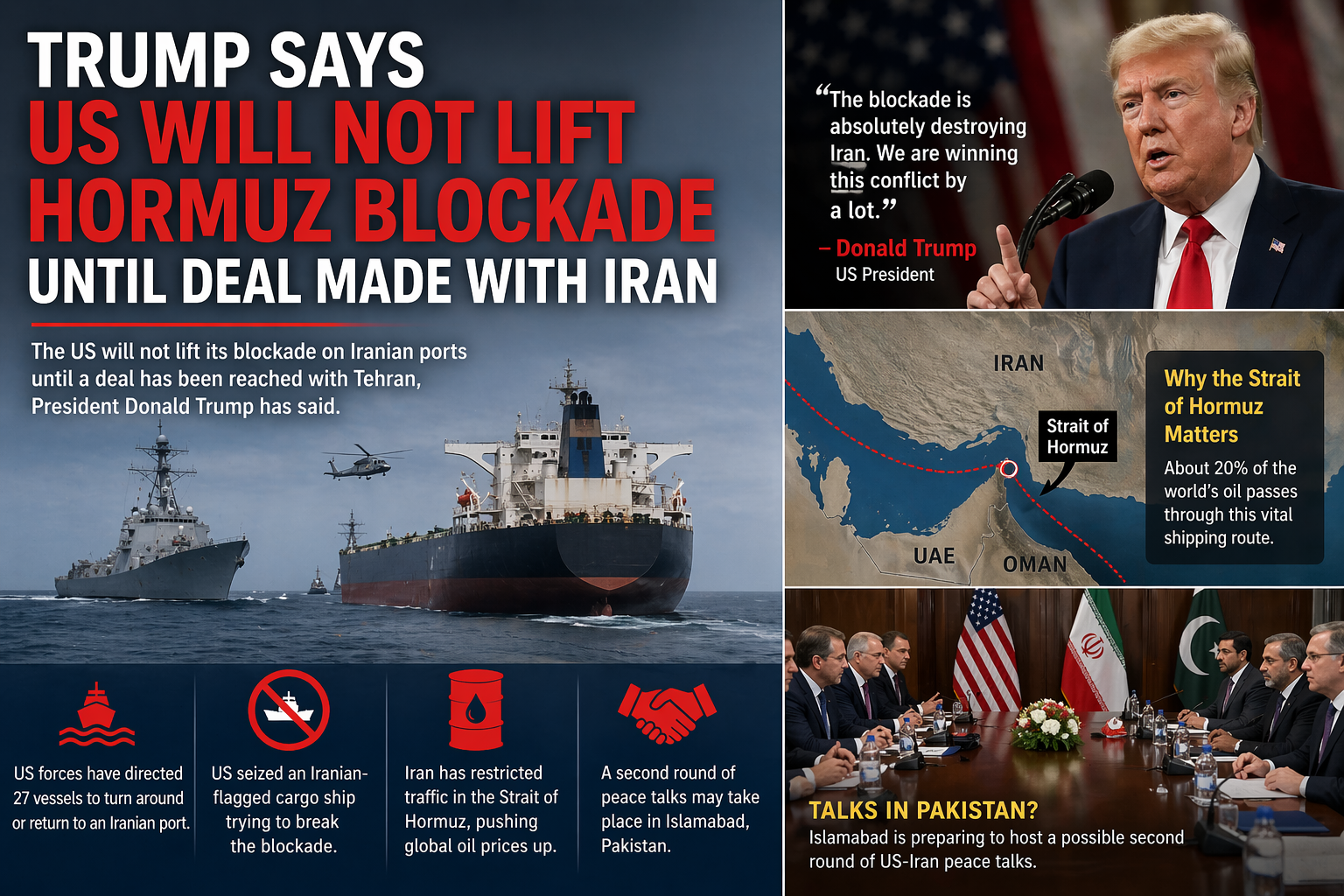
The United States will not remove its blockade on Iranian ports until a formal agreement is reached with Tehran, according to US President Donald Trump. His statement comes amid growing uncertainty over whether new peace negotiations between the two countries will proceed.
Trump announced that the blockade is significantly impacting Iran’s economy and military operations, emphasizing that the United States intends to maintain pressure until diplomatic terms are accepted.
The temporary ceasefire between the United States and Iran is scheduled to expire soon, increasing concerns about potential escalation if negotiations fail.
Rising Tensions in the Strait of Hormuz
The Strait of Hormuz, one of the world’s most critical oil shipping routes, has become a focal point of the conflict.
Key developments include:
- US forces have redirected 27 vessels attempting to reach Iranian ports
- A cargo ship flying the Iranian flag was intercepted and seized
- Iran described the seizure as an act of piracy
- Security levels have increased across regional shipping lanes
Iran has also imposed restrictions on traffic in the Strait of Hormuz, which has contributed to:
- Increased global energy prices
- Supply chain disruptions
- Heightened geopolitical risk
Ceasefire at Risk as Both Sides Hold Firm
Iran has stated it will keep the shipping route restricted until the United States lifts its blockade. Meanwhile, US officials argue that Iran violated the ceasefire agreement by engaging in hostile actions in the region.
This mutual standoff has created a fragile diplomatic environment, where both sides appear unwilling to make concessions without guarantees.
Possible Peace Talks in Pakistan
Despite tensions, diplomatic efforts are still underway. A second round of negotiations is expected to take place in Islamabad, Pakistan, although Iran has not officially confirmed participation.
Preparations in the Pakistani capital suggest that talks may proceed:
- Major roads near diplomatic venues have been closed
- Hotels hosting delegations have increased security
- International officials are coordinating logistics
Diplomatic observers believe both sides face strong pressure to attend, as failure to participate could worsen global instability.
Global Impact of the Hormuz Crisis
The situation in the Strait of Hormuz has worldwide implications because the route handles a significant portion of global oil transportation.
Potential consequences include:
- Rising fuel and transportation costs
- Market volatility
- Increased geopolitical tension
- Energy supply uncertainty
Governments and businesses are closely monitoring developments due to the economic importance of uninterrupted shipping through the region.
Outlook: Diplomacy or Escalation
Experts suggest that the coming days will be critical. If negotiations move forward, tensions may ease. However, if talks collapse, the risk of further conflict could increase.
For now, both sides remain locked in a strategic standoff while diplomatic channels continue to operate behind the scenes.