
INTRODUCTION
Modern fertility treatments rely heavily on precision, technology, and controlled environments, making IVF Lab Design a critical component of successful assisted reproductive procedures. A well-planned IVF Laboratory Design integrates advanced equipment and cleanroom technologies to ensure optimal conditions for fertilization, embryo development, and storage.
In this blog, we will explore the essential equipment used in IVF labs, their functions, and how they contribute to successful outcomes.
Importance of Equipment in IVF Labs
IVF labs handle extremely sensitive biological materials such as eggs, sperm, and embryos. The right equipment ensures:
- Controlled environmental conditions
- High precision in procedures
- Reduced contamination risks
- Improved success rates
Categories of Equipment in IVF Laboratory Design
IVF lab equipment can be broadly categorized into:
- Environmental control systems
- Laboratory instruments
- Cryopreservation equipment
- Monitoring and support systems
Essential Equipment Used in IVF Lab Design
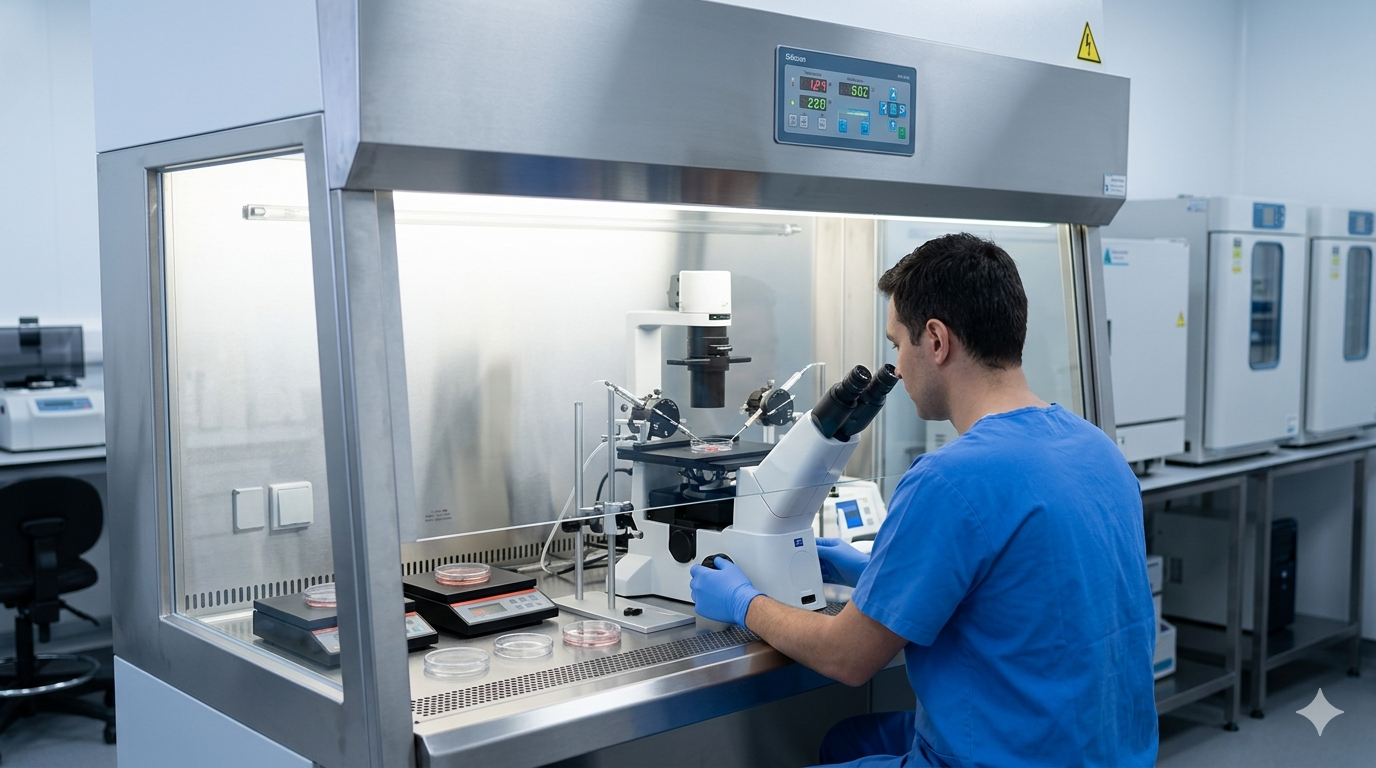
1. Laminar Airflow Workstations
Laminar airflow cabinets provide a sterile working environment.
Functions:
- Deliver HEPA-filtered air
- Maintain contamination-free workspace
- Protect embryos during handling
2. CO₂ Incubators
CO₂ incubators are one of the most critical devices in IVF labs.
Features:
- Maintain temperature (37°C)
- Control CO₂ levels (5–6%)
- Provide stable environment for embryo growth
3. Microscopes
Different types of microscopes are used:
- Stereo microscopes for handling gametes
- Inverted microscopes for observing embryos
4. IVF Workstations
Integrated workstations combine:
- Laminar airflow
- Heating surfaces
- Microscopes
They provide a controlled environment for delicate procedures.
5. Cryopreservation Equipment
Used for freezing and storing embryos and gametes.
Includes:
- Cryo tanks (liquid nitrogen storage)
- Freezers
- Cryo carriers
6. Sperm Analysis Systems
These systems analyze sperm quality and motility.
7. Centrifuges
Used for separating sperm and other biological samples.
8. Oocyte Aspiration Pumps
Used during egg retrieval procedures.
9. Embryo Transfer Catheters
Used for transferring embryos into the uterus.
10. Heating Equipment
Maintains temperature stability:
- Heated stages
- Warm plates
11. Air Filtration Systems
Air quality is critical in IVF labs.
Includes:
- HEPA filters
- Activated carbon filters
These systems remove particles and VOCs.
12. HVAC System
The HVAC system ensures:
- Temperature control
- Humidity regulation
- Air circulation
13. pH Monitoring Systems
Used to maintain optimal culture conditions.
14. Laboratory Furniture
Specialized furniture includes:
- Anti-vibration tables
- Cleanroom-compatible storage units
15. Gas Supply Systems
Provides gases like:
- CO₂
- Nitrogen
Essential for incubators and cryopreservation.
16. Sterilization Equipment
Ensures hygiene and safety:
- Autoclaves
- UV sterilizers
17. Data Monitoring Systems
Modern IVF labs use:
- Digital monitoring systems
- Alarm systems
- Data recording tools
Role of Cleanroom Technology in Equipment Performance
Cleanroom technology enhances equipment efficiency by:
- Reducing contamination
- Maintaining stable conditions
- Supporting precision
Importance of Air Quality in IVF Labs
Air quality directly impacts:
- Embryo development
- Success rates
- Lab efficiency
Equipment Layout and Workflow
Proper placement ensures:
- Smooth workflow
- Reduced contamination risks
- Efficient use of space
Maintenance of IVF Lab Equipment
Regular maintenance includes:
- Calibration
- Cleaning
- Performance testing
Compliance with Standards
IVF Laboratory Design must meet:
- ISO standards
- NABL guidelines
- ICMR recommendations
Challenges in IVF Lab Equipment Setup
Common challenges include:
- High cost of equipment
- Maintenance requirements
- Need for skilled professionals
Future Trends in IVF Lab Equipment
Innovations include:
- AI-based monitoring systems
- Automated IVF systems
- Advanced imaging technologies
Benefits of Advanced IVF Lab Equipment
Using modern equipment ensures:
- Higher success rates
- Improved accuracy
- Better patient outcomes
Conclusion
A well-equipped IVF Lab Design is essential for ensuring the success of fertility treatments. From incubators and microscopes to advanced filtration and cryopreservation systems, each piece of equipment plays a vital role in maintaining a controlled and sterile environment. As the demand for advanced fertility solutions grows, investing in high-quality IVF Laboratory Design becomes increasingly important. Altus Airflow provides innovative solutions tailored to modern IVF lab requirements.
FAQs
1. What equipment is used in IVF Lab Design?
IVF Lab Design includes incubators, microscopes, laminar airflow systems, cryopreservation equipment, and air filtration systems.
2. Why are CO₂ incubators important in IVF Laboratory Design?
CO₂ incubators in IVF Laboratory Design maintain optimal conditions for embryo development.
3. How does air quality affect IVF Lab Design?
Air quality in IVF Lab Design impacts embryo health, making filtration systems essential.
4. What role do microscopes play in IVF labs?
Microscopes in IVF Laboratory Design allow detailed observation of embryos and gametes.
5. How often should IVF lab equipment be maintained?
Regular maintenance is required in IVF Lab Design to ensure accuracy and reliability.
Read Our Previous Blog------>How does a Modular Ophthalmic OT Setup Services improve surgical precision?