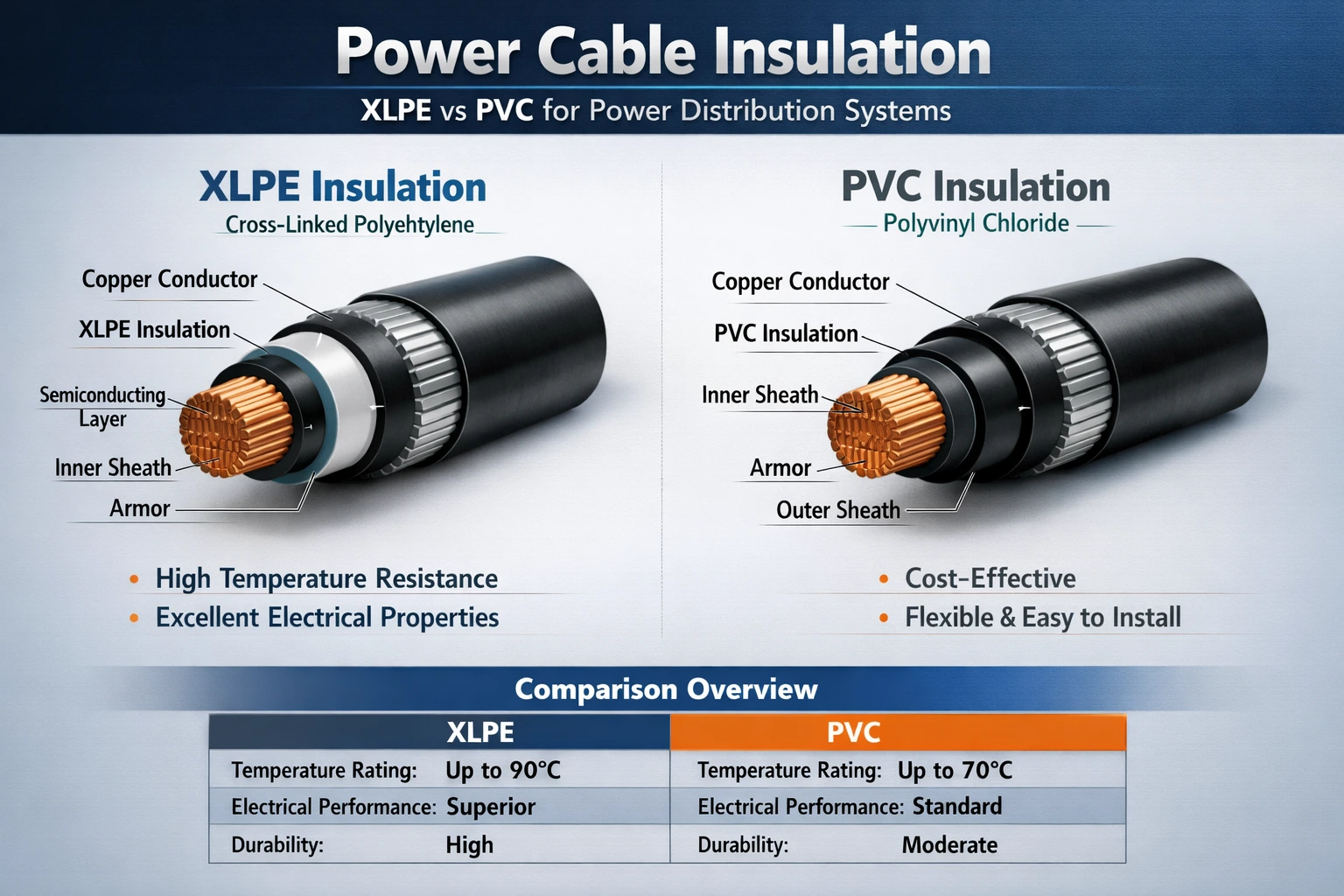
In today’s fast-evolving transmission and distribution landscape, power cable systems are no longer just passive conductors they are critical infrastructure assets that directly affect grid reliability, project timelines, and long-term operating costs. From urban distribution networks to utility-scale renewable connections and industrial power plants, selecting the right power cable requires both engineering precision and supply chain confidence.
As a global manufacturer of overhead conductors and power cables, HNBF Power supports utilities, EPC contractors, and infrastructure developers with technically verified cable solutions designed for demanding electrical environments. This guide explains how modern power cable systems are specified, engineered, and deployed for long-term grid performance.
What Is a Power Cable in Utility and Industrial Applications?
A power cable is an engineered electrical conductor system designed to transmit or distribute electrical energy safely and efficiently. In utility and industrial projects, power cables must meet strict requirements for:
-
Electrical performance
-
Mechanical durability
-
Thermal stability
-
Environmental resistance
Unlike general building wire, utility-grade power cable systems are selected based on network design parameters such as voltage class, short-circuit capacity, route conditions, and service life expectations.
Key Power Cable Types Used in Power Networks
Low-Voltage (LV) Power Cable Systems
LV power cables are widely used for secondary distribution, industrial facilities, substations, and auxiliary power systems. Typical applications include:
-
Distribution panels and feeders
-
Industrial equipment supply
-
Infrastructure and commercial facilities
HNBF Power manufactures LV power cable solutions with controlled conductor resistance, insulation integrity, and consistent production quality for utility and EPC procurement programs.
Concentric Cable for Distribution and Protection
Concentric power cables integrate neutral or grounding conductors around the phase conductor. These designs improve fault performance and electrical safety, particularly in underground and urban distribution networks.
Overhead and Aerial Cable Systems
In many regions, overhead networks remain the most cost-effective solution for large-scale power delivery. HNBF Power also supplies:
-
AAC (All Aluminum Conductor)
-
AAAC (All Aluminum Alloy Conductor)
-
ACSR (Aluminum Conductor Steel Reinforced)
-
ABC (Aerial Bundled Cable)
These conductor families complement underground and LV power cable systems for complete network solutions.
Engineering Criteria When Specifying a Power Cable
Electrical Rating and Voltage Class
Power cable selection begins with accurate system design:
Correct electrical sizing directly affects network losses and long-term reliability.
Thermal and Short-Circuit Performance
Modern power cable systems must withstand:
Cable design must account for conductor material, insulation type, and installation conditions such as buried ducts, trays, or direct burial.
Mechanical Strength and Installation Conditions
For utility and EPC projects, power cable durability during installation is equally critical. Engineers must evaluate:
HNBF Power designs its cable constructions to support large-scale site handling and long route installations commonly found in grid infrastructure projects.
Compliance with International Standards
Power cable quality and safety depend on full compliance with recognized international standards. Typical reference bodies include:
HNBF Power manufactures power cables in accordance with applicable international and customer-specific technical standards, supporting global export and utility qualification requirements.
Why Power Cable Quality Directly Impacts Grid Performance
Reduced Electrical Losses
High-purity conductor materials and consistent stranding geometry help lower conductor resistance and reduce technical losses over long feeder distances.
Improved Network Reliability
Proper insulation systems and precise manufacturing control significantly lower the risk of:
-
Partial discharge
-
Insulation aging
-
Moisture ingress
-
Premature cable failure
For utilities and industrial operators, this means fewer outages and lower long-term maintenance costs.
Long-Term Asset Life
Power cable projects are long-term investments. A well-engineered cable system can operate reliably for decades when installed and operated under correct design conditions.
How HNBF Power Supports Utility and EPC Power Cable Projects
HNBF Power is not only a cable supplier it is a manufacturing partner for transmission and distribution programs. The company provides:
-
Custom conductor and insulation designs
-
Flexible production lengths and packaging
-
Technical documentation and test reports
-
Support for project-specific specifications
Whether the project involves LV power cable networks, concentric cable systems, or hybrid overhead and underground installations, HNBF Power works closely with engineering and procurement teams to ensure technical alignment and delivery reliability.
Typical Power Cable Applications Served by HNBF Power
-
Utility distribution networks
-
Substations and switching stations
-
Industrial plants and manufacturing facilities
-
Renewable energy projects
-
Commercial and infrastructure developments
This broad application coverage allows HNBF Power to support both standardized utility programs and complex EPC project environments.
Frequently Asked Questions
1. What is the main difference between a power cable and an overhead conductor?
A power cable is typically insulated and used for underground, indoor, or protected installations, while overhead conductors such as AAC, AAAC, and ACSR are designed for open-air transmission and distribution lines.
2. How do I select the correct power cable size?
Cable sizing is based on load current, voltage level, installation method, ambient temperature, and allowable voltage drop. HNBF Power supports customers with technical data to confirm correct conductor cross-section and insulation selection.
3. Are concentric power cables required for all distribution projects?
No. Concentric cable designs are mainly used where integrated neutral or grounding performance is required, particularly in underground or urban networks.
4. Can HNBF Power provide customized power cable constructions?
Yes. HNBF Power offers customized conductor materials, insulation systems, sheath designs, and packaging solutions according to project specifications and utility standards.
5. What quality documentation is typically provided with power cable orders?
Standard documentation includes type test reports, routine test results, material certifications, and compliance declarations based on project and standard requirements.
Power Cable Solutions Built for Utility-Grade Performance
Choosing the right power cable is a strategic decision that affects system reliability, network efficiency, and operational cost over the entire life of a project. For utilities and EPC contractors, working with a manufacturer that understands transmission and distribution engineering is essential.
Contact HNBF Power today to discuss your upcoming power cable projects and receive customized cable solutions designed specifically for your grid infrastructure, industrial facilities, and large-scale power distribution needs.