KPMG Unveils Shared Risk-Check Framework for Ethical AI in Healthcare
KPMG has introduced a new shared risk-check framework aimed at advancing trusted, scalable, and equitable Artificial Intelligence (AI) applications within the healthcare sector. The announcement, made on November 13, 2026, highlights a shift in global discussions from solely focusing on AI safety to broader human-development concerns. This includes preserving human capabilities, incorporating diverse knowledge and cultural contexts, maintaining human accountability, ensuring responsible data use, and developing verifiable and inclusive AI systems. The framework is particularly designed to address the unique challenges faced by AI for Health in low- and middle-income countries (LMICs).The rapid advancement of AI capabilities has outpaced the development of adequate safety evaluation, regulation, and institutional governance. This new framework is critical because AI models often rely on data predominantly from higher-income settings, which can lead to unreliable performance in different epidemiological and population contexts, especially in LMICs. Moreover, factors like connectivity, interoperable health information systems, and digital literacy significantly influence who can benefit from AI. By providing a structured approach, the framework seeks to bridge the existing gap between ethical principles and their practical implementation, promoting more reliable and equitable AI solutions worldwide.
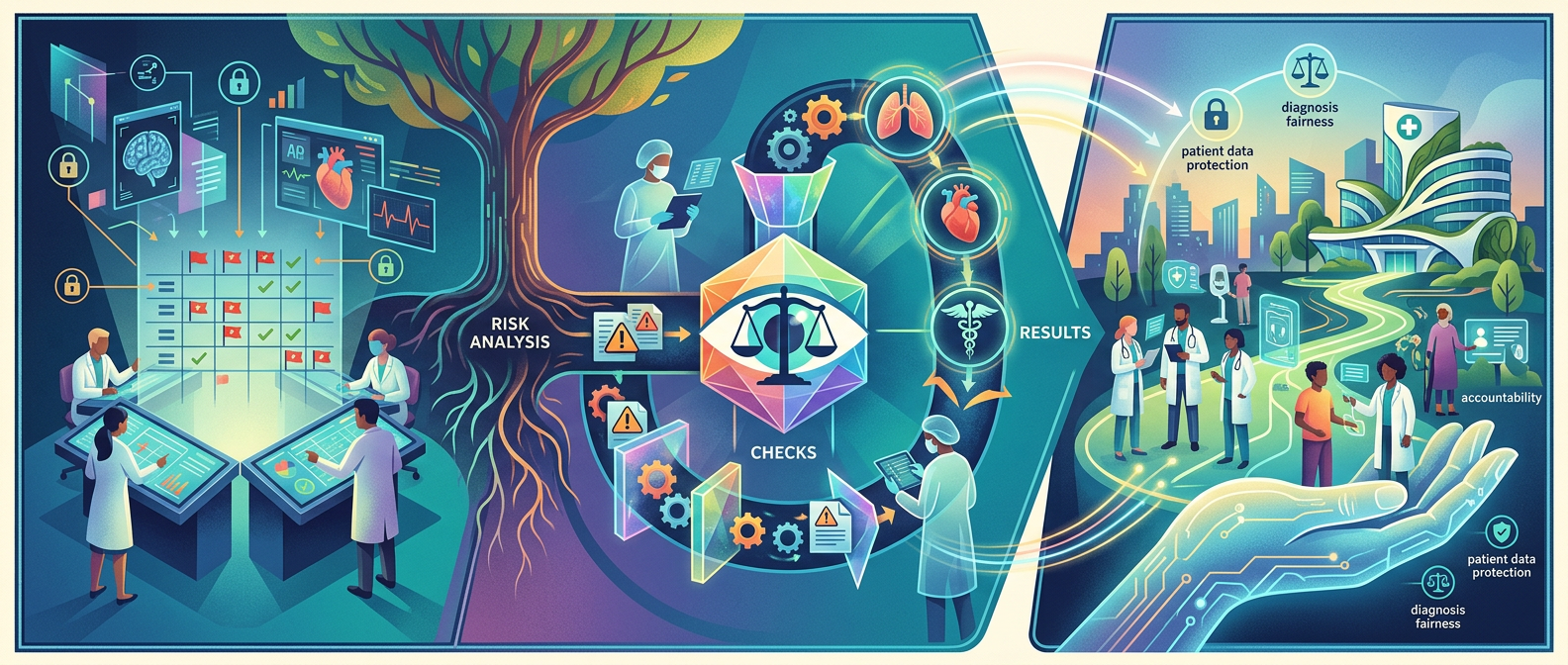
The proposed shared risk-check framework is aligned with the entire AI for Health lifecycle, from ideation and research and development to data procurement, model training, clinical validation, regulatory clearance, and post-market surveillance. It involves applying a common set of questions covering crucial aspects such as data representativeness and local validity. This initiative will likely lead to more robust and context-aware AI development in healthcare, fostering greater trust and adoption, particularly in underserved regions. The focus on practical implementation suggests an ongoing effort to integrate ethical considerations directly into the AI development process, pushing for more responsible innovation in global health.
KPMG Unveils Shared Risk-Check Framework for Ethical AI in Healthcare
KPMG has introduced a new shared risk-check framework aimed at advancing trusted, scalable, and equitable Artificial Intelligence (AI) applications within the healthcare sector. The announcement, made on November 13, 2026, highlights a shift in global discussions from solely focusing on AI safety to broader human-development concerns. This includes preserving human capabilities, incorporating diverse knowledge and cultural contexts, maintaining human accountability, ensuring responsible data use, and developing verifiable and inclusive AI systems. The framework is particularly designed to address the unique challenges faced by AI for Health in low- and middle-income countries (LMICs).
The rapid advancement of AI capabilities has outpaced the development of adequate safety evaluation, regulation, and institutional governance. This new framework is critical because AI models often rely on data predominantly from higher-income settings, which can lead to unreliable performance in different epidemiological and population contexts, especially in LMICs. Moreover, factors like connectivity, interoperable health information systems, and digital literacy significantly influence who can benefit from AI. By providing a structured approach, the framework seeks to bridge the existing gap between ethical principles and their practical implementation, promoting more reliable and equitable AI solutions worldwide.
The proposed shared risk-check framework is aligned with the entire AI for Health lifecycle, from ideation and research and development to data procurement, model training, clinical validation, regulatory clearance, and post-market surveillance. It involves applying a common set of questions covering crucial aspects such as data representativeness and local validity. This initiative will likely lead to more robust and context-aware AI development in healthcare, fostering greater trust and adoption, particularly in underserved regions. The focus on practical implementation suggests an ongoing effort to integrate ethical considerations directly into the AI development process, pushing for more responsible innovation in global health.
Sources
kpmg.com https://vertexaisearch.cloud.google.com/grounding-api-redirect/AUZIYQGyQjO8EYABziyKOPkFwNK1w56aG_7xQH1HlWOjcgyczsGlzO4KGTBDcrhJU2EiPTVwUd0kgAQUANQuP--z05Z7wmqDzfA1UNo3MsqeQ-uOv_By2wh7G_zYDCsGy_AvR2CKkTP5WOKHTh1tQDCDM4cPZD2yD9Ckv2UT0A1uWrmV1Hg=
#AIEthics #HealthcareAI #DigitalHealth #GlobalGovernance #AIforDevelopment