Global Semiconductor Equipment Sales Dramatically Shift Away From China Towards South Korea and Taiwan
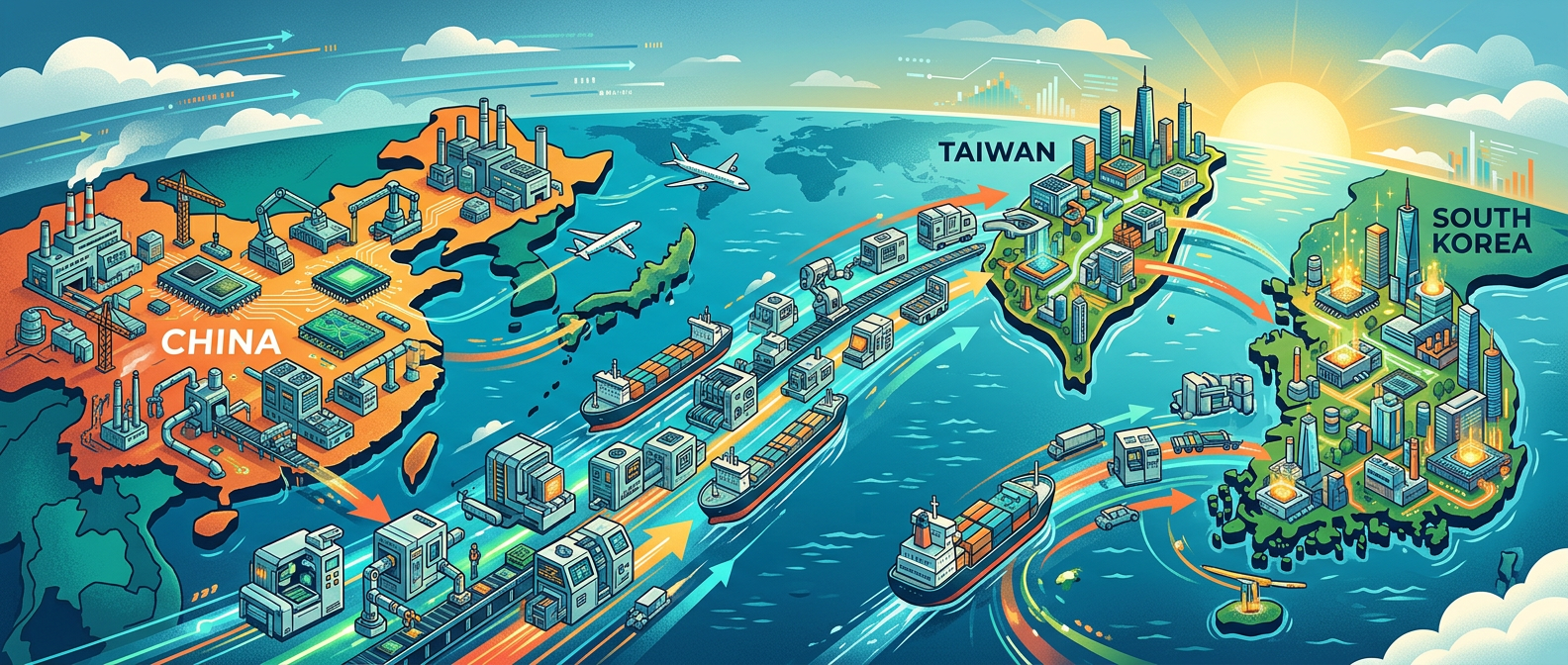
Major global semiconductor manufacturing equipment companies have reported a significant and uniform decline in their sales ratios to China during the third quarter of 2026 compared to the same period last year. This notable shift comes as US export controls continue to restrict China's access to advanced semiconductor equipment, effectively halting the sale of cutting-edge technology to the nation. Companies like ASML, Tokyo Electron, Lam Research, and KLA all experienced reduced proportions of their sales going to China. For example, ASML's sales ratio to China plummeted by 19 percentage points, while its sales to Taiwan and South Korea collectively exceeded China's share during this period.Conversely, South Korea and Taiwan have witnessed a substantial surge in equipment purchases. This increased investment is primarily driven by their aggressive expansion into AI semiconductor infrastructure. South Korean giants such as Samsung Electronics and SK Hynix are significantly boosting their high-bandwidth memory (HBM) and advanced DRAM production capacities, essential for AI applications. Similarly, Taiwan Semiconductor Manufacturing Company (TSMC) is rapidly scaling up its advanced foundry and packaging capabilities to meet the escalating global demand for AI hardware. This redirection of sales and investment highlights a fundamental reconfiguration of the global semiconductor supply chain.
This trend is expected to continue and intensify, further solidifying the technological divide in the semiconductor industry. China will likely accelerate its efforts to bolster its domestic semiconductor equipment industry to compensate for the restrictions imposed by overseas suppliers, potentially fostering a more self-reliant but less advanced indigenous ecosystem. Meanwhile, South Korea and Taiwan are poised to further cement their roles as critical global hubs for advanced AI chip manufacturing. These nations will benefit from sustained robust global demand for AI hardware, placing continuous pressure on them for rapid innovation to maintain their technological leadership and address potential future supply chain challenges.
Global Semiconductor Equipment Sales Dramatically Shift Away From China Towards South Korea and Taiwan
Major global semiconductor manufacturing equipment companies have reported a significant and uniform decline in their sales ratios to China during the third quarter of 2026 compared to the same period last year. This notable shift comes as US export controls continue to restrict China's access to advanced semiconductor equipment, effectively halting the sale of cutting-edge technology to the nation. Companies like ASML, Tokyo Electron, Lam Research, and KLA all experienced reduced proportions of their sales going to China. For example, ASML's sales ratio to China plummeted by 19 percentage points, while its sales to Taiwan and South Korea collectively exceeded China's share during this period.
Conversely, South Korea and Taiwan have witnessed a substantial surge in equipment purchases. This increased investment is primarily driven by their aggressive expansion into AI semiconductor infrastructure. South Korean giants such as Samsung Electronics and SK Hynix are significantly boosting their high-bandwidth memory (HBM) and advanced DRAM production capacities, essential for AI applications. Similarly, Taiwan Semiconductor Manufacturing Company (TSMC) is rapidly scaling up its advanced foundry and packaging capabilities to meet the escalating global demand for AI hardware. This redirection of sales and investment highlights a fundamental reconfiguration of the global semiconductor supply chain.
This trend is expected to continue and intensify, further solidifying the technological divide in the semiconductor industry. China will likely accelerate its efforts to bolster its domestic semiconductor equipment industry to compensate for the restrictions imposed by overseas suppliers, potentially fostering a more self-reliant but less advanced indigenous ecosystem. Meanwhile, South Korea and Taiwan are poised to further cement their roles as critical global hubs for advanced AI chip manufacturing. These nations will benefit from sustained robust global demand for AI hardware, placing continuous pressure on them for rapid innovation to maintain their technological leadership and address potential future supply chain challenges.
Sources
chosun.com https://vertexaisearch.cloud.google.com/grounding-api-redirect/AUZIYQGz0RzGZAWt6mSZLEgjTLVwMool2sYfseRFXrNmALJfHKhFGRFz19FnDW6EbUu721xfyWHaTIsbo79raLmiUq-tmBLg2w6EYuHzHK8RG82Cpyk9tiTcBQpkT-fki1SC25jbNzi4GbbBJ_58b9Aoi4a_yM-phsPb-7g9OxOUQTE5dsrr9YZeCt-csKL_vw==
#SemiconductorIndustry #AITechnology #GlobalTrade #ChipManufacturing #SupplyChain