Elon Musk's TeraFab Initiates Massive Equipment Orders for Ambitious 2032 Production Target
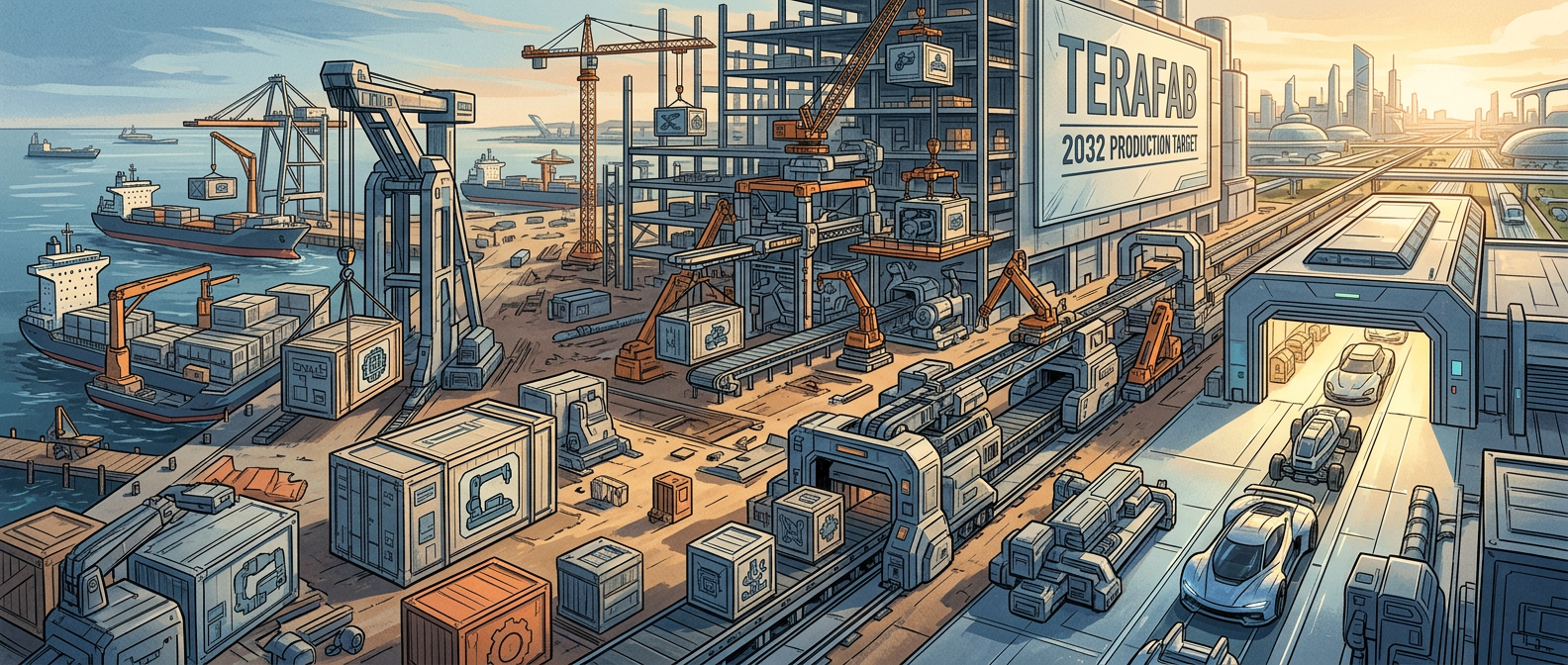
Elon Musk’s ambitious semiconductor factory project, TeraFab, has reportedly taken a significant step forward by placing substantial orders with Japanese semiconductor equipment suppliers. This development, first reported on November 9, 2026, indicates a tangible move beyond its conceptual phase, with an audacious goal of achieving a production capacity of 1 million silicon wafers per month by 2032. This represents a scale unprecedented in many existing semiconductor manufacturing facilities, highlighting the immense ambition behind the project.The semiconductor industry has largely maintained skepticism regarding TeraFab’s aggressive timelines, particularly given the typical three-year construction period for such plants and Musk’s entry into an industry where his companies previously lacked direct manufacturing experience. However, these new equipment orders are compelling the industry to regard TeraFab as a serious, albeit unconventional, contender. The sheer volume of the orders, coupled with unusually tight delivery deadlines, is creating considerable disruption, with one Japanese semiconductor supplier executive reportedly describing the demands as “absurd” while acknowledging the necessity to respond. The ultimate aim is to produce computational semiconductors equivalent to 1 terawatt annually, specifically to cater to the escalating demands of artificial intelligence and robotics applications for Tesla and SpaceX.
This strategic move by Tesla and SpaceX signals a profound commitment to vertically integrate their AI and robotics semiconductor supply chain, potentially diminishing their reliance on external foundries. While the traditional semiconductor industry navigates these unusual pressures, the successful execution of TeraFab’s plans could fundamentally reshape the global chip manufacturing landscape by introducing a new, high-volume player. The coming years will be crucial in observing how existing suppliers adapt and if TeraFab can surmount the formidable logistical and technical hurdles to achieve its ambitious production milestones.
Elon Musk's TeraFab Initiates Massive Equipment Orders for Ambitious 2032 Production Target
Elon Musk’s ambitious semiconductor factory project, TeraFab, has reportedly taken a significant step forward by placing substantial orders with Japanese semiconductor equipment suppliers. This development, first reported on November 9, 2026, indicates a tangible move beyond its conceptual phase, with an audacious goal of achieving a production capacity of 1 million silicon wafers per month by 2032. This represents a scale unprecedented in many existing semiconductor manufacturing facilities, highlighting the immense ambition behind the project.
The semiconductor industry has largely maintained skepticism regarding TeraFab’s aggressive timelines, particularly given the typical three-year construction period for such plants and Musk’s entry into an industry where his companies previously lacked direct manufacturing experience. However, these new equipment orders are compelling the industry to regard TeraFab as a serious, albeit unconventional, contender. The sheer volume of the orders, coupled with unusually tight delivery deadlines, is creating considerable disruption, with one Japanese semiconductor supplier executive reportedly describing the demands as “absurd” while acknowledging the necessity to respond. The ultimate aim is to produce computational semiconductors equivalent to 1 terawatt annually, specifically to cater to the escalating demands of artificial intelligence and robotics applications for Tesla and SpaceX.
This strategic move by Tesla and SpaceX signals a profound commitment to vertically integrate their AI and robotics semiconductor supply chain, potentially diminishing their reliance on external foundries. While the traditional semiconductor industry navigates these unusual pressures, the successful execution of TeraFab’s plans could fundamentally reshape the global chip manufacturing landscape by introducing a new, high-volume player. The coming years will be crucial in observing how existing suppliers adapt and if TeraFab can surmount the formidable logistical and technical hurdles to achieve its ambitious production milestones.
Sources
chosun.com https://vertexaisearch.cloud.google.com/grounding-api-redirect/AUZIYQGZ1pGXaAxYmEDOF55Hb9aPnMC1VzbBd4uYfKYA2xf1RO4v1cEDuzObUwUGpFZkV-F8BJXlvXlVb6dwACDf7qR4T2ysVjggCODJBVek6mJkIsIosltVvPxtNlZwcWgCY-qZRv3CFkYsmJbrQloJADYwwKIIfdgtfpumXLD6cLhDmPY9I3Hxaw0rug==
#SemiconductorIndustry #ArtificialIntelligence #ElonMusk #TeraFab #GlobalSupplyChain