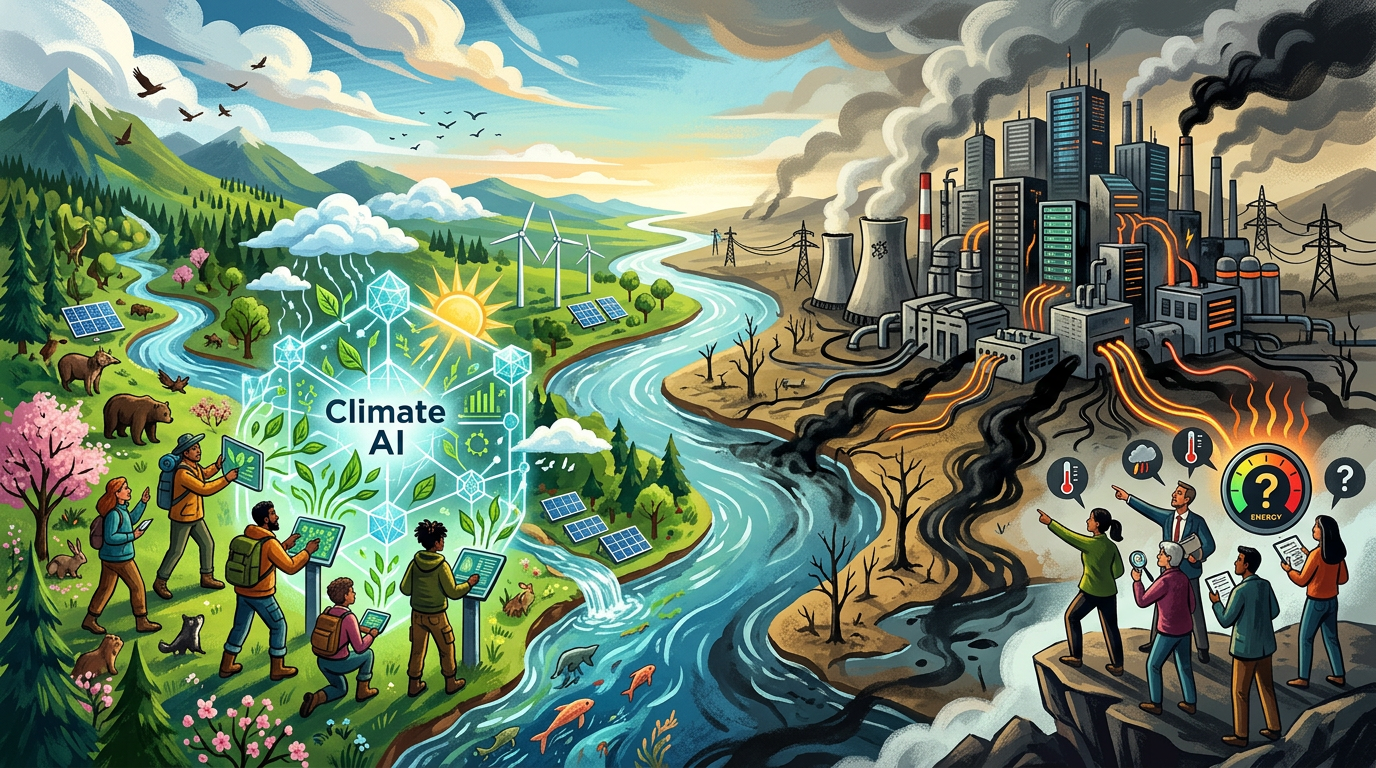
Environmental Groups Champion AI for Climate While Urging Accountability for its Footprint
A significant report emerging on November 7, 2026, highlights a pivotal moment in the intersection of artificial intelligence and environmental advocacy: conservation groups are increasingly deploying AI for climate action while simultaneously vocalizing serious concerns about the technology's burgeoning ecological cost. Coverage across major technology and finance outlets revealed a dual engagement where environmental organizations actively leverage AI for tasks like climate data analysis, forest-fire tracking, and wildlife monitoring, even as they press the industry on the escalating electricity, water, and emissions associated with AI data centers. A recent survey confirmed that every one of the 15 conservation and development organizations studied utilized AI, yet each also expressed apprehension regarding its environmental footprint.This development is critical because it underscores a growing tension between AI's potential as a powerful tool for environmental solutions and the substantial resources required to power its infrastructure. The reports project alarming increases in data center electricity consumption, potentially doubling to 950 terawatt-hours by 2030, alongside a projected doubling of water consumption to 1.2 trillion liters annually. This dual stance from environmental groups signals a turning point, demanding that the digital technology sector, particularly AI builders and data center operators, confront the sustainability challenges inherent in their rapid expansion. The issue moves beyond abstract discussions to direct demands from stakeholders actively engaged in climate action.
Looking ahead, this intensified scrutiny from environmental advocacy groups is expected to drive more urgent calls for regulatory action concerning data center energy and water usage. The industry will likely face increased pressure to invest in greener AI infrastructure, including renewable energy sources and advanced cooling technologies to reduce water consumption. This dynamic will profoundly influence investment strategies, grid management, and the overall development trajectory of AI, pushing for more transparent reporting of environmental impacts and greater accountability from tech giants. The dialogue will shift from whether AI infrastructure is inherently good or bad, to how it can be developed and operated sustainably and equitably.
Environmental Groups Champion AI for Climate While Urging Accountability for its Footprint
A significant report emerging on November 7, 2026, highlights a pivotal moment in the intersection of artificial intelligence and environmental advocacy: conservation groups are increasingly deploying AI for climate action while simultaneously vocalizing serious concerns about the technology's burgeoning ecological cost. Coverage across major technology and finance outlets revealed a dual engagement where environmental organizations actively leverage AI for tasks like climate data analysis, forest-fire tracking, and wildlife monitoring, even as they press the industry on the escalating electricity, water, and emissions associated with AI data centers. A recent survey confirmed that every one of the 15 conservation and development organizations studied utilized AI, yet each also expressed apprehension regarding its environmental footprint.
This development is critical because it underscores a growing tension between AI's potential as a powerful tool for environmental solutions and the substantial resources required to power its infrastructure. The reports project alarming increases in data center electricity consumption, potentially doubling to 950 terawatt-hours by 2030, alongside a projected doubling of water consumption to 1.2 trillion liters annually. This dual stance from environmental groups signals a turning point, demanding that the digital technology sector, particularly AI builders and data center operators, confront the sustainability challenges inherent in their rapid expansion. The issue moves beyond abstract discussions to direct demands from stakeholders actively engaged in climate action.
Looking ahead, this intensified scrutiny from environmental advocacy groups is expected to drive more urgent calls for regulatory action concerning data center energy and water usage. The industry will likely face increased pressure to invest in greener AI infrastructure, including renewable energy sources and advanced cooling technologies to reduce water consumption. This dynamic will profoundly influence investment strategies, grid management, and the overall development trajectory of AI, pushing for more transparent reporting of environmental impacts and greater accountability from tech giants. The dialogue will shift from whether AI infrastructure is inherently good or bad, to how it can be developed and operated sustainably and equitably.
Sources
shattered.io https://vertexaisearch.cloud.google.com/grounding-api-redirect/AUZIYQFbnq0f_mxI3cfL8c9L8UJimH96wARLrpblt5LoMrB_XIQYvfaUV11bmzgB0S4b6Cc4gy0bbTVYH60d1u0Bv1KQSwU0LLApvbHCgmSKL5U0GJcrAP3WgGIq_rTpZ3gMJ1MSyK-s7-sJ_ZbSi39bQVG2S1FOeBTxaAN-IikXJynmr8QldQZOoOMNeiCeWAW87DhP8M_NPzxCsIeQyw==
undp.org https://vertexaisearch.cloud.google.com/grounding-api-redirect/AUZIYQEPaFDVaAL_CPjM0QPmFIbkIVJmlbHkGN8Wb_-439135OceA_rXeEHNDFxstaxPBROZNKV4qsfgfo7mIVX61qI0C9xbw2ZoxChPnHYWZxYHo1kJi9vnsmQPZkmeLNxu_-2uBxuJdKZaQ84ll6HU_aw-GgxtyayvEMl4equiM249nPB3rQcHXh6-pTneo86Sn7LJv2GlbTa1ufvSzxHkBenVRmAGNA==
#AI #EnvironmentalImpact #DataCenters #SustainableTech #ClimateAction