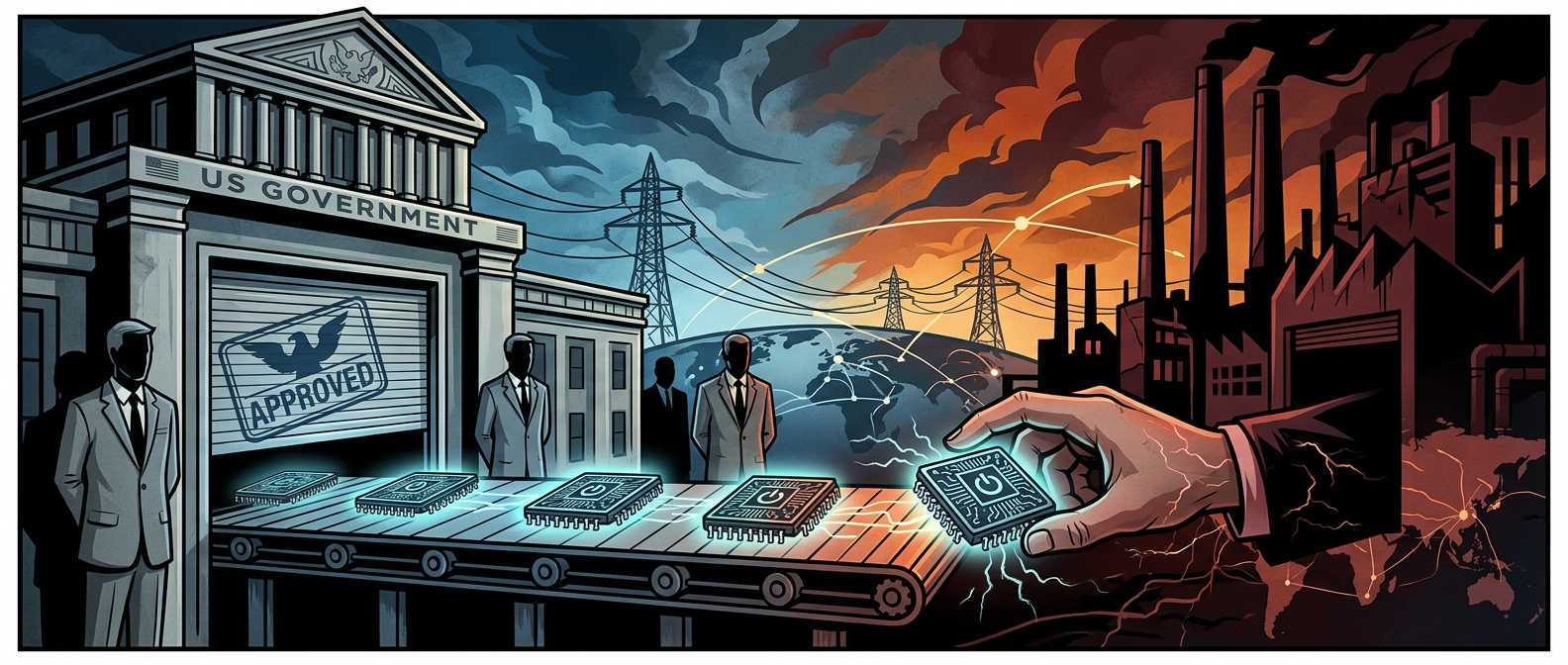
US Approval of Advanced Nvidia Chips to Questionable Chinese Firms Sparks National Security Alarm
A New York Times investigation, first reported on November 7, 2026, has revealed critical vulnerabilities in US export control mechanisms, showing that the Commerce Department approved sales of advanced Nvidia H200 artificial intelligence chips to Chinese companies with dubious connections. The probe specifically highlighted New Matrix, a Chinese firm established just 17 months prior, whose registered office appeared vacant upon inspection. Further corporate records linked New Matrix's owners to Wise Road, a Chinese private equity fund previously blacklisted by the US Commerce Department for aiding Beijing in acquiring strategically sensitive semiconductor companies.This revelation raises serious questions about the efficacy of Washington's national security screening processes and its ability to prevent advanced US technology from reaching entities that could bolster China's military capabilities or undermine national interests. The findings suggest that neither the Commerce Department nor Nvidia may have conducted sufficient due diligence on approved Chinese buyers, potentially allowing front companies to circumvent export restrictions. This incident underscores the ongoing challenges in managing the flow of dual-use technologies amid heightened geopolitical tensions between the United States and China.
The fallout from this investigation is expected to intensify demands for reforms within the Commerce Department's Bureau of Industry and Security. Congressional representatives have indicated they will seek testimony from both Commerce officials and Nvidia executives, pushing for more stringent verification protocols, including mandatory on-site inspections and real-time monitoring of approved buyers. For Nvidia, the incident could lead to increased regulatory scrutiny and reputational risks, potentially forcing the company to implement more robust, albeit costlier, customer screening. The broader AI and semiconductor industries will be watching closely, as any new restrictions or enforcement measures could significantly impact their operations in the lucrative Chinese market.
US Approval of Advanced Nvidia Chips to Questionable Chinese Firms Sparks National Security Alarm
A New York Times investigation, first reported on November 7, 2026, has revealed critical vulnerabilities in US export control mechanisms, showing that the Commerce Department approved sales of advanced Nvidia H200 artificial intelligence chips to Chinese companies with dubious connections. The probe specifically highlighted New Matrix, a Chinese firm established just 17 months prior, whose registered office appeared vacant upon inspection. Further corporate records linked New Matrix's owners to Wise Road, a Chinese private equity fund previously blacklisted by the US Commerce Department for aiding Beijing in acquiring strategically sensitive semiconductor companies.
This revelation raises serious questions about the efficacy of Washington's national security screening processes and its ability to prevent advanced US technology from reaching entities that could bolster China's military capabilities or undermine national interests. The findings suggest that neither the Commerce Department nor Nvidia may have conducted sufficient due diligence on approved Chinese buyers, potentially allowing front companies to circumvent export restrictions. This incident underscores the ongoing challenges in managing the flow of dual-use technologies amid heightened geopolitical tensions between the United States and China.
The fallout from this investigation is expected to intensify demands for reforms within the Commerce Department's Bureau of Industry and Security. Congressional representatives have indicated they will seek testimony from both Commerce officials and Nvidia executives, pushing for more stringent verification protocols, including mandatory on-site inspections and real-time monitoring of approved buyers. For Nvidia, the incident could lead to increased regulatory scrutiny and reputational risks, potentially forcing the company to implement more robust, albeit costlier, customer screening. The broader AI and semiconductor industries will be watching closely, as any new restrictions or enforcement measures could significantly impact their operations in the lucrative Chinese market.
Sources
jpost.com https://vertexaisearch.cloud.google.com/grounding-api-redirect/AUZIYQHNmmJ3YbZ7BqLSc4VmYJkVm_5lFPm17i9KWhsnUn7PLPiyJhY393aOEt8YlBNoWXqFyUJ6XRDRr_Agd1JNz6pdAkisMtuv2qdOLoBytIFqmf2eYMzgVHIfY-o1d6yywgTOYNH2NNCWZEEj7USZ9DiJxSgC087oeQsHhJdqc7_texeKSoAX8TwsQyE=
emergent.sh https://vertexaisearch.cloud.google.com/grounding-api-redirect/AUZIYQGe9MrbnFT4EyyMwVNVCQDz5i1GVJdTrikmqAcYcWQNTEjyKlgT9_pRxWsBjSQktvtFOEcXsEcjxBPhPR8tZpEHRUBLcJHjmy6YeN0wHuCv6kyFBNiJPAWSV2Q12HGYUet6TOgvscgwrId66H5W8pAOpdvs-xRJWYNlLrw=
securityboulevard.com https://vertexaisearch.cloud.google.com/grounding-api-redirect/AUZIYQHP6Fp0ucexlnDYfB-z0xxEOMD7gl9SsWNlyZqLcWRQfYK5arT5ZBIMffDM6KsSanVhcGdEOD86tUCBq6SUOrMUsTbjHhgvfFPgXvXFBQ9mRdxxLt_nnzaA22vjziumor-Djus6AReWPGWCsmyubXrOzWIOtOfbfGET1oZLYfT2CvMldU0dwlg-AjeD1nO7Y2z09frVQsyJghRg6UJM7Qe_87HQ0tMhPMODrzfW2pKXdVBNOmONiV6-r8w=
#AIChips #NationalSecurity #ExportControls #USChinaTech #Nvidia