Mercedes-Benz Shifts to AI-Powered Vehicle Development, Targeting Faster Innovation
Stuttgart, Germany – Mercedes-Benz officially announced on November 6, 2026, a significant strategic shift towards artificial intelligence (AI)-powered vehicle development. The German luxury automaker aims to integrate AI across its design, simulation, and testing phases to accelerate its traditional 48 to 60-month development cycle by up to 40 percent. This move comes in response to rapid innovation cycles, particularly from Chinese automakers, which are posing an increasing competitive threat in the global luxury car market.The company's leadership acknowledged during a November 2026 investor briefing that maintaining the current development pace risked eroding market share, especially in China. Chinese competitors have been setting new benchmarks by incorporating over-the-air software updates, advanced driver-assistance systems, and sophisticated infotainment platforms as standard features across mid-tier vehicles, functionalities Mercedes-Benz often positions as premium upgrades. This technology perception gap is a key challenge the new AI acceleration strategy seeks to address.
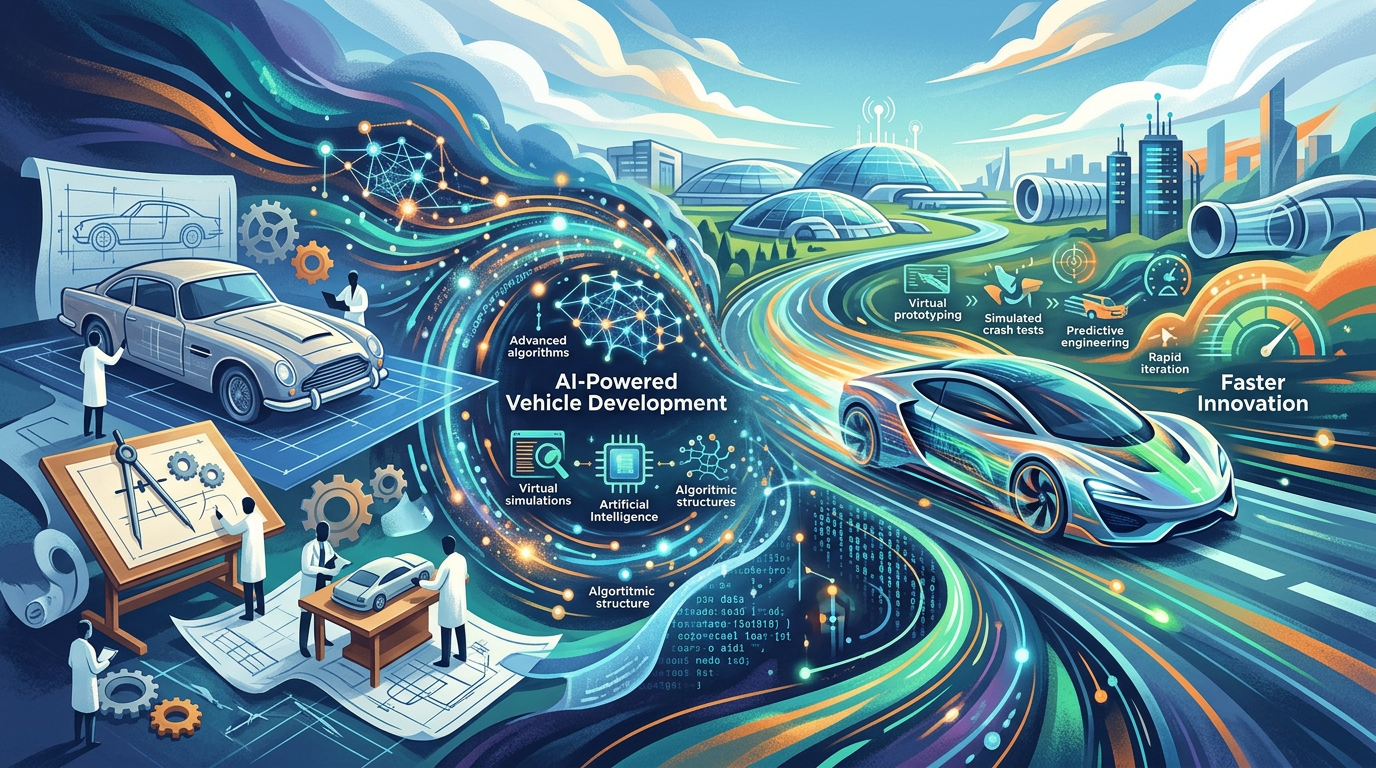
Mercedes-Benz plans to deploy AI in three critical development areas. First, generative design algorithms will be utilized to produce numerous aerodynamic and structural variations based on performance parameters, a process that traditionally consumed months of manual CAD work. Second, AI-driven simulations will largely replace physical prototype testing for aspects such as crash safety, thermal management, and noise-vibration-harshness analysis, significantly reducing the need for expensive pre-production units. Finally, machine learning models will predict component reliability and potential warranty issues by analyzing historical data gathered from two decades of vehicle telemetry.
The AI development initiative was formally launched during Mercedes-Benz's November 2026 quarterly business update. Company executives confirmed that AI tools are already in pilot programs at their design centers in Stuttgart and Sindelfingen. A full rollout is anticipated across all global engineering teams by the second quarter of 2027. The automaker emphasized that while AI will play a transformative role, it is intended to augment and empower human engineers rather than replace them, fostering a more efficient and innovative development ecosystem.
Mercedes-Benz Shifts to AI-Powered Vehicle Development, Targeting Faster Innovation
Stuttgart, Germany – Mercedes-Benz officially announced on November 6, 2026, a significant strategic shift towards artificial intelligence (AI)-powered vehicle development. The German luxury automaker aims to integrate AI across its design, simulation, and testing phases to accelerate its traditional 48 to 60-month development cycle by up to 40 percent. This move comes in response to rapid innovation cycles, particularly from Chinese automakers, which are posing an increasing competitive threat in the global luxury car market.
The company's leadership acknowledged during a November 2026 investor briefing that maintaining the current development pace risked eroding market share, especially in China. Chinese competitors have been setting new benchmarks by incorporating over-the-air software updates, advanced driver-assistance systems, and sophisticated infotainment platforms as standard features across mid-tier vehicles, functionalities Mercedes-Benz often positions as premium upgrades. This technology perception gap is a key challenge the new AI acceleration strategy seeks to address.
Mercedes-Benz plans to deploy AI in three critical development areas. First, generative design algorithms will be utilized to produce numerous aerodynamic and structural variations based on performance parameters, a process that traditionally consumed months of manual CAD work. Second, AI-driven simulations will largely replace physical prototype testing for aspects such as crash safety, thermal management, and noise-vibration-harshness analysis, significantly reducing the need for expensive pre-production units. Finally, machine learning models will predict component reliability and potential warranty issues by analyzing historical data gathered from two decades of vehicle telemetry.
The AI development initiative was formally launched during Mercedes-Benz's November 2026 quarterly business update. Company executives confirmed that AI tools are already in pilot programs at their design centers in Stuttgart and Sindelfingen. A full rollout is anticipated across all global engineering teams by the second quarter of 2027. The automaker emphasized that while AI will play a transformative role, it is intended to augment and empower human engineers rather than replace them, fostering a more efficient and innovative development ecosystem.
Sources
emergent.sh https://vertexaisearch.cloud.google.com/grounding-api-redirect/AUZIYQHMKvYhjayeY5Hlk1E9chjNiNF0pcrj9kMPQ4unNcDf0uwMJ6yQwFobouIrS_yBP3IrQEW6tiS4hnD_jnWNuDFL_a6LADoJ5_NmMV6YL8Z03V2WaZXB93H2nSNh8USv1waT8MDepe8ll9l_sSHnUV-s6lJrflHoYjykQbJeHQ==
#ArtificialIntelligence #AutomotiveTech #DigitalTransformation #GlobalCompetition