Nvidia Faces Significant AI Chip Backlog in Hong Kong Due to China's Import Restrictions
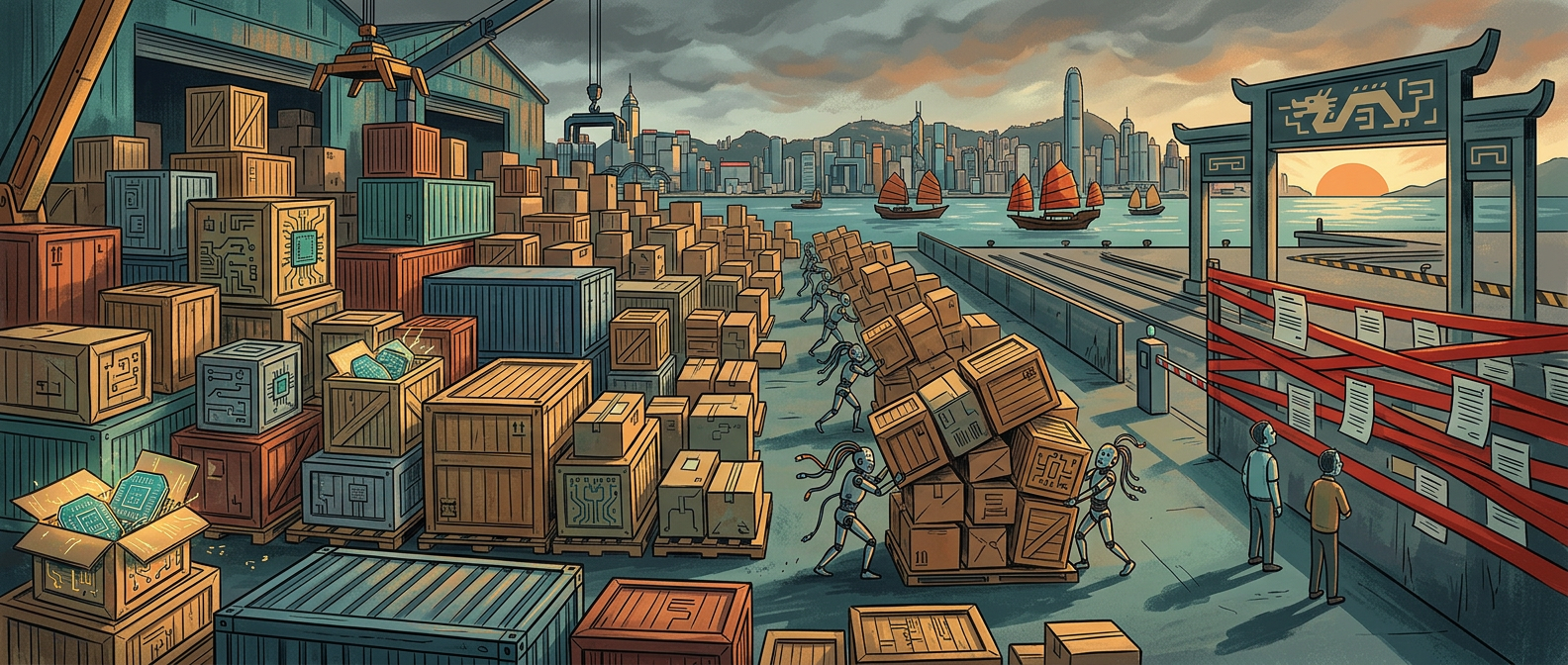
A substantial stockpile of approximately 600,000 Nvidia H200 artificial intelligence chips is currently held in Hong Kong, unable to reach mainland China. This significant bottleneck stems from Beijing's sustained restrictions on large-scale imports of advanced AI chips, despite an escalating demand from Chinese technology firms. The situation underscores the delicate balance China is attempting to strike between accelerating its domestic AI development and its strategic imperative to lessen its reliance on US technology.The H200 chips, while not Nvidia's most recent iteration, remain crucial for advanced AI development due to their powerful computing capabilities and comprehensive software ecosystem. These attributes are currently difficult to replicate with Chinese alternatives, particularly for the rigorous demands of training complex AI models. The resulting supply constraints have already manifested in severe price inflation within China's unofficial markets, with reports indicating an eight-card H200 server was valued at over six million yuan (US$900,000) by late October—a threefold increase from the previous year. This logjam vividly illustrates the profound impact of geopolitical tensions on the global technology supply chain and the pace of AI innovation.
Looking ahead, the immediate future remains uncertain. While limited shipments have been allowed in recent months, enabling some major Chinese internet companies to secure about 10,000 H200 chips each, broader large-volume imports are still awaiting Beijing's green light. These restrictions, initially imposed by the US on advanced AI chip exports in 2022, are compelling Chinese companies to explore alternative procurement channels, often through intermediaries, which further inflates costs and could impede their AI advancements. With Nvidia's even newer Blackwell chips also under US export controls, the pressure on China to accelerate its indigenous semiconductor capabilities is intensifying, though its short-to-medium-term dependence on foreign technology is expected to persist.
Nvidia Faces Significant AI Chip Backlog in Hong Kong Due to China's Import Restrictions
A substantial stockpile of approximately 600,000 Nvidia H200 artificial intelligence chips is currently held in Hong Kong, unable to reach mainland China. This significant bottleneck stems from Beijing's sustained restrictions on large-scale imports of advanced AI chips, despite an escalating demand from Chinese technology firms. The situation underscores the delicate balance China is attempting to strike between accelerating its domestic AI development and its strategic imperative to lessen its reliance on US technology.
The H200 chips, while not Nvidia's most recent iteration, remain crucial for advanced AI development due to their powerful computing capabilities and comprehensive software ecosystem. These attributes are currently difficult to replicate with Chinese alternatives, particularly for the rigorous demands of training complex AI models. The resulting supply constraints have already manifested in severe price inflation within China's unofficial markets, with reports indicating an eight-card H200 server was valued at over six million yuan (US$900,000) by late October—a threefold increase from the previous year. This logjam vividly illustrates the profound impact of geopolitical tensions on the global technology supply chain and the pace of AI innovation.
Looking ahead, the immediate future remains uncertain. While limited shipments have been allowed in recent months, enabling some major Chinese internet companies to secure about 10,000 H200 chips each, broader large-volume imports are still awaiting Beijing's green light. These restrictions, initially imposed by the US on advanced AI chip exports in 2022, are compelling Chinese companies to explore alternative procurement channels, often through intermediaries, which further inflates costs and could impede their AI advancements. With Nvidia's even newer Blackwell chips also under US export controls, the pressure on China to accelerate its indigenous semiconductor capabilities is intensifying, though its short-to-medium-term dependence on foreign technology is expected to persist.
Sources
businesstoday.com.my https://vertexaisearch.cloud.google.com/grounding-api-redirect/AUZIYQGm72GWFln-TIpkpSJl4dYKmNvBXWPo3H8fMKrmQVnMlf3mWhvzKoMzunh5sGAMEUo-TGDC_5CzQHNHj8ZWs1YQGqXO6sK8NhE4LHFd9x1Mch585CBWtJdt-bsQoPnUaYoqedCHR_C3vxlsXCajB0nTO5Ga_ELeKnvOVDmYCyyLwKzxsdZ4V_aquhS6EHrjNfBT6OtyuNjQ_aDYsz_HRGS-Jy2R-U9U7CcZBUFmfYBfWCAfkYG3
#AIChips #SemiconductorSupplyChain #ChinaTech #Geopolitics #Nvidia