Voters Push Back Against AI Infrastructure Growth, Triggering Tech Sell-Off
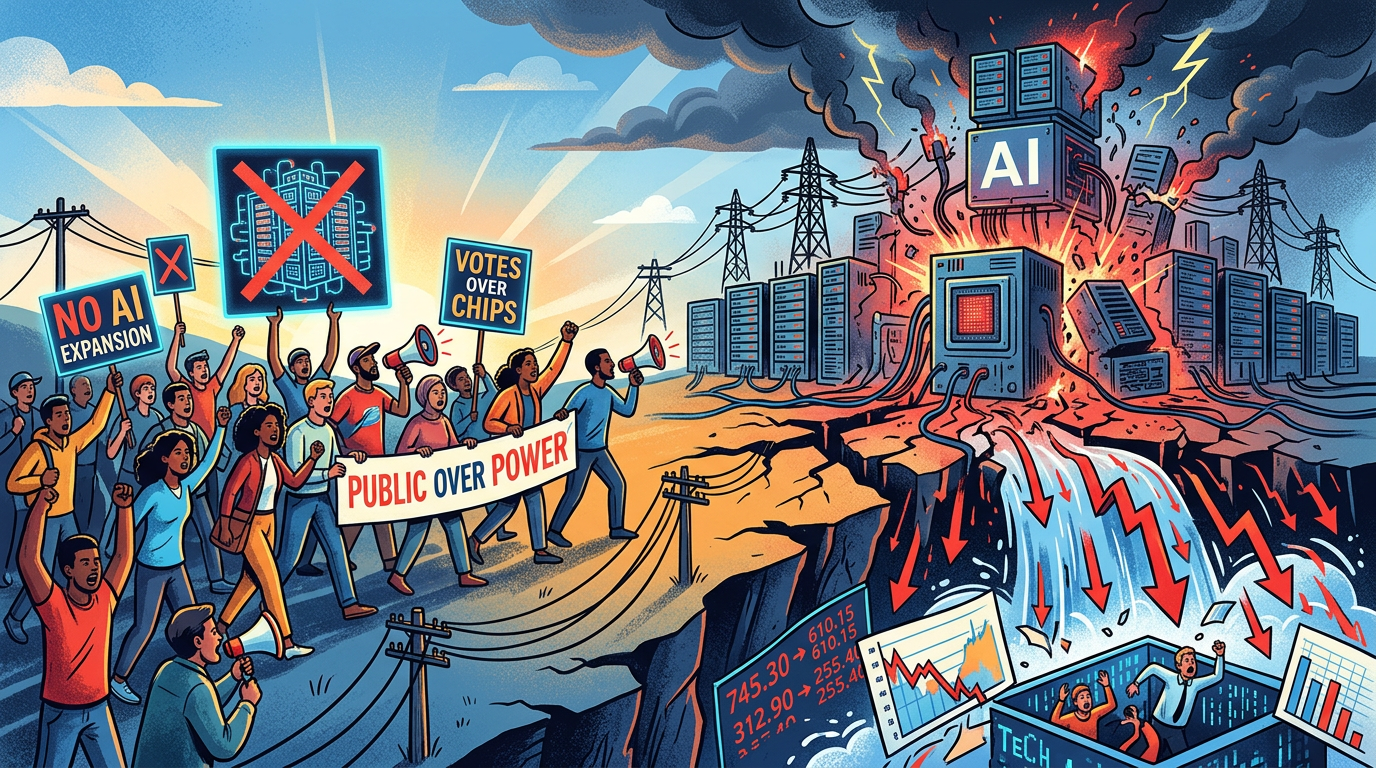
The landscape for artificial intelligence development in the United States faces significant shifts following the November 5, 2026, midterm elections. Voters across various localities approved ballot measures designed to restrict new data center construction, signaling growing public discontent with the rapid expansion of AI infrastructure. Simultaneously, Democrats, whose campaigns often focused on curbing AI development due to resource consumption concerns, secured majorities in both the House and Senate. This political upheaval immediately impacted financial markets, leading to a substantial sell-off in AI-related stocks, with chipmakers and AI infrastructure companies experiencing sharp declines.This voter-led rejection of unbridled data center growth marks a critical turning point for the AI industry. The widespread approval of development restrictions indicates that communities are increasingly viewing large-scale AI infrastructure as a drain on local resources rather than solely an engine of technological progress. Such sentiment could significantly slow the pace of data center construction, leading to increased operational costs for AI companies as they face greater regulatory hurdles and potentially limited locations for expansion. The sharp market reaction underscores investor anxiety about these emerging obstacles and the potential for a less favorable operating environment for AI firms.
The broader implications extend beyond immediate construction delays. This public and political pushback signals a fundamental shift in how AI development may be perceived and regulated in the coming years. Increased congressional scrutiny is anticipated, potentially accelerating demands for stricter AI safety standards, independent model evaluations, and greater accountability from data center developers regarding their environmental footprint, particularly concerning energy and water usage. This evolving political climate demands a more community-centric and sustainable approach from the tech sector.
Moving forward, the AI industry will likely need to adapt by prioritizing the development of more energy-efficient AI models and data center technologies. Companies may increase efforts to engage proactively with local communities and policymakers to address environmental concerns and build consensus for future projects. This could also lead to a strategic decentralization of AI infrastructure development or a greater focus on regions more amenable to such expansion, prompting a re-evaluation of current growth strategies. The emphasis will undoubtedly shift towards responsible and sustainable AI build-out.
Voters Push Back Against AI Infrastructure Growth, Triggering Tech Sell-Off
The landscape for artificial intelligence development in the United States faces significant shifts following the November 5, 2026, midterm elections. Voters across various localities approved ballot measures designed to restrict new data center construction, signaling growing public discontent with the rapid expansion of AI infrastructure. Simultaneously, Democrats, whose campaigns often focused on curbing AI development due to resource consumption concerns, secured majorities in both the House and Senate. This political upheaval immediately impacted financial markets, leading to a substantial sell-off in AI-related stocks, with chipmakers and AI infrastructure companies experiencing sharp declines.
This voter-led rejection of unbridled data center growth marks a critical turning point for the AI industry. The widespread approval of development restrictions indicates that communities are increasingly viewing large-scale AI infrastructure as a drain on local resources rather than solely an engine of technological progress. Such sentiment could significantly slow the pace of data center construction, leading to increased operational costs for AI companies as they face greater regulatory hurdles and potentially limited locations for expansion. The sharp market reaction underscores investor anxiety about these emerging obstacles and the potential for a less favorable operating environment for AI firms.
The broader implications extend beyond immediate construction delays. This public and political pushback signals a fundamental shift in how AI development may be perceived and regulated in the coming years. Increased congressional scrutiny is anticipated, potentially accelerating demands for stricter AI safety standards, independent model evaluations, and greater accountability from data center developers regarding their environmental footprint, particularly concerning energy and water usage. This evolving political climate demands a more community-centric and sustainable approach from the tech sector.
Moving forward, the AI industry will likely need to adapt by prioritizing the development of more energy-efficient AI models and data center technologies. Companies may increase efforts to engage proactively with local communities and policymakers to address environmental concerns and build consensus for future projects. This could also lead to a strategic decentralization of AI infrastructure development or a greater focus on regions more amenable to such expansion, prompting a re-evaluation of current growth strategies. The emphasis will undoubtedly shift towards responsible and sustainable AI build-out.
Sources
cnn.com https://vertexaisearch.cloud.google.com/grounding-api-redirect/AUZIYQFLtvYeBPR-o0MFuUKNcRzQa5m-1JHvjBGSIglCMaqF-TGKX0HfRk6pmMCTknmtawe3mDGfyhlOZuZ9ZMbBnjK1LNjPMHFtJFE-TXtgKFGWN2kYH1ZlzOk3VpldLwExBNwtdYOlDw6aCnnWOK18xhgeBUx3_1qua2b4xUEHag==
afp.com https://vertexaisearch.cloud.google.com/grounding-api-redirect/AUZIYQGFx-zLpnoZCUzWHAEKVJoTBr1yhnVGnPA1AbYoJ8lZS2UFSTvYF5-FlO0JIo3rXFe_qp1XlNJWNzyXJiyR7LtWWnZ0-JeZ8GQ126sVBHcZxyNDqEz-Wyozn-4EsVuQzndxdLaKMXzNLOa2DDv0tz3pbEFUP45-zt86e2TvNJuRCJGXrA==
axios.com https://vertexaisearch.cloud.google.com/grounding-api-redirect/AUZIYQFeutSQ7k6s19wYW0-qNr_Ex2CFVkqkMhg1Uo41A-2uCZAcauKOSYdFosuxlPzqo57M0N9LWZNifJSCURpYZIwJ6BkuzQt5ZxbALQdKrQouudU_8orsI4JZxIaOIxS_8ZitLv-KiaeP_WMOGGwAfnBVZNQ8r__xWypJ8nik
#AIInfrastructure #DataCenters #TechPolicy #ElectionImpact #SemiconductorIndustry