Schneider Electric and Arup Form Global Partnership to Tackle AI's Soaring Power Demands
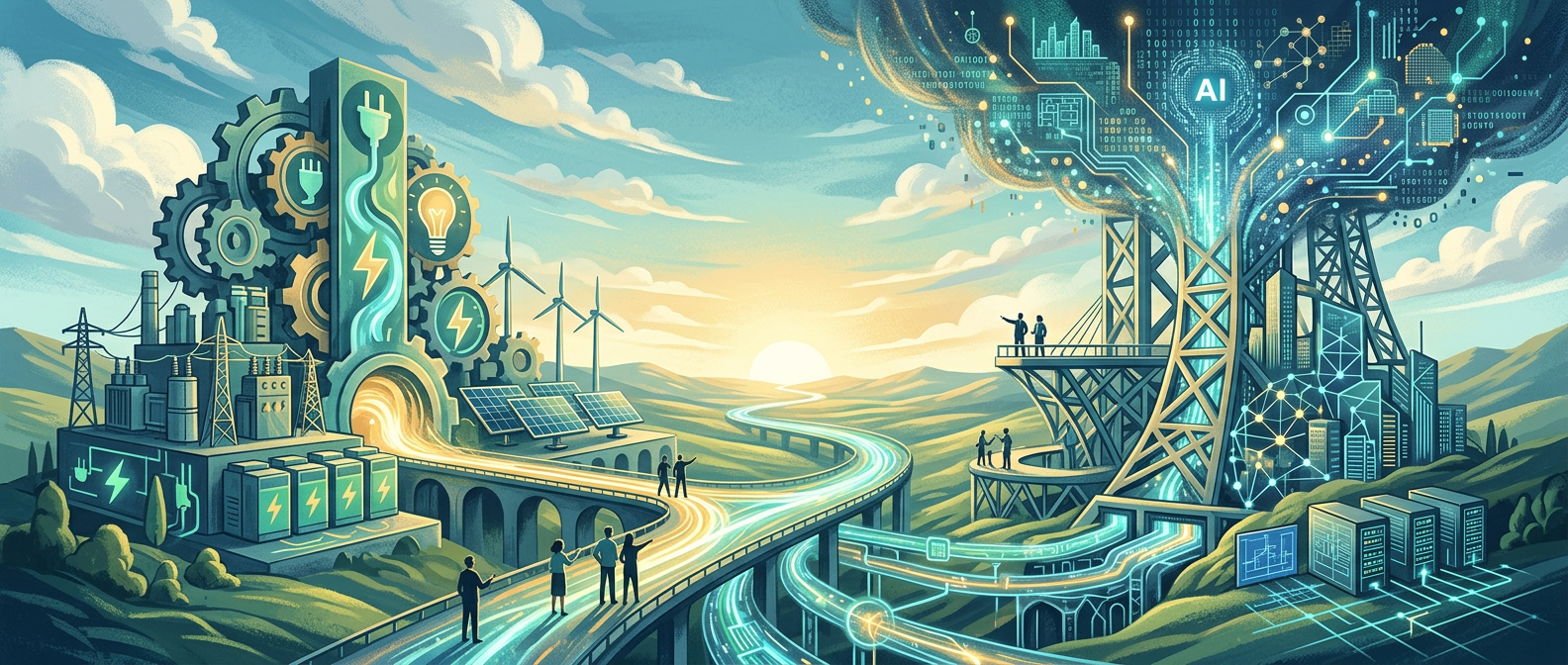
Global industrial giant Schneider Electric and renowned engineering firm Arup announced a new co-development partnership on November 17, 2026, aimed at tackling the escalating power demands of artificial intelligence infrastructure. This strategic alliance will focus on enhancing AI-driven physical system efficiency and expanding microgrid solutions globally. The collaboration brings together Schneider Electric's expertise in energy management hardware and software with Arup's extensive global engineering design capabilities.The partnership is a direct response to a critical bottleneck in the rapid expansion of AI: the significant gap between the pace at which computing capacity can be deployed and the much slower development of new grid-connected power generation. Projections indicate that global data center power demand is expected to more than double by 2030, forcing a structural shift towards on-site power generation solutions. This makes physical power resilience an inseparable component of modern digital infrastructure strategy.
By combining their respective strengths, Schneider Electric and Arup aim to co-develop next-generation technologies for a more sustainable, resilient, and low-carbon built environment. The focus on AI-driven tools for efficient physical systems and increased access to microgrids is crucial for enabling the accelerating buildout of "AI factories." For hybrid cloud and infrastructure operators, this partnership signals a vital move towards integrated solutions that can reduce complexity and overhead in meeting the unprecedented energy needs of advanced AI.
Schneider Electric and Arup Form Global Partnership to Tackle AI's Soaring Power Demands
Global industrial giant Schneider Electric and renowned engineering firm Arup announced a new co-development partnership on November 17, 2026, aimed at tackling the escalating power demands of artificial intelligence infrastructure. This strategic alliance will focus on enhancing AI-driven physical system efficiency and expanding microgrid solutions globally. The collaboration brings together Schneider Electric's expertise in energy management hardware and software with Arup's extensive global engineering design capabilities.
The partnership is a direct response to a critical bottleneck in the rapid expansion of AI: the significant gap between the pace at which computing capacity can be deployed and the much slower development of new grid-connected power generation. Projections indicate that global data center power demand is expected to more than double by 2030, forcing a structural shift towards on-site power generation solutions. This makes physical power resilience an inseparable component of modern digital infrastructure strategy.
By combining their respective strengths, Schneider Electric and Arup aim to co-develop next-generation technologies for a more sustainable, resilient, and low-carbon built environment. The focus on AI-driven tools for efficient physical systems and increased access to microgrids is crucial for enabling the accelerating buildout of "AI factories." For hybrid cloud and infrastructure operators, this partnership signals a vital move towards integrated solutions that can reduce complexity and overhead in meeting the unprecedented energy needs of advanced AI.
Sources
futurumgroup.com https://vertexaisearch.cloud.google.com/grounding-api-redirect/AUZIYQEN49qi2nltF8bVyRfMS4sCywOM__FOyfIXrtMwcWEmtJIJ1_LQsoCV9HzR6a6J8qQumuAP1Sj8FbDpLUHleODcrf8TmlMs56SZzNxEXMMUK1u2_69W33KMEZr1VKoixhD3Jdt2j_QjQ-fsQtqD0WFhb3GtBJZPmAqDw8UEatOT53YVEa2pIbOCxaeZ5IkvTdhiDtVIB50mKv8JA2g=
#AIEnergyEfficiency #MicrogridSolutions #DataCenterInfrastructure #SchneiderArup #SustainableAI
Singapore Unveils National AI Missions for Financial Services at FinTech Festival
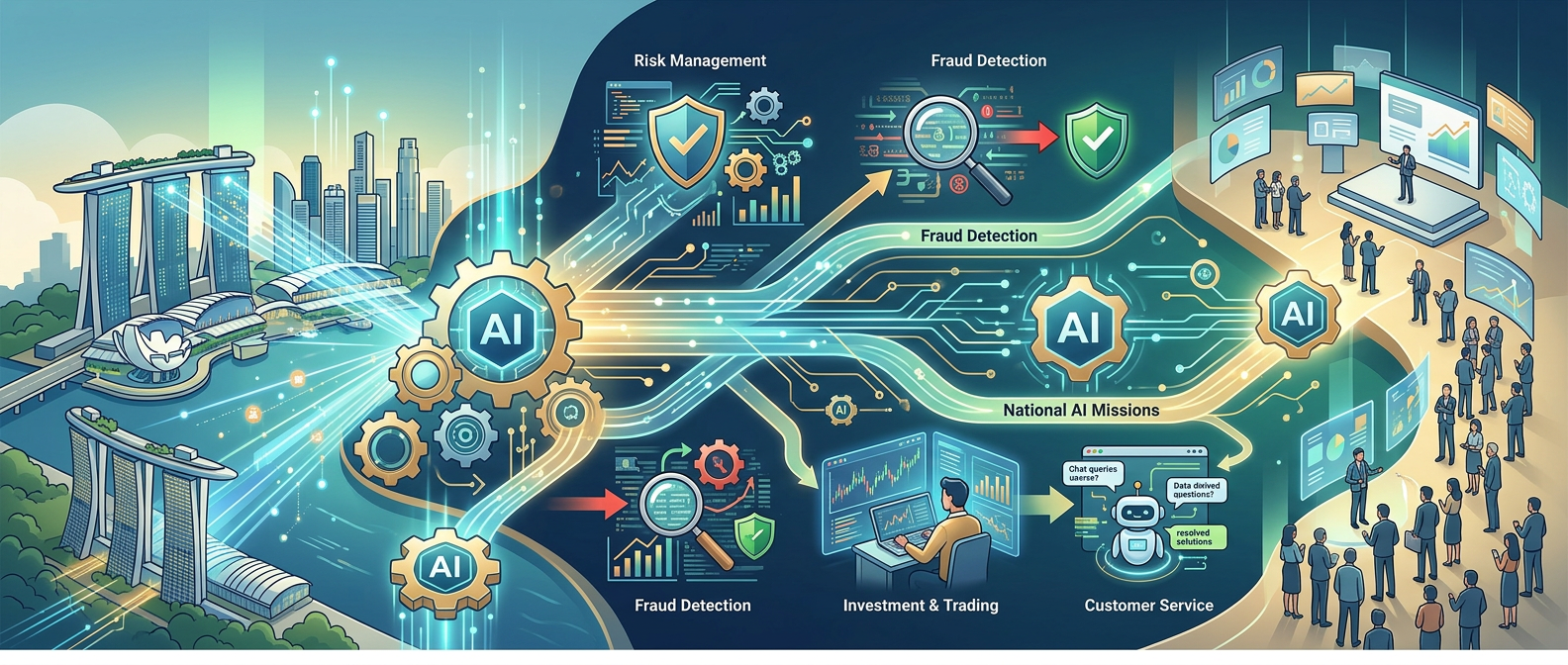
Singapore's Monetary Authority (MAS) and the Future of Finance Institute (FFI) have jointly launched significant initiatives under the National AI Missions for financial services. The announcement, made on November 18, 2026, at the Singapore FinTech Festival by Deputy Prime Minister Gan Kim Yong, outlines a strategic push to integrate artificial intelligence more deeply and securely into the nation's financial sector.The core objectives of these AI missions are multifaceted: to enhance financial crime prevention, improve access to financing for businesses, and ensure the safe and reliable transaction capabilities of AI agents. To support these goals, MAS and FFI are establishing an AI Innovation Arena, which will provide developers with synthetic data for building and testing AI solutions, particularly for scam detection. Additionally, an Agentic Money Sandbox will offer a controlled environment for financial institutions to experiment with AI agents conducting transactions using digital money, adhering to defined limits and safeguards.
These initiatives are poised to accelerate AI adoption within Singapore's financial ecosystem, fostering innovation while prioritizing security and responsible deployment. The Agentic Money Sandbox, in particular, signals a proactive approach to the emerging landscape of AI-driven financial transactions, enabling practical testing before live deployment. Launch partners for FFI, including DBS, OCBC, Standard Chartered, and UOB, are set to contribute their expertise, ensuring that the AI solutions developed address real-world industry needs and fortify Singapore's position as a leading FinTech hub.
Singapore Unveils National AI Missions for Financial Services at FinTech Festival
Singapore's Monetary Authority (MAS) and the Future of Finance Institute (FFI) have jointly launched significant initiatives under the National AI Missions for financial services. The announcement, made on November 18, 2026, at the Singapore FinTech Festival by Deputy Prime Minister Gan Kim Yong, outlines a strategic push to integrate artificial intelligence more deeply and securely into the nation's financial sector.
The core objectives of these AI missions are multifaceted: to enhance financial crime prevention, improve access to financing for businesses, and ensure the safe and reliable transaction capabilities of AI agents. To support these goals, MAS and FFI are establishing an AI Innovation Arena, which will provide developers with synthetic data for building and testing AI solutions, particularly for scam detection. Additionally, an Agentic Money Sandbox will offer a controlled environment for financial institutions to experiment with AI agents conducting transactions using digital money, adhering to defined limits and safeguards.
These initiatives are poised to accelerate AI adoption within Singapore's financial ecosystem, fostering innovation while prioritizing security and responsible deployment. The Agentic Money Sandbox, in particular, signals a proactive approach to the emerging landscape of AI-driven financial transactions, enabling practical testing before live deployment. Launch partners for FFI, including DBS, OCBC, Standard Chartered, and UOB, are set to contribute their expertise, ensuring that the AI solutions developed address real-world industry needs and fortify Singapore's position as a leading FinTech hub.
Sources
mas.gov.sg https://vertexaisearch.cloud.google.com/grounding-api-redirect/AUZIYQGxqzHmhBQTJj95MvX5giW1PaINeUvbzMsbK0sg7D5yp0Lebg-myyO3yUxVV-HPCvAeeqBvIlK6OqGHHXKldigartPyPddppBwNfsr_NYB9amZCahyKlYvvuCfjWXinHLl6uppNwGVhpkoM07bvC1KyJInd981chmtK-3AKaZK7mtT9U45RIMoZaJXCLHyzytLy89oHTDICuDP54SYBvnPgOJCyflaUOFzu6xyrQfv74cZzte5KhtsBgiEhKictwOLURV1_eT8=
#SingaporeFinTech #AIFinance #DigitalEconomy #MAS #FinancialInnovation
Key EU AI Act Provisions on Content Marking and Harmful Content Set for December 2 Implementation
Specific provisions of the European Union's Artificial Intelligence (AI) Act are poised to take effect on December 2, 2026. These include obligations for generative AI systems to comply with Article 50(2) marking requirements and the implementation of new prohibitions against AI systems generating non-consensual intimate or child abuse material. This imminent regulatory milestone follows the entry into force of the "Digital Omnibus on AI" (Regulation (EU) 2026/1744) in July 2026, which provided amendments and clarifications to the broader AI Act's implementation schedule.These upcoming provisions mark a significant stride in the regulation of AI content. The Article 50(2) marking requirement is designed to enhance transparency, helping users discern between authentic and AI-generated media. This measure is crucial for combating misinformation and maintaining trust in digital content. Furthermore, the prohibitions directly address the severe ethical and societal concerns associated with AI misuse, aiming to prevent the creation and dissemination of highly damaging content such as non-consensual intimate imagery and child sexual abuse material. The EU's proactive stance in establishing such a comprehensive and enforceable regulatory framework underscores its commitment to fostering responsible AI development and deployment globally.
Looking ahead, businesses operating generative AI systems within the EU that were placed on the market before August 2, 2026, must ensure full compliance with the Article 50(2) marking obligations by December 2, 2026. Concurrently, all providers and deployers of AI systems must verify that their technologies do not facilitate the creation of prohibited harmful content, as these new bans will be actively enforced from the same date. The EU AI Act anticipates further phased implementation, with obligations for high-risk AI systems in areas like employment and education (Annex III) scheduled for December 2, 2027, and for AI integrated into products (Annex I) by August 2, 2028. This tiered approach demonstrates a structured path towards comprehensive AI regulation, with continuous monitoring and guidance expected from EU authorities to facilitate adherence.
Key EU AI Act Provisions on Content Marking and Harmful Content Set for December 2 Implementation
Specific provisions of the European Union's Artificial Intelligence (AI) Act are poised to take effect on December 2, 2026. These include obligations for generative AI systems to comply with Article 50(2) marking requirements and the implementation of new prohibitions against AI systems generating non-consensual intimate or child abuse material. This imminent regulatory milestone follows the entry into force of the "Digital Omnibus on AI" (Regulation (EU) 2026/1744) in July 2026, which provided amendments and clarifications to the broader AI Act's implementation schedule.
These upcoming provisions mark a significant stride in the regulation of AI content. The Article 50(2) marking requirement is designed to enhance transparency, helping users discern between authentic and AI-generated media. This measure is crucial for combating misinformation and maintaining trust in digital content. Furthermore, the prohibitions directly address the severe ethical and societal concerns associated with AI misuse, aiming to prevent the creation and dissemination of highly damaging content such as non-consensual intimate imagery and child sexual abuse material. The EU's proactive stance in establishing such a comprehensive and enforceable regulatory framework underscores its commitment to fostering responsible AI development and deployment globally.
Looking ahead, businesses operating generative AI systems within the EU that were placed on the market before August 2, 2026, must ensure full compliance with the Article 50(2) marking obligations by December 2, 2026. Concurrently, all providers and deployers of AI systems must verify that their technologies do not facilitate the creation of prohibited harmful content, as these new bans will be actively enforced from the same date. The EU AI Act anticipates further phased implementation, with obligations for high-risk AI systems in areas like employment and education (Annex III) scheduled for December 2, 2027, and for AI integrated into products (Annex I) by August 2, 2028. This tiered approach demonstrates a structured path towards comprehensive AI regulation, with continuous monitoring and guidance expected from EU authorities to facilitate adherence.
Sources
casrai.org https://vertexaisearch.cloud.google.com/grounding-api-redirect/AUZIYQEqoYVk9Fy86JvV6WKhjdIQFALFa6S1iI5Fgi66EWMN1MQ4QScwPHuaX-2nFQk8edHficf6V2LLd5EBtd7LINZj9G5KlZPZiYFSH7NLPYEnMFxbm0dRBm_u3uT6qcbLzls_vPxv1RlTL_PVpBGi2WcEYvsPfJaL9V5CJ7B3fV-Y681hgw==
generationimpact.global https://vertexaisearch.cloud.google.com/grounding-api-redirect/AUZIYQGbJxXcS8YlyShEfUE8dIrwEISmWWXVYtkNbXuXKh4PpCRzn4haCa40Evi2o9tHUbIRjytXELUOoYYeuD9Ub3_kX9RuaqfFqokrvlZeF1AO12E04rbsXY7avgg4WG7_HnpMShp35ShT-yYX1tk-C-Us8j1l
alicelabs.ai https://vertexaisearch.cloud.google.com/grounding-api-redirect/AUZIYQGK8lbBGBMpCcZxrQywgil2S1eR57bdz4zUqhHu6mz9Hal7LeC8rMubqypD1CRICFxup-usq9cqXOtKB6mNmEfBVwn6puww5ukxjiokOKYNHbNreZphIx47i85Y4cpa0IrJmF7tH6eOpeWvjuT07Dopmcoe
#EUAIAct #DigitalRegulation #AITransparency #ContentModeration #AIEthics