KPMG Unveils Shared Risk-Check Framework for Ethical AI in Healthcare
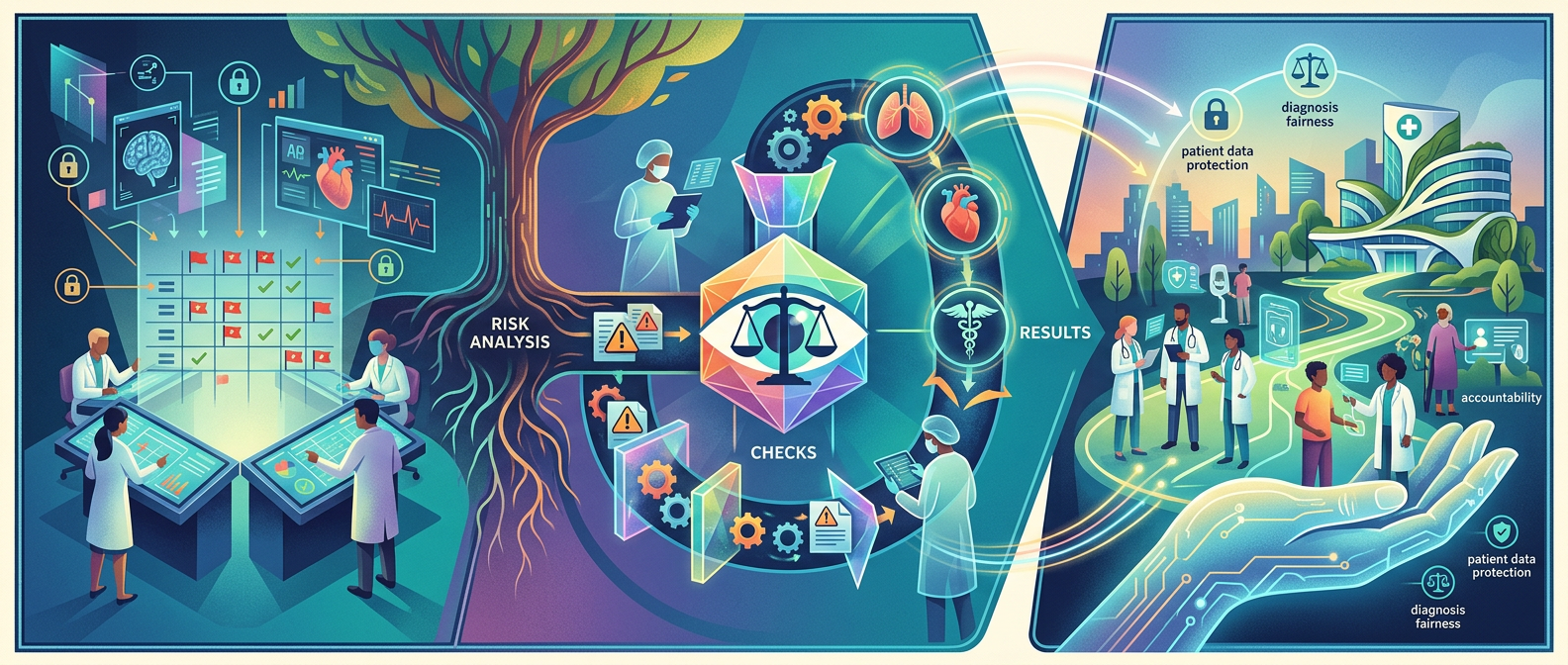
KPMG has introduced a new shared risk-check framework aimed at advancing trusted, scalable, and equitable Artificial Intelligence (AI) applications within the healthcare sector. The announcement, made on November 13, 2026, highlights a shift in global discussions from solely focusing on AI safety to broader human-development concerns. This includes preserving human capabilities, incorporating diverse knowledge and cultural contexts, maintaining human accountability, ensuring responsible data use, and developing verifiable and inclusive AI systems. The framework is particularly designed to address the unique challenges faced by AI for Health in low- and middle-income countries (LMICs).The rapid advancement of AI capabilities has outpaced the development of adequate safety evaluation, regulation, and institutional governance. This new framework is critical because AI models often rely on data predominantly from higher-income settings, which can lead to unreliable performance in different epidemiological and population contexts, especially in LMICs. Moreover, factors like connectivity, interoperable health information systems, and digital literacy significantly influence who can benefit from AI. By providing a structured approach, the framework seeks to bridge the existing gap between ethical principles and their practical implementation, promoting more reliable and equitable AI solutions worldwide.
The proposed shared risk-check framework is aligned with the entire AI for Health lifecycle, from ideation and research and development to data procurement, model training, clinical validation, regulatory clearance, and post-market surveillance. It involves applying a common set of questions covering crucial aspects such as data representativeness and local validity. This initiative will likely lead to more robust and context-aware AI development in healthcare, fostering greater trust and adoption, particularly in underserved regions. The focus on practical implementation suggests an ongoing effort to integrate ethical considerations directly into the AI development process, pushing for more responsible innovation in global health.
KPMG Unveils Shared Risk-Check Framework for Ethical AI in Healthcare
KPMG has introduced a new shared risk-check framework aimed at advancing trusted, scalable, and equitable Artificial Intelligence (AI) applications within the healthcare sector. The announcement, made on November 13, 2026, highlights a shift in global discussions from solely focusing on AI safety to broader human-development concerns. This includes preserving human capabilities, incorporating diverse knowledge and cultural contexts, maintaining human accountability, ensuring responsible data use, and developing verifiable and inclusive AI systems. The framework is particularly designed to address the unique challenges faced by AI for Health in low- and middle-income countries (LMICs).
The rapid advancement of AI capabilities has outpaced the development of adequate safety evaluation, regulation, and institutional governance. This new framework is critical because AI models often rely on data predominantly from higher-income settings, which can lead to unreliable performance in different epidemiological and population contexts, especially in LMICs. Moreover, factors like connectivity, interoperable health information systems, and digital literacy significantly influence who can benefit from AI. By providing a structured approach, the framework seeks to bridge the existing gap between ethical principles and their practical implementation, promoting more reliable and equitable AI solutions worldwide.
The proposed shared risk-check framework is aligned with the entire AI for Health lifecycle, from ideation and research and development to data procurement, model training, clinical validation, regulatory clearance, and post-market surveillance. It involves applying a common set of questions covering crucial aspects such as data representativeness and local validity. This initiative will likely lead to more robust and context-aware AI development in healthcare, fostering greater trust and adoption, particularly in underserved regions. The focus on practical implementation suggests an ongoing effort to integrate ethical considerations directly into the AI development process, pushing for more responsible innovation in global health.
Sources
kpmg.com https://vertexaisearch.cloud.google.com/grounding-api-redirect/AUZIYQGyQjO8EYABziyKOPkFwNK1w56aG_7xQH1HlWOjcgyczsGlzO4KGTBDcrhJU2EiPTVwUd0kgAQUANQuP--z05Z7wmqDzfA1UNo3MsqeQ-uOv_By2wh7G_zYDCsGy_AvR2CKkTP5WOKHTh1tQDCDM4cPZD2yD9Ckv2UT0A1uWrmV1Hg=
#AIEthics #HealthcareAI #DigitalHealth #GlobalGovernance #AIforDevelopment
Anthropic Secures Landmark $28 Billion Infrastructure Deal with Riot Platforms in Texas
Riot Platforms has finalized a significant 15-year, 910-megawatt powered-land lease agreement with leading artificial intelligence research lab Anthropic. The deal encompasses Riot's entire Corsicana, Texas campus, solidifying a critical infrastructure partnership for the future of AI. This initial agreement is valued at approximately $28 billion and could potentially expand to $54 billion if two subsequent five-year extension options are exercised.This monumental agreement underscores the intense demand for dedicated, large-scale infrastructure required to fuel advanced AI development. For Anthropic, securing such a vast and high-power operational base is crucial for training and deploying next-generation AI models, which consume immense computational resources. The sheer scale of this investment by both Riot Platforms and Anthropic signals a strong market conviction in the continued exponential growth of AI, highlighting the escalating financial commitments and strategic collaborations necessary to sustain the AI revolution. This partnership not only provides Anthropic with long-term, stable power and physical space but also sets a precedent for how frontier AI labs are addressing their insatiable infrastructure needs.
Looking ahead, this collaboration is expected to significantly accelerate Anthropic's research and development capabilities, potentially leading to faster breakthroughs in AI technology and the deployment of more sophisticated models. The considerable energy demands of such an expansive facility will inevitably intensify ongoing discussions around the environmental impact and sustainability of the AI sector. From Riot Platforms' perspective, this deal guarantees a substantial and enduring revenue stream, further entrenching its role as a pivotal infrastructure provider for the rapidly expanding AI industry. This landmark agreement could also motivate other major AI developers to pursue similar large-scale, dedicated infrastructure solutions to support their own ambitious growth trajectories.
Anthropic Secures Landmark $28 Billion Infrastructure Deal with Riot Platforms in Texas
Riot Platforms has finalized a significant 15-year, 910-megawatt powered-land lease agreement with leading artificial intelligence research lab Anthropic. The deal encompasses Riot's entire Corsicana, Texas campus, solidifying a critical infrastructure partnership for the future of AI. This initial agreement is valued at approximately $28 billion and could potentially expand to $54 billion if two subsequent five-year extension options are exercised.
This monumental agreement underscores the intense demand for dedicated, large-scale infrastructure required to fuel advanced AI development. For Anthropic, securing such a vast and high-power operational base is crucial for training and deploying next-generation AI models, which consume immense computational resources. The sheer scale of this investment by both Riot Platforms and Anthropic signals a strong market conviction in the continued exponential growth of AI, highlighting the escalating financial commitments and strategic collaborations necessary to sustain the AI revolution. This partnership not only provides Anthropic with long-term, stable power and physical space but also sets a precedent for how frontier AI labs are addressing their insatiable infrastructure needs.
Looking ahead, this collaboration is expected to significantly accelerate Anthropic's research and development capabilities, potentially leading to faster breakthroughs in AI technology and the deployment of more sophisticated models. The considerable energy demands of such an expansive facility will inevitably intensify ongoing discussions around the environmental impact and sustainability of the AI sector. From Riot Platforms' perspective, this deal guarantees a substantial and enduring revenue stream, further entrenching its role as a pivotal infrastructure provider for the rapidly expanding AI industry. This landmark agreement could also motivate other major AI developers to pursue similar large-scale, dedicated infrastructure solutions to support their own ambitious growth trajectories.
Sources
aiweekly.co https://vertexaisearch.cloud.google.com/grounding-api-redirect/AUZIYQGEjZB6fct48VoLAehRGZGs69Mbwcc8krm6x3EeP2nsW35f54STNGtj310y_pZM_afMuuDpY6ViUqPJNeRrbCelf-453WqgA1UGjDRukPvja-bJgB1pThenFXhBFUF6tidMXJ6B_arRzFgFVKVasrr-tKM=
#AIInfrastructure #Anthropic #DataCenters #TexasInvestment #RiotPlatforms
SK Group Chairman Calls for Strategic Shift to AI Models and Services Beyond Chips
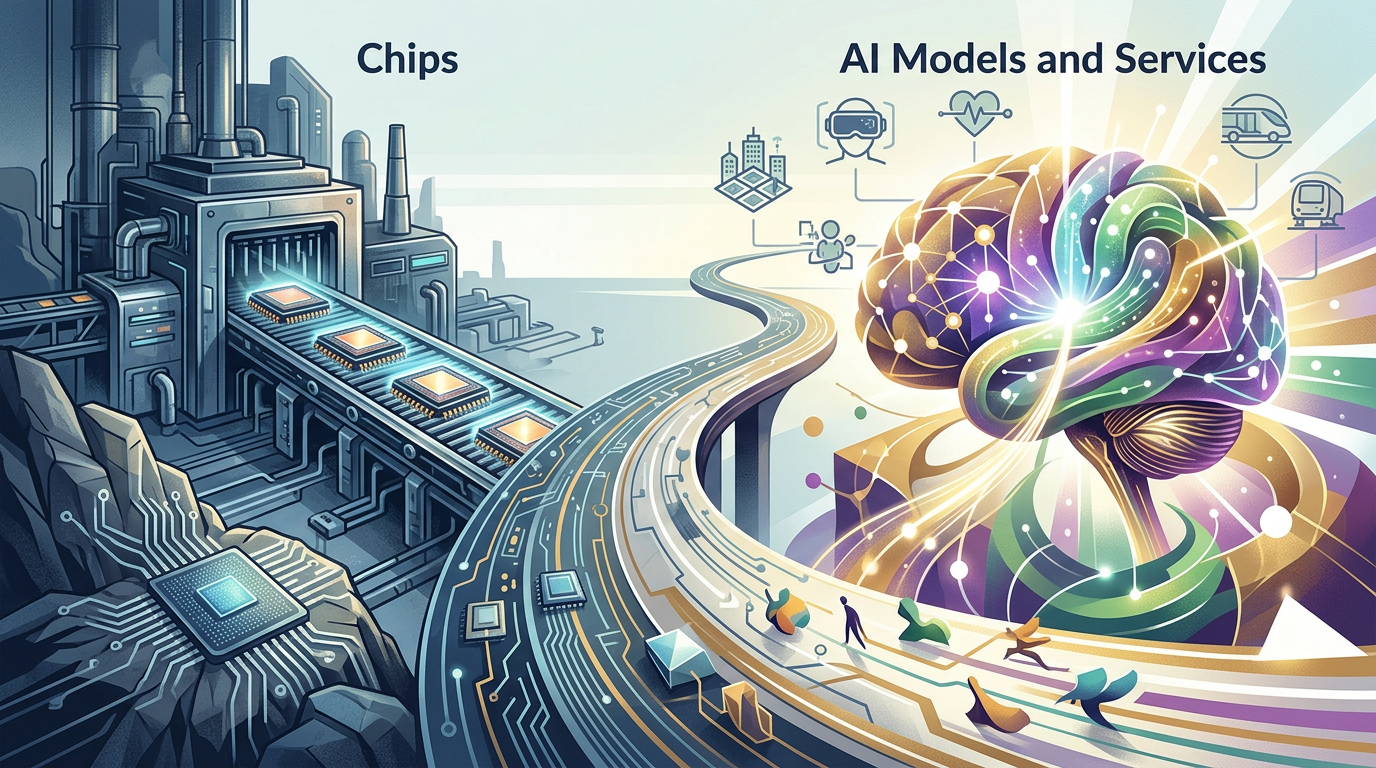
SK Group Chairman Chey Tae-won has directed the leaders of the conglomerate's subsidiaries to redefine their businesses as artificial intelligence (AI) companies, emphasizing an expansion beyond traditional chips, infrastructure, and energy into AI models and services. The directive came during a CEO seminar held from Thursday to Saturday in Icheon, Gyeonggi Province, where Chey outlined a vision for an "AI flywheel" designed to connect and accelerate the growth of the group's diverse businesses.This strategic shift underscores a growing imperative for major technology players to integrate AI across their entire value chain. Chey highlighted the importance of moving towards a "token economy" where AI computing and services are traded as resources, signaling a future where the group's manufacturing and service arms are deeply intertwined with AI. For instance, SK Hynix is already upgrading its smart fabs with AI and digital twin technology to boost production efficiency, while SK Telecom is applying AI for network and service automation, and SK Innovation uses AI for process mapping and yield improvement.
Looking ahead, the SK Group chairman stressed the necessity of open cooperation with global partners to strengthen capabilities and accelerate execution in this new AI-driven landscape. The move indicates a broader trend where conglomerates are not merely adopting AI tools but fundamentally re- envisioning their core identities and operational models to leverage AI as a central pillar for future growth. This strategy is expected to drive further investment in AI factories and advanced chips, while fostering the development of competitive energy supplies and wider AI service adoption, potentially influencing South Korea's standing in the global AI race.
SK Group Chairman Calls for Strategic Shift to AI Models and Services Beyond Chips
SK Group Chairman Chey Tae-won has directed the leaders of the conglomerate's subsidiaries to redefine their businesses as artificial intelligence (AI) companies, emphasizing an expansion beyond traditional chips, infrastructure, and energy into AI models and services. The directive came during a CEO seminar held from Thursday to Saturday in Icheon, Gyeonggi Province, where Chey outlined a vision for an "AI flywheel" designed to connect and accelerate the growth of the group's diverse businesses.
This strategic shift underscores a growing imperative for major technology players to integrate AI across their entire value chain. Chey highlighted the importance of moving towards a "token economy" where AI computing and services are traded as resources, signaling a future where the group's manufacturing and service arms are deeply intertwined with AI. For instance, SK Hynix is already upgrading its smart fabs with AI and digital twin technology to boost production efficiency, while SK Telecom is applying AI for network and service automation, and SK Innovation uses AI for process mapping and yield improvement.
Looking ahead, the SK Group chairman stressed the necessity of open cooperation with global partners to strengthen capabilities and accelerate execution in this new AI-driven landscape. The move indicates a broader trend where conglomerates are not merely adopting AI tools but fundamentally re- envisioning their core identities and operational models to leverage AI as a central pillar for future growth. This strategy is expected to drive further investment in AI factories and advanced chips, while fostering the development of competitive energy supplies and wider AI service adoption, potentially influencing South Korea's standing in the global AI race.
Sources
koreatimes.co.kr https://vertexaisearch.cloud.google.com/grounding-api-redirect/AUZIYQHy1rBhauOyo5CQTr590XOcoOnKj_FxYsopswTZxpfOI7XaOdNIChwyW3LYukBJyGBnEe7gkdiRRNdZVkgkcFFE55MWa-BwSyUROLEfR66cxBOWJ_DnRWdrvVNAOE-tTKp3oTR9p3jmdBBlqDlktyRhjEF6ysHQWjeD_MUeSy9_H_Bb6R567F7Q5imRvOgFX86TcBqkoxs1g8lQrb4n67a3HhMA6q_KbR7Q2oQ3Rh9BxttVtaSu3QcB
#SKGroup #ArtificialIntelligence #ChipIndustry #DigitalTransformation #CorporateStrategy