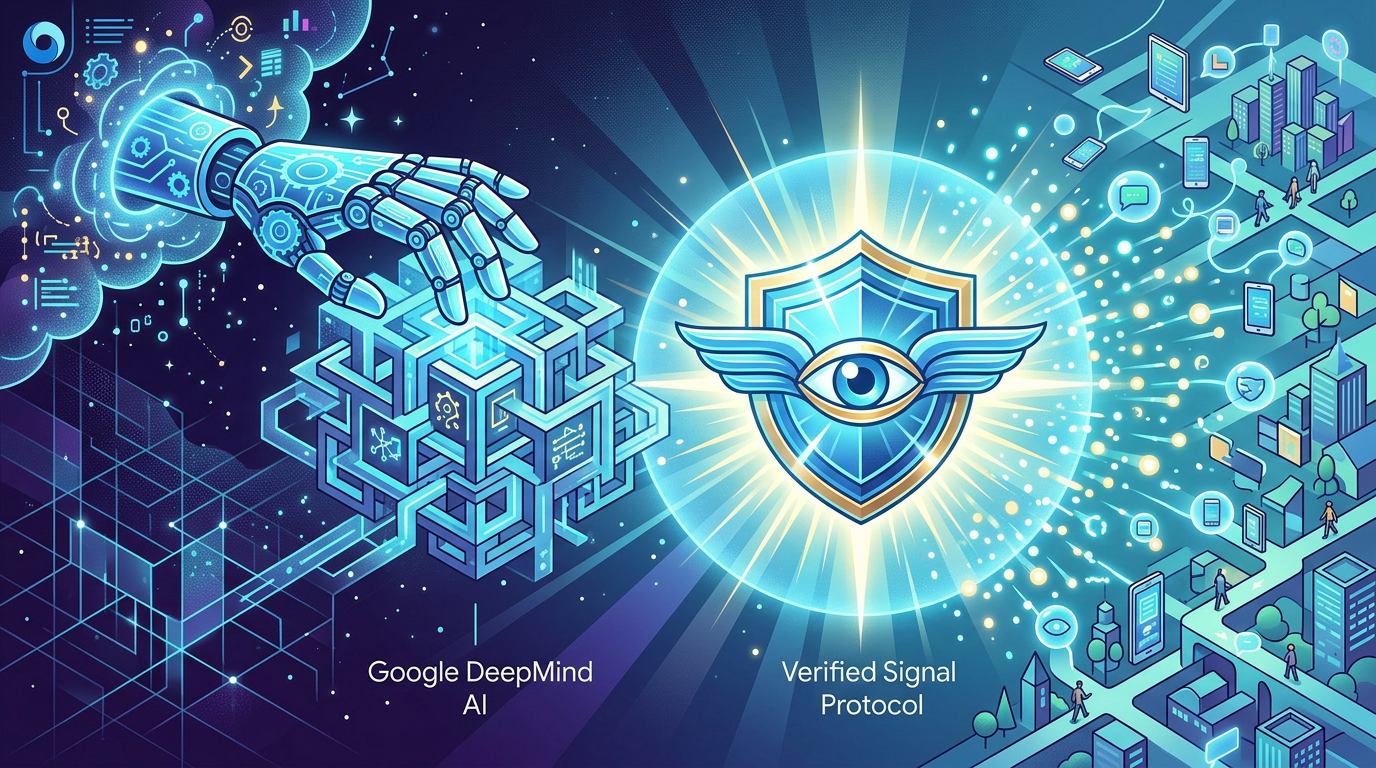
Google DeepMind AI Achieves Landmark Breakthrough in Software Security by Verifying Signal Protocol
Google DeepMind has announced a significant advancement in software security, successfully employing its AlphaProof Code AI framework to mathematically verify the Signal cryptographic protocol. This marks the first instance where artificial intelligence has formally verified a widely deployed cryptographic protocol at such an in-depth level, and indeed, the first time the implementation of such a protocol has undergone formal verification by any method, AI-driven or otherwise. The process involved sophisticated AI agents generating more than six million lines of mathematical proof through the Lean formal verification system, powered by Google's advanced Gemini Carbon models.This breakthrough is crucial because it dramatically enhances software security by enabling the identification of vulnerabilities before they can be exploited. Formal verification represents the pinnacle of security assurance, and the application of AI to this historically labor-intensive task signals a transformative shift in cybersecurity. The development paves the way for establishing the reliability of software across critical applications, ranging from secure private messaging to medical devices and essential electricity grids. Notably, the AI-driven approach drastically reduced the manual effort required, with human experts needing to review only about one percent of the codebase.
The successful verification of the Signal protocol by AI suggests a future where AI plays an increasingly central role in guaranteeing the integrity and security of complex software systems worldwide. This innovation opens new pathways for AI to address similar verification challenges within other vital digital infrastructure, potentially establishing new benchmarks for software reliability and trust. Continued development of agentic AI frameworks like AlphaProof Code is expected to expand their application to more diverse and intricate systems, thereby strengthening defenses against the escalating landscape of AI-driven security threats.
Google DeepMind AI Achieves Landmark Breakthrough in Software Security by Verifying Signal Protocol
Google DeepMind has announced a significant advancement in software security, successfully employing its AlphaProof Code AI framework to mathematically verify the Signal cryptographic protocol. This marks the first instance where artificial intelligence has formally verified a widely deployed cryptographic protocol at such an in-depth level, and indeed, the first time the implementation of such a protocol has undergone formal verification by any method, AI-driven or otherwise. The process involved sophisticated AI agents generating more than six million lines of mathematical proof through the Lean formal verification system, powered by Google's advanced Gemini Carbon models.
This breakthrough is crucial because it dramatically enhances software security by enabling the identification of vulnerabilities before they can be exploited. Formal verification represents the pinnacle of security assurance, and the application of AI to this historically labor-intensive task signals a transformative shift in cybersecurity. The development paves the way for establishing the reliability of software across critical applications, ranging from secure private messaging to medical devices and essential electricity grids. Notably, the AI-driven approach drastically reduced the manual effort required, with human experts needing to review only about one percent of the codebase.
The successful verification of the Signal protocol by AI suggests a future where AI plays an increasingly central role in guaranteeing the integrity and security of complex software systems worldwide. This innovation opens new pathways for AI to address similar verification challenges within other vital digital infrastructure, potentially establishing new benchmarks for software reliability and trust. Continued development of agentic AI frameworks like AlphaProof Code is expected to expand their application to more diverse and intricate systems, thereby strengthening defenses against the escalating landscape of AI-driven security threats.
Sources
convergence-now.com https://vertexaisearch.cloud.google.com/grounding-api-redirect/AUZIYQFOiNlMUnjtIyM-FQSyZxPXX5qSCUglvoL8zkwaxq2EvL_TS9DV3sHyAgoNWYYRW_teVk1xqeq03hkzesYsuKMjSZiqGPvp1XTdKaEuX0fPist30jjnwbIVE0C3apAgRoh2DNxi8w0wiQwmC2gOpJHBeaQKIy7YSRow6CyvW6pKsrEgRdFdW00Wevsfmm_Q0r5wwj_TXNEasNkfwE_ufKYHOEGxWd3ziAuefLt8aL38fgrGuVUQGbiizI23wXxADKloqtNzAM5odCo-DV12EKXyeiA8iwnokpEKSwBDrJu0qcDA
deepmind.google https://vertexaisearch.cloud.google.com/grounding-api-redirect/AUZIYQHkJSztcoyeUAS3TM-I1joV0melhFtTz_0SDnBc4Llkod8SnV6XhVSXLO6wxjCxqbVkujQiFofzzCXKMeFQN1jT9bmkV0Et-flpMioPFGG2LriSG_uJjyetLdFCi2pGN6XKV50INmOCooXtzMdex7SpqgMx
#AI #Cybersecurity #GoogleDeepMind #FormalVerification #DigitalSecurity
Jensen Huang Resigns as NVIDIA CEO, Colette Kress Appointed Interim Leader
Jensen Huang, the co-founder who led NVIDIA for 33 years, has resigned from his roles as President, Chief Executive Officer, and member of the Board of Directors, effective immediately. This pivotal leadership change, announced on November 12, 2026, sees Colette Kress, NVIDIA's Executive Vice President and Chief Financial Officer, stepping into the position of interim CEO. The Board has initiated a comprehensive search for a permanent successor, considering both internal and external candidates.Huang's unexpected departure follows earlier reports of internal board probes regarding allegations of foreign intelligence targeting and potential violations of chip shipment policies. These investigations, which garnered significant attention, have cast a shadow over the company's recent operations and leadership. The news sent ripples through the market, with NVIDIA's stock experiencing a notable decline as investors reacted to the uncertainty surrounding the future direction of the world's most valuable chipmaker.
This leadership transition is momentous for NVIDIA and the broader artificial intelligence landscape, given Huang's instrumental role in transforming the company into a dominant force in AI and high-performance computing. His vision shaped the trajectory of an entire industry, making his sudden exit a critical inflection point. The immediate challenge for NVIDIA's leadership team and interim CEO Kress will be to ensure operational continuity, maintain customer confidence, and stabilize the company's market position amidst intense competition and evolving geopolitical dynamics in the semiconductor sector. The ongoing fallout is expected to intensify scrutiny on U.S. chip export regulations and may lead to further congressional inquiries into national security implications.
Jensen Huang Resigns as NVIDIA CEO, Colette Kress Appointed Interim Leader
Jensen Huang, the co-founder who led NVIDIA for 33 years, has resigned from his roles as President, Chief Executive Officer, and member of the Board of Directors, effective immediately. This pivotal leadership change, announced on November 12, 2026, sees Colette Kress, NVIDIA's Executive Vice President and Chief Financial Officer, stepping into the position of interim CEO. The Board has initiated a comprehensive search for a permanent successor, considering both internal and external candidates.
Huang's unexpected departure follows earlier reports of internal board probes regarding allegations of foreign intelligence targeting and potential violations of chip shipment policies. These investigations, which garnered significant attention, have cast a shadow over the company's recent operations and leadership. The news sent ripples through the market, with NVIDIA's stock experiencing a notable decline as investors reacted to the uncertainty surrounding the future direction of the world's most valuable chipmaker.
This leadership transition is momentous for NVIDIA and the broader artificial intelligence landscape, given Huang's instrumental role in transforming the company into a dominant force in AI and high-performance computing. His vision shaped the trajectory of an entire industry, making his sudden exit a critical inflection point. The immediate challenge for NVIDIA's leadership team and interim CEO Kress will be to ensure operational continuity, maintain customer confidence, and stabilize the company's market position amidst intense competition and evolving geopolitical dynamics in the semiconductor sector. The ongoing fallout is expected to intensify scrutiny on U.S. chip export regulations and may lead to further congressional inquiries into national security implications.
Sources
nvidia.com https://vertexaisearch.cloud.google.com/grounding-api-redirect/AUZIYQGp4iLme3egwNup5LQngzbkFVl-juAgMNMGOf3t_RKW7kvOVgIWaV76iMlajz_jAlBW5doYUnqw1ojKIO4TlK3ff0jMByA8MDwLhtdgB2kYpLU2MjtVBQuFfmSCzrFyslGYz0EZeyAZLAT1gd6p0bSvWjLpEdiUbw3tmDLc
itif.org https://vertexaisearch.cloud.google.com/grounding-api-redirect/AUZIYQGlSsJJRPq9nd3ik4icV9EOumHLh-0_msMFXG0fvUX4mU4GIycR_3DpZA32-4YmkFB3g19mLNmNhIP-ZSqwEXJQIk_nU0IXyIjRNQSB4lhNsT5RY8uANwKDmhFk72yHMpJiE6tKJnBJ3Yrgv_kRS40Ryp8DhoSWb9U4QmEcpEijs5dGePL7DDyHTLr6SeQxdfH0r2_BpCA=
tradingkey.com https://vertexaisearch.cloud.google.com/grounding-api-redirect/AUZIYQGyK4v7wypWL1DfeRQu_dpkqZHDVn_Y0e6lUmav6MtOks90pUs1N_y4iTCosxnTTjCgKKS71V19-xICdUkeoKtUB9-OZg7GtC3ZHEZNVqB62rr8ccOoDSZMksVZUuQ9cvRrREzbxwMKyDopsRCLcgL5psyP8yh-aM3eacaUgEasi9Hf26djmyVS8NqirFiw0pl3ByIhfi278RNc6-szXgI407caTfPZiJCgu3pEx6ZkeA==
#NVIDIA #CEOTransition #AIChips #SemiconductorIndustry #CorporateGovernance