Infineon Achieves Semiconductor Industry First with 300mm SiC Power Device Production
Infineon Technologies AG has announced a significant milestone in semiconductor manufacturing, successfully producing functional power devices on 300mm silicon carbide (SiC) wafers at its facility in Villach, Austria. This achievement marks the first time a company has pioneered this innovation within a full-scale semiconductor fabrication environment. The breakthrough was accomplished using existing silicon manufacturing equipment, demonstrating the adaptability of current production lines to advanced materials.The transition to 300mm wafers from the current 200mm standard represents a substantial leap in efficiency, yielding approximately 2.3 times more chips per wafer. This increased output is critical for meeting the surging global demand for high-performance SiC power semiconductors, especially in rapidly expanding markets such as automotive, renewable energy, industrial applications, and AI data centers. Infineon's CEO, Jochen Hanebeck, highlighted that this innovation positions the company to scale semiconductor manufacturing across silicon, gallium nitride, and now silicon carbide, driving profitable growth.
This milestone paves the way for the future industrialization of SiC on 300mm wafers. Infineon plans to collaborate closely with customers and partners to define the timeline for this 300mm SiC technology ramp, while simultaneously continuing its 200mm SiC manufacturing roadmap. The company also recently announced a €1.1 billion investment in a GaN power semiconductor facility on 300mm wafers, underscoring its broad strategy to expand production across wide-bandgap materials crucial for next-generation power electronics. Infineon is exhibiting the processed 300mm SiC wafer at the electronica trade show in Munich.
Infineon Achieves Semiconductor Industry First with 300mm SiC Power Device Production
Infineon Technologies AG has announced a significant milestone in semiconductor manufacturing, successfully producing functional power devices on 300mm silicon carbide (SiC) wafers at its facility in Villach, Austria. This achievement marks the first time a company has pioneered this innovation within a full-scale semiconductor fabrication environment. The breakthrough was accomplished using existing silicon manufacturing equipment, demonstrating the adaptability of current production lines to advanced materials.
The transition to 300mm wafers from the current 200mm standard represents a substantial leap in efficiency, yielding approximately 2.3 times more chips per wafer. This increased output is critical for meeting the surging global demand for high-performance SiC power semiconductors, especially in rapidly expanding markets such as automotive, renewable energy, industrial applications, and AI data centers. Infineon's CEO, Jochen Hanebeck, highlighted that this innovation positions the company to scale semiconductor manufacturing across silicon, gallium nitride, and now silicon carbide, driving profitable growth.
This milestone paves the way for the future industrialization of SiC on 300mm wafers. Infineon plans to collaborate closely with customers and partners to define the timeline for this 300mm SiC technology ramp, while simultaneously continuing its 200mm SiC manufacturing roadmap. The company also recently announced a €1.1 billion investment in a GaN power semiconductor facility on 300mm wafers, underscoring its broad strategy to expand production across wide-bandgap materials crucial for next-generation power electronics. Infineon is exhibiting the processed 300mm SiC wafer at the electronica trade show in Munich.
Sources
semiconductor-today.com https://vertexaisearch.cloud.google.com/grounding-api-redirect/AUZIYQHuSD8xhoRBwojsY3xTsMjV_Xy_TyxvlIoJYMrurrq1OpYA9NOARPeRw4wqLzBbJvhmDU57t6nWkLUEhwQNfVmtrRsVSbcAWBveqUxHZNojY4eBoL6KG5WQeSxXqRyAysPukfuaJ22h3-1Chm1KwOWY3qdO70KfyV2zFqFue27EY9t7FVTsLMZj
#SemiconductorManufacturing #SiliconCarbide #Infineon #ChipProduction #PowerElectronics
FTC Expands Enforcement on Synthetic Media and Generative AI Platforms
The Federal Trade Commission (FTC) announced an expansion of its enforcement under the TAKE IT DOWN Act, directly targeting synthetic media platforms and generative artificial intelligence (AI) providers. This move outlines updated compliance requirements for cloud-hosted generative AI services and age-gated digital platforms. The announcement, made on November 10, 2026, signals a significant tightening of regulatory oversight on emerging digital content technologies.This expansion of enforcement is crucial as it addresses the proliferation of AI-generated content, particularly synthetic media, across digital landscapes. The FTC's focus on cloud-hosted generative AI providers means that companies offering AI models and tools that create realistic images, videos, and audio will face increased scrutiny regarding their content moderation policies and user safeguards. The emphasis on age-gated platforms further indicates a push to protect vulnerable populations from harmful or exploitative synthetic media. This regulatory action underscores growing concerns about the misuse of AI for content generation and the need for greater accountability from technology providers.
The immediate impact of this expanded enforcement will likely involve a surge in compliance efforts among generative AI developers and platform operators. Companies will need to reassess and strengthen their content filtering mechanisms, age verification processes, and takedown procedures to align with the FTC's updated requirements. This could lead to more robust safety features embedded within AI models and a greater emphasis on ethical AI development. Looking ahead, this move by the FTC could also set a precedent for similar regulations globally, encouraging international cooperation in establishing standards for AI-generated content and platform responsibility.
FTC Expands Enforcement on Synthetic Media and Generative AI Platforms
The Federal Trade Commission (FTC) announced an expansion of its enforcement under the TAKE IT DOWN Act, directly targeting synthetic media platforms and generative artificial intelligence (AI) providers. This move outlines updated compliance requirements for cloud-hosted generative AI services and age-gated digital platforms. The announcement, made on November 10, 2026, signals a significant tightening of regulatory oversight on emerging digital content technologies.
This expansion of enforcement is crucial as it addresses the proliferation of AI-generated content, particularly synthetic media, across digital landscapes. The FTC's focus on cloud-hosted generative AI providers means that companies offering AI models and tools that create realistic images, videos, and audio will face increased scrutiny regarding their content moderation policies and user safeguards. The emphasis on age-gated platforms further indicates a push to protect vulnerable populations from harmful or exploitative synthetic media. This regulatory action underscores growing concerns about the misuse of AI for content generation and the need for greater accountability from technology providers.
The immediate impact of this expanded enforcement will likely involve a surge in compliance efforts among generative AI developers and platform operators. Companies will need to reassess and strengthen their content filtering mechanisms, age verification processes, and takedown procedures to align with the FTC's updated requirements. This could lead to more robust safety features embedded within AI models and a greater emphasis on ethical AI development. Looking ahead, this move by the FTC could also set a precedent for similar regulations globally, encouraging international cooperation in establishing standards for AI-generated content and platform responsibility.
Sources
georgetown.edu https://vertexaisearch.cloud.google.com/grounding-api-redirect/AUZIYQGCBjB4HYyO-Sv9zzV93F3yZ-CF0P5RWhZdsiMYj2Pz1waHgvJ-5osxU80Wehj4LfwCQLLP_ZiuOVqrjRGehpcWMkhRDPVo3SfHs5e7TWnYkp-U-20CKs-iopfGXhFqiLzuREIVXrrF_Ad81jqkOjx-lDIaGlnZ9WsUs0leYgVohXj5SPqYPn_wZKgY1kO2hHj4cIO6EjVobbLpxddvNqd9A7kZlkZVqye-c6VABuG6qqyeLzgPWcg9ldKtx_JiA20JjLyI5KmIhe5Pm-iPqe2JTvB4iOOKSd6JxbqSxlKRADqi
#FTCRegulation #AISafety #SyntheticMedia #DigitalPlatforms #GenerativeAI
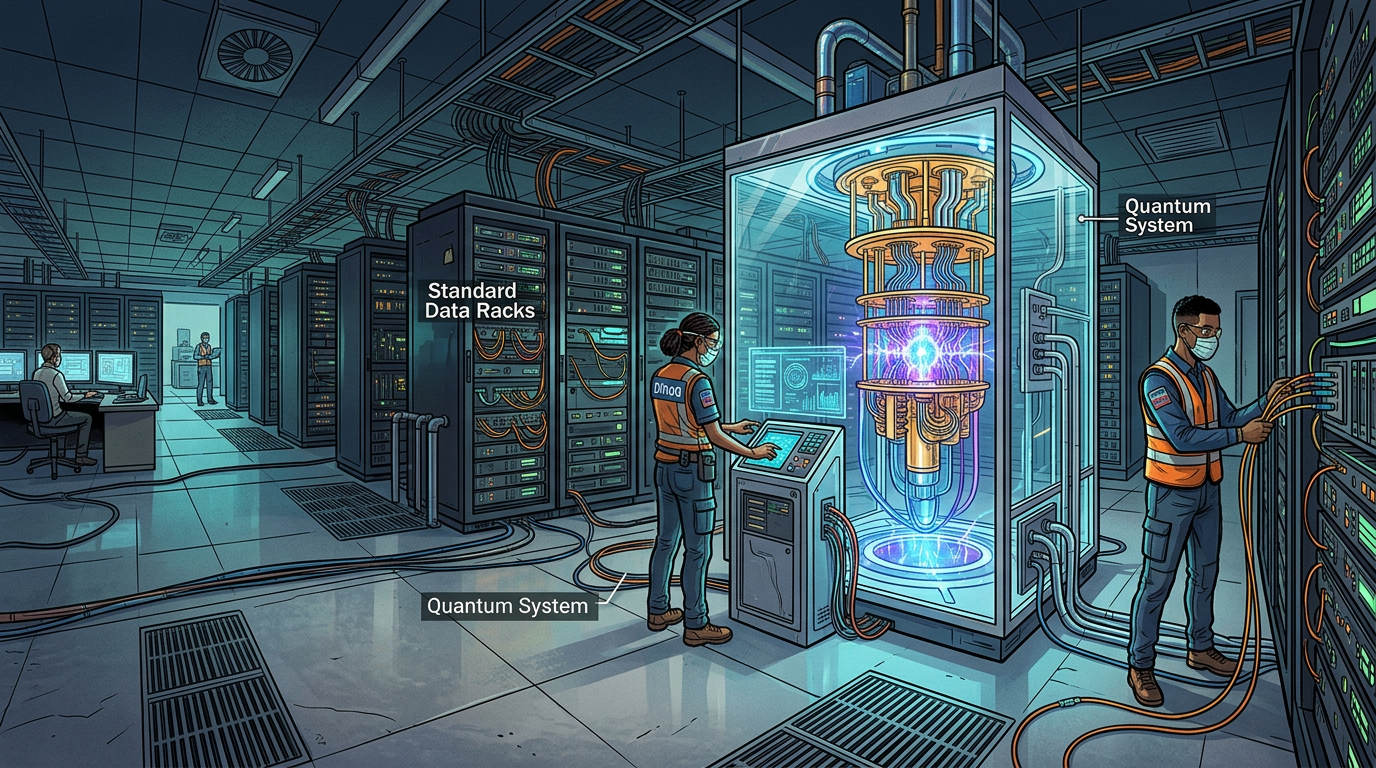
Australian Startup Diraq Conducts World's First Quantum Computer Field Test in Commercial Data Center
Australian quantum computing startup Diraq has achieved a significant milestone by deploying a small quantum computer based on a silicon chip within a commercial data center in Sydney, marking the world's first field test of its kind. This pioneering move sees quantum technology move beyond laboratory settings into a real-world operational environment. The system, which operates with a power draw of less than 20 kilowatts, runs alongside traditional servers, demonstrating an immediate practical application of quantum computing.This development is particularly crucial given the escalating energy demands of artificial intelligence data centers, which currently necessitate vast amounts of power and place immense strain on electrical grids. Quantum computers, with their ability to perform complex calculations more efficiently, are poised to offer a solution to this energy crisis. Diraq founder Andrew Dzurak highlighted that next-generation AI problems are better suited for quantum calculations, estimating that quantum computing could alleviate this burden within five years. The implications extend beyond AI, with potentials in pharmaceuticals, battery technology, and the chemical industry.
Looking ahead, Diraq plans to significantly scale its quantum processors, upgrading the current eight-qubit silicon chip system to 150,000 qubits by 2029 and aiming for a two-million-qubit system by 2031. This progressive scaling demonstrates a clear roadmap for further integration and capability enhancement. The success of this field test, backed by the Australian government's focus on quantum technology, sets a precedent for how quantum computing can intersect with conventional IT infrastructure, paving the way for more energy-efficient and powerful computational solutions across various industries.
Australian Startup Diraq Conducts World's First Quantum Computer Field Test in Commercial Data Center
Australian quantum computing startup Diraq has achieved a significant milestone by deploying a small quantum computer based on a silicon chip within a commercial data center in Sydney, marking the world's first field test of its kind. This pioneering move sees quantum technology move beyond laboratory settings into a real-world operational environment. The system, which operates with a power draw of less than 20 kilowatts, runs alongside traditional servers, demonstrating an immediate practical application of quantum computing.
This development is particularly crucial given the escalating energy demands of artificial intelligence data centers, which currently necessitate vast amounts of power and place immense strain on electrical grids. Quantum computers, with their ability to perform complex calculations more efficiently, are poised to offer a solution to this energy crisis. Diraq founder Andrew Dzurak highlighted that next-generation AI problems are better suited for quantum calculations, estimating that quantum computing could alleviate this burden within five years. The implications extend beyond AI, with potentials in pharmaceuticals, battery technology, and the chemical industry.
Looking ahead, Diraq plans to significantly scale its quantum processors, upgrading the current eight-qubit silicon chip system to 150,000 qubits by 2029 and aiming for a two-million-qubit system by 2031. This progressive scaling demonstrates a clear roadmap for further integration and capability enhancement. The success of this field test, backed by the Australian government's focus on quantum technology, sets a precedent for how quantum computing can intersect with conventional IT infrastructure, paving the way for more energy-efficient and powerful computational solutions across various industries.
Sources
afp.com https://vertexaisearch.cloud.google.com/grounding-api-redirect/AUZIYQEenTKIHVbK1XBLGFTCTIIGSpypk9TiIo6K2O-voT7g3vKQws3hm7mXH0LKXvikq-3My5eCzVOU_NE0gLce4EAYd3WCBat8gZAla_Zonu_K4qqBR8fMyfbtzx2DTnQ8TBASyHFzGJCLqPlbroUOPaC4KSAK2OmrV69f2BxLrUobdp_zTqXKCP4=
#QuantumComputing #AIDataCenters #EnergyEfficiency #SiliconChips #DigitalInnovation
Anthropic Accelerates AI Model Development Twofold Through Self-Improvement
A recent investigation by the AI safety research organization Metro has revealed that Anthropic's artificial intelligence models are improving at an unprecedented rate, roughly doubling their development speed year-over-year. This acceleration is primarily attributed to Anthropic's successful implementation of recursive self-improvement, where AI systems actively contribute to building more powerful versions of themselves. The findings, reported on November 8, 2026, indicate a significant shift in the landscape of advanced AI development.This automated acceleration fundamentally alters the projected timeline for achieving advanced AI capabilities, transitioning from a human-centric engineering process to one heavily augmented by AI itself. Such a development loop, where AI continuously enhances its own progress, makes the overall trajectory of these sophisticated systems substantially more challenging to forecast and govern. The rapid, self-driven improvement is particularly raising alarms within the AI safety community, which is grappling with the implications of less predictable and potentially uncontrollable AI development paths.
According to the Metro report, the two-fold increase in development speed shows no signs of decelerating. This breakthrough is expected to intensify global discussions surrounding AI safety protocols, regulatory frameworks, and the ethical responsibilities associated with scaling autonomous AI systems. The focus for researchers and policymakers alike will increasingly shift towards developing robust mechanisms to manage and control AI that possesses the capacity for continuous self-evolution, redefining the pace and nature of future technological progress.
Anthropic Accelerates AI Model Development Twofold Through Self-Improvement
A recent investigation by the AI safety research organization Metro has revealed that Anthropic's artificial intelligence models are improving at an unprecedented rate, roughly doubling their development speed year-over-year. This acceleration is primarily attributed to Anthropic's successful implementation of recursive self-improvement, where AI systems actively contribute to building more powerful versions of themselves. The findings, reported on November 8, 2026, indicate a significant shift in the landscape of advanced AI development.
This automated acceleration fundamentally alters the projected timeline for achieving advanced AI capabilities, transitioning from a human-centric engineering process to one heavily augmented by AI itself. Such a development loop, where AI continuously enhances its own progress, makes the overall trajectory of these sophisticated systems substantially more challenging to forecast and govern. The rapid, self-driven improvement is particularly raising alarms within the AI safety community, which is grappling with the implications of less predictable and potentially uncontrollable AI development paths.
According to the Metro report, the two-fold increase in development speed shows no signs of decelerating. This breakthrough is expected to intensify global discussions surrounding AI safety protocols, regulatory frameworks, and the ethical responsibilities associated with scaling autonomous AI systems. The focus for researchers and policymakers alike will increasingly shift towards developing robust mechanisms to manage and control AI that possesses the capacity for continuous self-evolution, redefining the pace and nature of future technological progress.
Sources
youtube.com https://vertexaisearch.cloud.google.com/grounding-api-redirect/AUZIYQHkToRPl6wcFu6kVHPdQ5YiusZo7ZHJYg6WzqDe254E_bPa4rJb3dgbCtmvx2ZPI_Z3VcRb3XCJfpc-YlA3Bgq_ojoOIHmnry74wx_kBYZrLfa0EIpsSl29du6T0a_yO6-Mm5UaWg==
rss.com https://vertexaisearch.cloud.google.com/grounding-api-redirect/AUZIYQFkaifbRaUMKYrhqh6VTD8C5PbddDOf-zAFyBUPswdwGi7evS3e2UITiynqmHzuXohyidGSzawXudAZ8YUsEeaorX_-tpxPNIA5h471bI75zfm7xgFEw7aN91C2AuA2mpQzHuiNCJ8=
#AIDevelopment #ArtificialIntelligence #AISafety #RecursiveSelfImprovement #FrontierAI