Hair Transplant in Al Ain: Full Process from Consultation to Growth
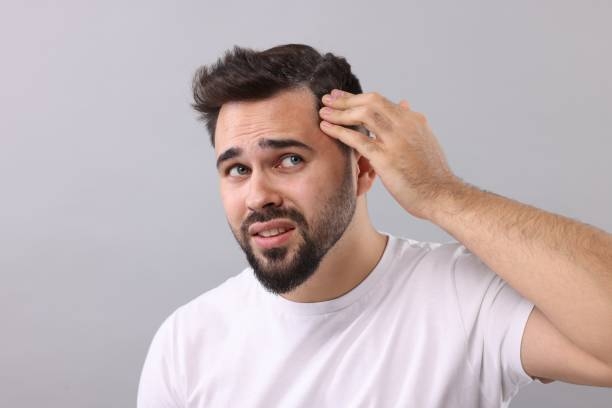
The transition from hair loss to a permanent, restored hairline is a journey that spans approximately one year. For patients considering a hair transplant in Al Ain, understanding the biological and clinical steps involved is essential for a stress-free experience. In clinical settings, we observe that patients who are well-informed about the "intermediate" stages—such as the resting phase and the shedding phase—are much more satisfied with their long-term outcomes. This guide provides a clinical roadmap of the four key stages of hair restoration, ensuring you know exactly what to expect from your first visit to your final result.
Phase 1: The Diagnostic Mapping (Week 0)
The journey begins not with surgery, but with a rigorous anatomical assessment. Our diagnostic-first philosophy ensures that we do not just look at where hair is missing, but where it will be in ten years. During the consultation, we utilize digital trichoscopy to map your "Donor Reserve."
-
Medical History: Reviewing any underlying causes of hair loss (hormonal, nutritional, or genetic).
-
Hairline Design: Artistically drawing a boundary that respects your facial symmetry and aging profile.
-
Graft Calculation: Determining the precise number of units required to achieve your desired density without over-harvesting.
-
Method Selection: Deciding between Sapphire FUE, DHI, or a hybrid approach based on your scalp's unique characteristics.
Phase 2: The Procedure Day (The Clinical Event)
On the day of your hair transplant in Al Ain, the focus shifts to meticulous microsurgery. The process is a marathon of precision, usually lasting between 6 and 8 hours.
-
Local Anesthesia: The scalp is numbed using specialized pressure-injectors to minimize the sensation of needles.
-
Extraction: Individual follicular units are harvested using micro-punches (0.7mm–0.85mm).
-
Graft Preservation: Harvested units are placed in a chilled, nutrient-rich "HypoThermosol" solution to maintain 100% cell viability.
-
Channel Opening: Using Sapphire blades, the surgeon creates micro-slits at specific angles (30–45 degrees) to ensure natural hair direction.
-
Implantation: The grafts are delicately placed into the channels, with single-hair units at the front and multi-hair units behind for volume.
Phase 3: The Recovery and "Shock Loss" (Weeks 1–12)
This is the most "active" phase for the patient, requiring strict adherence to self-care protocols. It is also the most psychologically challenging due to a temporary phase called "Shock Loss."
Is the 'Shock Loss' phase a sign of failure?
No. In clinical practice, we observe that nearly 90% of patients experience shedding of the transplanted hair shafts around week three. This is a natural response as the follicle enters a "resting phase" (Telogen) before starting new growth. The root remains healthy and secure beneath the skin.
Based on post-procedure follow-ups, what feels uncomfortable is the initial itching and scabbing during the first 7 days. However, what feels surprisingly easy is the return to daily life. By day ten, the scabs are gone, and the donor area has healed so cleanly that the procedure is no longer visible to the naked eye.
"The first month was a rollercoaster. I saw the hair fall out and panicked, but the clinic had warned me it would happen. By month three, I could see the tiny new sprouts coming through, and I knew it was working." — Sami
Phase 4: The Growth and Maturation (Months 4–12)
This is the "Biological Spring" where your investment begins to yield visible results. The growth is gradual, meaning the change in your appearance is subtle enough that friends often can't pinpoint exactly why you look younger.
-
Months 4–5: "Pioneer hairs" emerge. They are initially fine and soft (vellus-like).
-
Months 6–8: Significant "boom" in density. The hair shafts begin to thicken and gain their permanent pigment.
-
Months 10–12: The final texture and wave pattern stabilize. The hairline becomes dense and fully styleable.
Frequently Asked Questions
How long do I need to stay in Al Ain after the surgery?
If you are traveling from outside the city, we recommend staying for at least 48 hours. This allows us to perform your "First Wash" in the clinic and ensure there is no unusual swelling before you return home.
Can I wear a cap during the 'Shock Loss' phase?
After the first 10 days, you can wear a loose-fitting hat or a baseball cap. We advise against tight-fitting headwear or traditional ghutras until at least week three to prevent friction on the new follicles.
When can I start using Minoxidil or Finasteride again?
Safety and a diagnostic-first philosophy suggest waiting at least 2 weeks after surgery to resume topical treatments. We often recommend these as "growth boosters" to maintain your non-transplanted hair.
Does the process change for a beard transplant?
The extraction and implantation steps are identical. However, the healing on the face is typically faster than the scalp, though the "Shock Loss" phase still occurs around the three-week mark.
Is there any maintenance required after month 12?
Once the hair is fully grown, it is permanent. You can cut, dye, and style it just like your original hair. No specialized shampoos are required after the initial healing year.
Why Choose Tajmeels Clinic for Your Procedure?
At Tajmeels Clinic, we believe that a hair transplant is a partnership, not just a procedure. We specialize in hair transplant in Al Ain by utilizing a diagnostic-first philosophy that covers every milestone from the first follicle map to the final density check. Our clinicians provide a structured, empathetic environment where your safety and your aesthetic goals are prioritized at every stage. We provide a professional, transparent experience, ensuring that your journey to a natural, full head of hair is as smooth and successful as the science allows.

Categories
Read More
If you want to buy guest posting services, you’re probably looking for a quick, safe, and user-friendly way to get your website noticed. Our guest posting services are designed for people who want real results—unique content, published on real sites, with zero hassle. Everything is 100% plagiarism free and easy to use, so you can focus on growing your business.✅ We’re here to...

Buy GitHub Personal Accounts For more information,just knock us!🌙🌚🌛🌜🌝🌞🌟✨ Telegram: @pvatopzone 🌙🌚🌛🌜🌝🌞🌟✨ Email:pvatopzone@gmail.com🌙🌚🌛🌜🌝🌞🌟✨ Telegram: @pvatopzone 🌙🌚🌛🌜🌝🌞🌟✨ Email:pvatopzone@gmail.com🌙🌚🌛🌜🌝🌞🌟✨ our company: https://pvatopzone.com/product/buy-github-personal-accounts/🌑🌒🌓🌔🌕🌖🌗🌘 ✨🌙💫🌌🌙🖤🌑⚡🌒🔥🌓💫 GitHub is the world’s leading platform for software development,...