Precision Care: Targeted Mongolian Spot Removal in Dubai
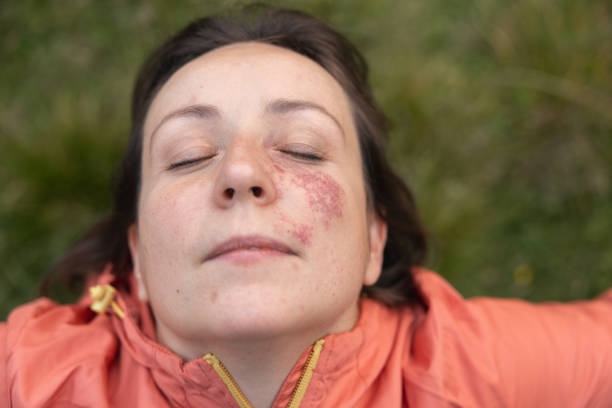
Mongolian spots, or congenital dermal melanocytosis, are flat, blue-grey marks that typically appear at birth, often on the lower back or buttocks. While many fade during childhood, some persist into adulthood, leading patients to seek birthmark removal in Dubai. In clinical settings, we observe that these marks are unique because the pigment is located deep within the dermis rather than on the surface. Because the blue tint is caused by the Tyndall effect—light scattering off deep-seated melanin—effective removal requires a high-energy laser capable of reaching those deep layers without injuring the superficial skin.
The Clinical Logic of Deep Dermal Targeting
To treat Mongolian spots effectively, we utilize a "Deep-Reach" protocol. Since the melanin is trapped deep in the skin, standard surface lasers are ineffective. We prioritize the Q-Switched Nd:YAG laser (1064nm wavelength). This specific frequency is "transparent" to the epidermis, meaning it passes through the surface without heating it, but is aggressively absorbed by the deep blue and grey pigment. The laser creates a photo-acoustic shockwave that shatters the deep melanin into fragments, which are then processed by the body's natural waste-removal systems.
Comparison: Mongolian Spot vs. Surface Pigment Removal
| Feature | Mongolian Spot Removal | Surface Pigment Removal |
| Pigment Location | Deep Dermis | Epidermis/Surface |
| Laser Wavelength | 1064nm (Deep penetration) | 532nm (Superficial) |
| Visual Response | Gradual fading from within | Immediate darkening/crusting |
| Sessions Needed | 6–10 Sessions | 3–5 Sessions |
| Risk of Scarring | Extremely Low | Low |
Does Removing Mongolian Spots Hurt?
What is the actual pain level for deep dermal laser treatment?
Most patients describe the sensation as a deep, rhythmic "thumping" or a sharp snap against the skin. Because the target is deeper in the tissue, the sensation feels more "solid" than surface treatments. We use clinical-grade topical numbing and integrated cooling air systems to maintain comfort, typically resulting in a pain score of 3/10.
Based on post-procedure follow-ups, the recovery sensation is "surprisingly easy." Unlike surface lasers that leave the skin feeling raw, deep dermal treatment leaves the surface intact. Patients often report that the area feels slightly heavy or warm for a few hours, but there is no "stinging" or "burning" sensation once the session is over.
"I had a persistent grey mark on my lower back that never faded. The laser treatment at Tajmeels was much faster than I expected. It felt like a quick tapping sensation, and I could go back to my normal routine right away." — Farah
The Realistic Fading Timeline
How long does it take for a Mongolian spot to disappear?
Because the shattered pigment must be transported away by the lymphatic system from deep within the skin, fading is a slow and steady process. Significant results are usually seen after the third or fourth session, with 6 to 10 sessions required for maximum clearance. We space treatments 8 weeks apart to allow the body's "clean-up" cells (macrophages) sufficient time to work.
In clinical practice, we observe this internal healing cycle:
-
Days 1–7: No visible change on the surface, though some internal "shadowing" or minor swelling may occur.
-
Weeks 2–4: The body begins the microscopic removal of shattered melanin.
-
Week 6–8: The blue-grey hue appears visibly lighter as the density of the pigment decreases.
-
Month 6+: After multiple sessions, the area begins to blend seamlessly with the surrounding skin tone.
Who Should Choose This Clinical Path?
Is laser removal safe for all ages and skin types?
Mongolian spot removal is exceptionally safe for darker skin tones (Fitzpatrick IV-VI) when using the 1064nm wavelength, as it bypasses the surface melanin that can cause complications. We prioritize a diagnostic-first philosophy, ensuring the spot is accurately identified as dermal melanocytosis rather than a more complex vascular lesion.
Safety is our priority in the Dubai climate. Even though the laser targets deep tissue, the "new" skin being formed is sensitive. We strictly advise against sun exposure on the treated area. If the site is on the lower back or limbs, it should be covered with clothing or a high-zinc physical sunscreen for the duration of the treatment course to prevent "rebound" darkening.
Why "Patience" is a Clinical Requirement
Why does it take more sessions than other birthmarks?
The depth of the pigment in Mongolian spots acts as a natural shield. Each laser pass can only reach and shatter a certain percentage of the melanin. We must wait for that layer to clear before the laser can effectively reach the pigment beneath it. Rushing the process with higher energy levels would only risk surface damage without improving the deep-clearing result.
What feels "tolerable" to patients is the non-invasive nature of the sessions. There is no bleeding, no scabbing, and no downtime. However, the commitment to a long-term schedule is essential. Those who stick to the 8-week interval see the most uniform and complete results.
"It took me almost a year of sessions, but the grey patch on my shoulder is finally gone. The process was slow, but I’m glad I didn't rush it; the skin looks perfectly natural now." — Hassan
Frequently Asked Questions
-
Will the spot return after it has been removed?
Once the deep dermal pigment is shattered and reabsorbed by the body, it does not return. These are permanent results.
-
Is it safe for children?
While many Mongolian spots fade naturally by age 4, persistent ones can be treated in older children. We assess each case individually to ensure the child is comfortable and the timing is right.
-
Can I exercise after my session?
Yes. Since the surface of the skin is not broken, you can resume exercise immediately, though we suggest avoiding very hot saunas for 24 hours.
-
Why is the spot blue or grey instead of brown?
This is due to the "Tyndall Effect." Melanin deep in the dermis reflects shorter blue wavelengths of light back to the eye, making the mark appear blueish-grey.
-
How do I know if it’s a Mongolian spot or a bruise?
Mongolian spots are present from birth and do not change color or disappear within days like a bruise. A clinical diagnostic check will confirm the nature of the mark instantly.
Why Choose Tajmeels Clinic for Your Procedure?
At Tajmeels Clinic, we understand that Mongolian spots require a specialized, deep-tissue approach. We specialize in birthmark removal in Dubai by utilizing a diagnostic-first philosophy, ensuring your treatment is tailored to the specific depth and density of your dermal pigment. Our clinicians are experts in high-energy Q-switched technology, providing safe and effective fading for even the most persistent marks. We offer a professional, supportive environment where your long-term skin health and aesthetic goals are our primary focus.
Categories
Read More
ในโลกของบุหรี่ไฟฟ้ายุคใหม่ แบรนด์ relx ยังคงครองใจผู้ใช้อย่างต่อเนื่อง ด้วยนวัตกรรมที่พัฒนาไม่หยุด ทั้งตัวเครื่องและหัวพอดที่ตอบโจทย์ทุกสไตล์การสูบ ใครกำลังมองหาฟีลดี กลิ่นชัด บทความนี้มีคำตอบ!ความนิยมของ relx ที่มาแรงไม่หยุดกระแสของ relx เติบโตอย่างรวดเร็ว เพราะใช้งานง่าย ดีไซน์ทันสมัย และมีตัวเลือกหลากหลาย ไม่ว่าจะเป็นมือใหม่หรือสายควันตัวจริง...
If you want to buy best guest posting services, you’re probably looking for a simple, safe, and user-friendly way to get your website noticed. Our best guest posting services are made for people who want real results—unique content, published on real sites, with zero hassle. Everything is 100% plagiarism free and easy to use, so you can focus on growing your business.✅ We’re...