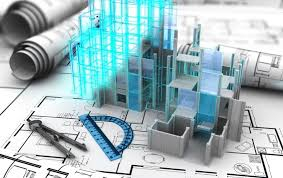
High-rise developments are becoming a dominant feature of the UAE’s evolving skyline. Cities like Dubai and Abu Dhabi are continually expanding upward, with architects, engineers, and developers competing to design structures that are more innovative, efficient, and sustainable than ever before. However, constructing a high-rise building involves far more complexity than a low-rise structure. These projects require precise planning, advanced coordination, and seamless integration of multiple disciplines. This is where BIM modelling services play a critical role. For UAE developers, contractors, and consultants, BIM has become an essential tool that supports accuracy, safety, and efficiency across all project stages. Companies such as AEC7D are helping transform the construction process by offering comprehensive BIM solutions aligned with the region’s high standards and ambitious goals.
Enhancing Design Accuracy and Visualisation
High-rise developments require exceptionally accurate design planning. Even a minor error can lead to massive rework, safety risks, or delays. BIM modelling services allow project teams to create 3D models that represent every structural, architectural, and MEP element with precision. The ability to visualise the entire building digitally before construction begins helps stakeholders identify and resolve potential design issues early. In a region like the UAE, where architectural innovation is a hallmark of development, BIM ensures that complex designs are executed exactly as intended. BIM also helps clients visualise the project in ways that traditional 2D drawings cannot, improving decision-making and design approvals.
Supporting Multi-Disciplinary Coordination
High-rise projects involve several teams: architects, structural engineers, MEP engineers, façade consultants, contractors, and subcontractors. Coordinating these disciplines can be challenging, especially when working on large-scale towers with interconnected systems. BIM modelling services create a shared digital environment where all disciplines can collaborate efficiently. Clash detection is one of the most valuable features, enabling teams to identify conflicts between components—for example, between HVAC ducts and structural beams—before they lead to problems on-site. In the fast-paced UAE construction market, this reduces the risk of delays, disputes, and costly rework.
Improving Construction Efficiency
Construction efficiency is essential for high-rise developments where timelines, budgets, and safety considerations are tight. BIM models support construction sequencing through 4D simulation, allowing teams to visualise the construction schedule layer by layer. Contractors can plan site logistics, crane movements, material handling, and workforce allocation more effectively. This level of detail is particularly important in dense urban environments like Dubai Marina, Downtown Dubai, or Reem Island, where space constraints can cause challenges. By integrating real-time data and project timelines, BIM improves productivity and reduces bottlenecks during construction.
Enhancing Structural Safety
Safety is a major concern for high-rise construction. Tall structures must withstand wind loads, seismic activity, and environmental conditions specific to the UAE’s climate. BIM modelling services allow structural engineers to simulate load behaviour, analyse building stability, and optimise structural elements for maximum safety. By integrating structural analysis tools within the BIM environment, engineers can ensure that the design meets international and local safety standards. This reduces uncertainties and strengthens the reliability of the structure before construction begins. AEC7D uses advanced BIM techniques to support engineers in designing safe and resilient buildings that align with UAE regulations.
Facilitating MEP System Integration
High-rise buildings depend heavily on efficient mechanical, electrical, and plumbing systems. From cooling systems capable of handling extreme UAE temperatures to fire safety systems that comply with Civil Defence standards, MEP design must be flawless. BIM modelling services ensure that all MEP elements are accurately integrated within the building’s geometry. Opportunities for energy savings and system optimisation become more visible through BIM simulations. For example, BIM can help identify more efficient duct routes, reduce material wastage, or adjust equipment sizes for improved performance. This level of integration is essential in high-rise towers where space constraints are significant.
Reducing Cost Overruns and Minimising Rework
Cost management is crucial for high-rise developments, which often involve large investments and tight financial oversight. BIM modelling services help reduce unexpected costs by enabling early identification of design conflicts and estimating quantities more accurately. 5D BIM integrates cost data with the 3D model, providing real-time insights into material requirements, procurement planning, and budget forecasting. This accuracy helps developers avoid overspending and improves financial control. The UAE construction industry places strong emphasis on delivering projects within budget, and BIM offers the transparency required to achieve this.
Streamlining Communication Among Stakeholders
Effective communication among stakeholders is vital for major developments. BIM models serve as a central source of truth for the entire project team. Instead of relying on separate drawings, spreadsheets, and emails, stakeholders can collaborate through a unified digital model. This improves information flow, reduces misunderstandings, and speeds up decision-making. For high-rise projects where multiple firms, subcontractors, and authorities are involved, clear communication is essential to avoid disruptions. AEC7D’s BIM solutions create a smooth communication channel, ensuring that every stakeholder works with accurate and up-to-date information.
Supporting Sustainability and Energy Efficiency
Sustainability is becoming increasingly important in the UAE, with government initiatives encouraging greener development practices. BIM modelling services play a key role in supporting sustainability objectives by enabling energy modelling, daylight analysis, and material optimisation. For high-rise buildings, BIM can help evaluate façade performance, optimise HVAC systems for energy efficiency, and choose materials with lower environmental impact. By using BIM, developers can reduce energy consumption, enhance occupant comfort, and meet green building standards such as Estidama and LEED.
Improving Facility Management After Construction
BIM’s value extends beyond the design and construction phases. Once the high-rise building is completed, a BIM model can serve as a digital twin for facility management. Operators can use the model to track maintenance schedules, manage equipment data, and monitor building performance. This is especially beneficial for large towers where managing assets and systems manually is difficult. With BIM, facility managers can identify issues quickly, plan maintenance efficiently, and ensure that the building continues to operate smoothly for years. This long-term benefit increases the lifecycle value of the building and supports better operational decisions.
Conclusion
BIM modelling services are no longer optional for high-rise developments—they are essential. In the UAE, where construction is fast-paced, technologically advanced, and highly ambitious, BIM provides the accuracy, efficiency, and collaboration needed to deliver successful projects. From improving design precision to supporting sustainability and enhancing post-construction management, BIM plays a vital role at every stage of development. Companies like AEC7D are enabling developers and contractors to adopt BIM more effectively, ensuring that the UAE continues to lead in innovative and world-class high-rise construction.