AI Companion Industry Set for Rapid Expansion as Demand Continues to Rise Globally
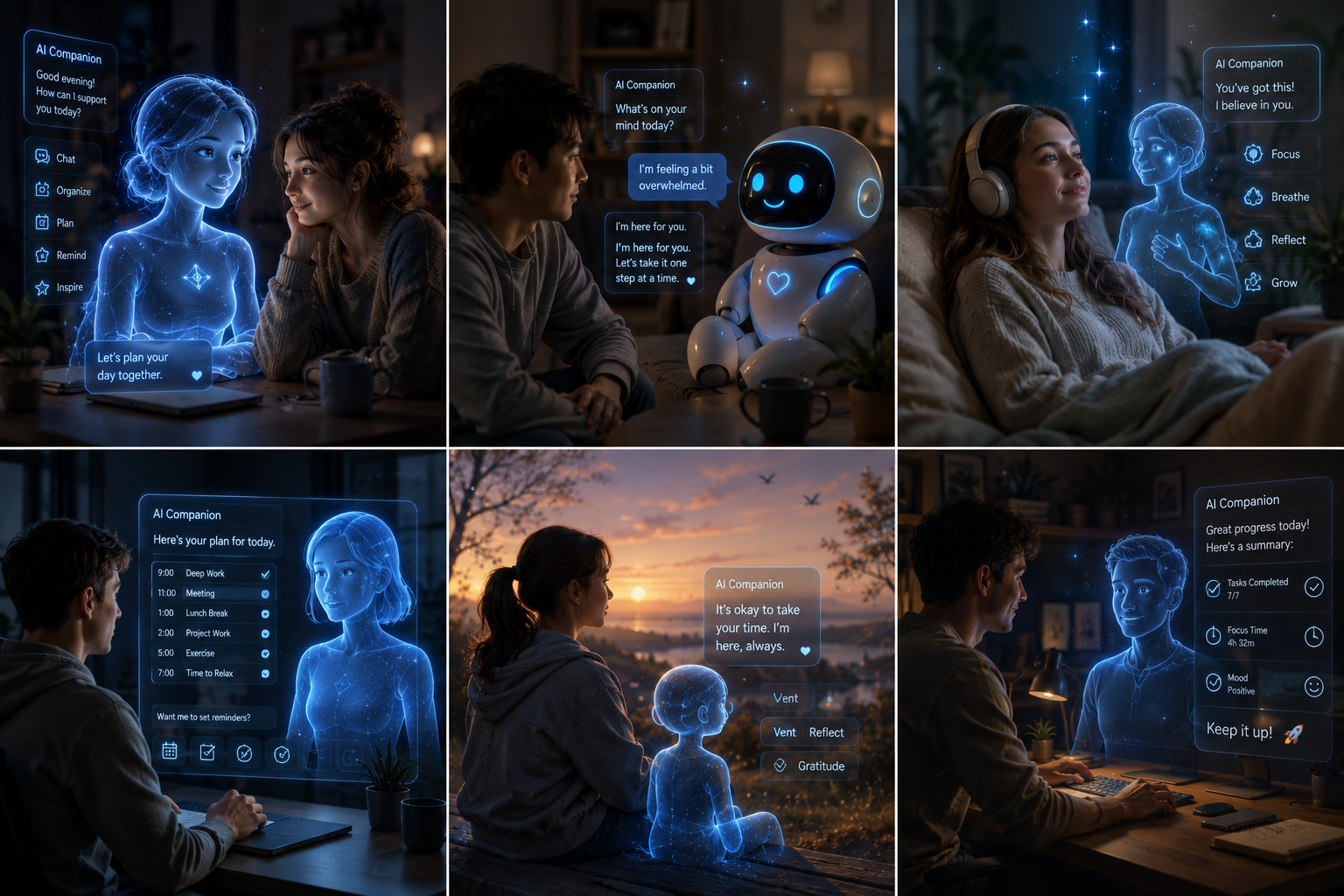
Artificial intelligence is changing the way people communicate, seek support, and build digital relationships. Over the last few years, AI companions have moved far beyond simple chatbots and virtual assistants. Modern AI companions can hold meaningful conversations, remember preferences, provide emotional engagement, and create highly personalized interactions. As technology continues to improve, the global AI companion industry is witnessing significant growth, attracting users, investors, developers, and businesses from different regions of the world.
Why AI Companions Are Becoming Part of Everyday Digital Life
Digital communication has become a central aspect of modern lifestyles. People spend a considerable amount of time online for work, entertainment, education, and social interaction. As a result, many users are becoming comfortable engaging with intelligent virtual entities that can provide conversation, recommendations, and companionship.
Unlike traditional chatbots that operate through predefined scripts, AI companions can generate context-aware responses and maintain more natural conversations. This capability creates a sense of continuity and personalization that users increasingly value.
Moreover, advances in generative AI have enabled companion applications to respond with greater accuracy, empathy, and contextual awareness. Consequently, user engagement levels are significantly higher than those seen in earlier generations of conversational software.
Many industry observers also point to changing social habits and growing digital connectivity as factors contributing to increased adoption. While human relationships remain essential, AI companions are filling specific digital interaction needs that were previously underserved.
Market Growth Signals Point Toward Long-Term Expansion
Several indicators suggest strong future growth for the AI companion industry. Venture capital investment in AI startups continues to increase, while established technology companies are allocating larger budgets toward conversational AI research and development.
Recent market reports estimate that the broader conversational AI sector could reach tens of billions of dollars in value over the coming years. AI companion applications are expected to represent a meaningful portion of that growth due to increasing consumer interest in personalized digital experiences.
Selected Industry Statistics
-
Various market research firms project double-digit annual growth rates for conversational AI markets through the next decade.
-
More than 70% of consumers globally have interacted with some form of AI-powered conversational technology.
-
Mobile-based AI applications continue to record significant increases in downloads and active user engagement.
-
Investment in generative AI companies reached record levels during recent funding cycles.
-
User retention rates tend to be higher for personalized AI experiences compared to generic chatbot solutions.
These indicators collectively suggest that demand is not driven by short-term trends alone but also by broader technological and behavioral shifts.
Technology Advancements Fueling Industry Momentum
The success of AI companions is closely connected to improvements in underlying technologies. Language models have become more sophisticated, enabling systems to generate nuanced and contextually relevant responses.
Voice synthesis technologies have also improved dramatically. AI companions can now communicate with more natural-sounding voices, creating interactions that feel smoother and more engaging. Similarly, speech recognition systems are achieving higher levels of accuracy, allowing users to communicate naturally without relying solely on text.
Memory systems represent another important advancement. Modern AI companions can retain certain user preferences and conversation histories, making future interactions more personalized. In comparison to earlier chatbot systems, this creates a stronger sense of continuity and relevance.
Meanwhile, multimodal AI capabilities are expanding possibilities even further. Companion applications can increasingly combine text, voice, images, and visual elements to create richer user experiences.
Personalization Is Driving User Retention
One of the strongest competitive advantages within the AI companion market is personalization. Users are more likely to continue using an AI system that remembers preferences, adapts communication styles, and responds according to individual needs.
Personalization extends beyond simple recommendations. AI companions can adjust conversation tone, suggest relevant content, and provide customized experiences based on interaction history. Consequently, engagement levels often increase as users spend more time with these systems.
This trend is encouraging developers to focus on creating adaptive experiences rather than static chatbot interactions. Not only does personalization improve user satisfaction, but it also strengthens long-term retention and platform loyalty.
Resources such as Xchar AI wiki frequently highlight how personalization has become one of the most influential factors shaping user expectations within the AI companion ecosystem.
Diverse Use Cases Expanding Market Opportunities
The AI companion industry is no longer focused on a single application category. Instead, developers are creating solutions for a wide range of user needs and interests.
Educational companions help learners practice languages, improve communication skills, and receive tutoring support. Productivity-focused companions assist professionals with scheduling, brainstorming, and information management. Wellness-oriented systems provide conversational support and motivation for personal goals.
Entertainment also represents a major growth segment. Users increasingly seek interactive experiences that feel engaging and responsive. As a result, companion applications are becoming integrated into gaming, storytelling, content creation, and virtual worlds.
Likewise, businesses are beginning to recognize the value of conversational AI technologies for customer engagement and community building. This broadening range of use cases continues to create new revenue opportunities across the industry.
Consumer Preferences Are Reshaping Product Development
Consumer expectations have changed significantly over the past few years. Users now expect digital products to offer greater levels of personalization, responsiveness, and accessibility.
Developers are responding by creating AI girlfriend capable of supporting long-form conversations, emotional engagement, and ongoing interaction histories. In the same way that social media platforms evolved around user behavior, AI companion products are adapting to changing consumer demands.
A growing number of users are also interested in relationship-oriented experiences. Conversations surrounding an AI girlfriend have contributed to broader discussions about how people interact with personalized AI systems and what types of digital companionship experiences they seek.
However, industry leaders continue focusing on responsible innovation, ensuring that products remain engaging while maintaining transparency and user trust.
Research and Development Investments Continue to Increase
The competitive nature of the AI industry is encouraging companies to invest heavily in research and development. Major technology firms, startups, and independent developers are all working to improve conversational intelligence and user experience quality.
Funding is supporting innovations in several key areas:
-
Emotional intelligence modeling
-
Long-term memory systems
-
Voice generation technologies
-
Multilingual communication
-
Personalization frameworks
-
Safety and moderation systems
As a result, future AI companions are expected to become more adaptive, accurate, and context-aware than current offerings.
Industry resources, including Xchar AI wiki, regularly document technological milestones that illustrate how quickly companion AI capabilities are advancing.
This cycle creates a feedback loop where growing adoption generates additional investment, leading to better products and increased consumer interest.
Global Markets Showing Strong Adoption Trends
North America remains a major hub for AI innovation, supported by strong investment activity and advanced technology infrastructure. However, adoption is expanding quickly across Europe, Asia-Pacific, Latin America, and other regions.
Asia-Pacific markets, in particular, are demonstrating substantial growth due to high smartphone penetration and widespread acceptance of digital technologies. Consequently, many companies are prioritizing international expansion strategies to reach emerging user bases.
Localization is becoming increasingly important as developers seek to serve audiences with different languages, cultural preferences, and communication styles. Companies that successfully adapt their products to regional needs are likely to gain competitive advantages.
Several market observers referenced through Xchar AI wiki have noted that international demand is becoming one of the strongest growth drivers for the sector.
Balancing Innovation With User Expectations
As AI companions become more advanced, developers face growing responsibility regarding user experience, privacy, and platform governance. Users expect transparency about how systems operate and how data is managed.
Companies are investing in safety measures designed to improve trust and maintain positive experiences. These efforts include moderation systems, user controls, privacy protections, and transparency policies.
Despite ongoing discussions about responsible AI development, consumer interest continues to increase. Many users view AI companions as useful tools for communication, entertainment, creativity, and personal interaction.
Even though challenges remain, the industry's overall trajectory suggests continued expansion supported by technological progress and evolving user preferences.
Specialized Segments Creating New Revenue Streams
The AI companion market is becoming increasingly diversified. Developers are creating products tailored to different audiences, interests, and interaction styles.
Some emerging segments focus on storytelling, roleplay, virtual personalities, and customized conversational experiences. Discussions around kinky ai demonstrate how developers are experimenting with highly personalized interaction formats designed to appeal to specific user communities.
This diversification allows companies to serve a broader range of consumer interests while creating additional monetization opportunities through subscriptions, premium features, and personalized services.
Subsequently, market segmentation is expected to become an important factor shaping competition and product differentiation in the years ahead.
Future Outlook for the AI Companion Industry
The future of AI companions appears highly promising. Improvements in language models, voice technology, personalization systems, and multimodal capabilities are expected to create increasingly sophisticated experiences.
Consumer demand shows little sign of slowing, while ongoing investment continues to accelerate innovation. Furthermore, expanding global accessibility will likely introduce millions of new users to companion AI platforms over the next decade.
Developers are expected to focus on creating more natural conversations, stronger personalization capabilities, and enhanced user experiences. Consequently, AI companions may become a routine part of daily digital interactions for people around the world.
References and community resources such as Xchar AI wiki continue to document industry developments, helping users and businesses stay informed about market trends and technological advancements.
Conclusion
The AI companion industry is entering a period of significant growth driven by technological innovation, rising consumer interest, and expanding global adoption. Improved language models, personalized interactions, voice capabilities, and multimodal experiences are transforming how people engage with digital systems. As investment continues to increase and new use cases emerge, AI companions are becoming more sophisticated and widely accepted across different markets.

Categories
Read More
Across Indian sport, very few names command as much respect as elite Olympic champions and cricketing icons. Their journeys often go beyond medals and records, extending into brand value, endorsements, investments, and long-term financial stability. Understanding how top athletes build their fortunes gives insight into the economics of modern sport in India, where fame, discipline, and career...

Creating a luxurious home is not solely about purchasing expensive furnishings or following the latest design trends. True elegance comes from thoughtful choices that blend comfort, functionality, and visual harmony. Every detail contributes to the overall atmosphere, from the way a room is illuminated to the furniture that anchors the space. Luxury interiors are often characterized by balance....