BIS FMCS Scheme: A Complete Guide for Foreign Manufacturers
Introduction
Expanding your products into the Indian market is a significant opportunity for foreign manufacturers. However, before many products can be sold in India, compliance with the BIS FMCS Scheme is mandatory. The Bureau of Indian Standards (BIS) introduced this scheme to ensure imported products meet Indian quality and safety standards. Understanding the BIS FMCS, the certification process, eligibility requirements, and documentation can help foreign businesses enter the Indian market without delays. This guide explains everything you need to know about BIS Certification for Foreign Manufacturer and BIS Registration for Foreign Manufacturer.
What is BIS FMCS?
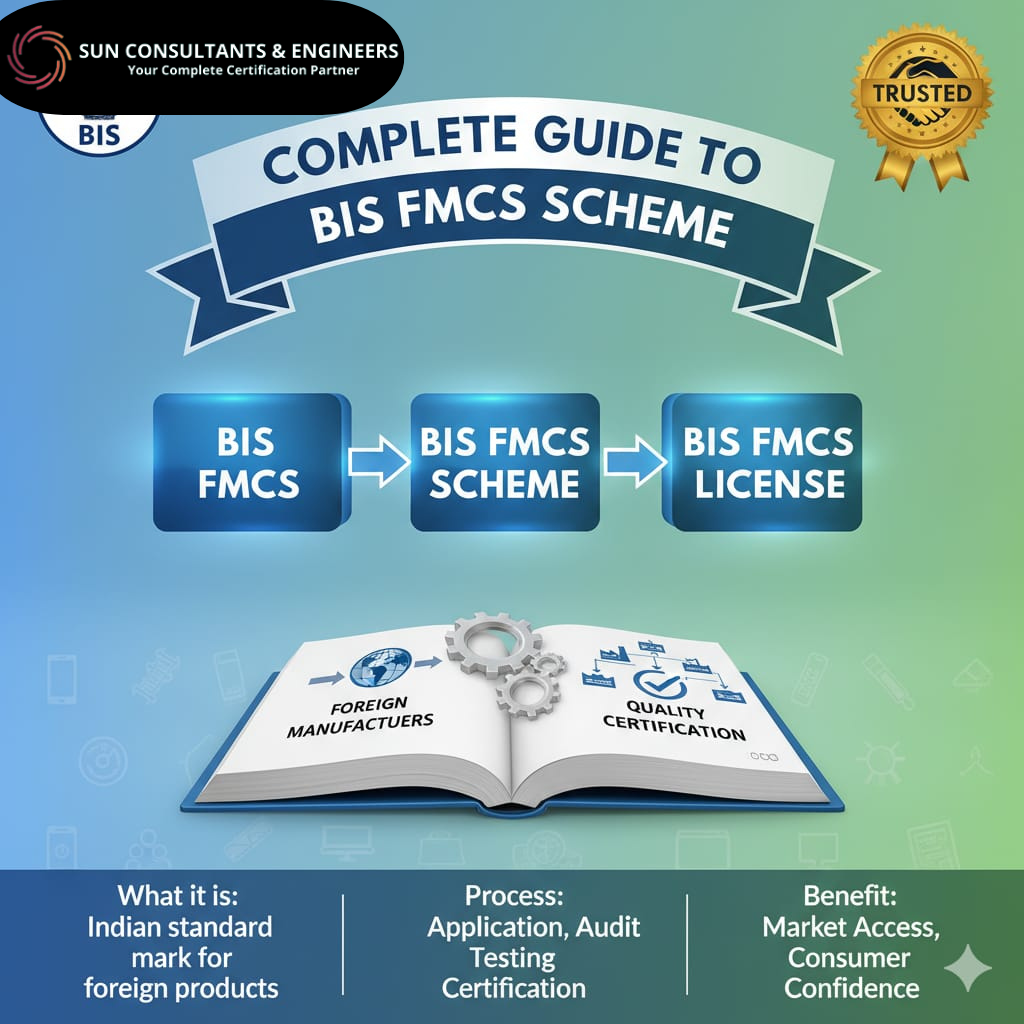
BIS FMCS stands for the Foreign Manufacturers Certification Scheme. It allows overseas manufacturers to obtain a BIS licence for products that fall under mandatory certification requirements in India. Unlike domestic manufacturers, foreign companies must apply under this scheme to demonstrate that their products comply with the relevant Indian Standards (IS). Once approved, manufacturers are authorized to use the Standard Mark on their certified products.
What is the BIS FMCS Scheme?
The BIS FMCS Scheme is specifically designed for manufacturers located outside India. It enables eligible foreign companies to receive BIS certification after successful product testing, factory inspection, and quality management evaluation. Under this scheme, BIS officials conduct a factory audit to verify manufacturing capabilities and ensure that quality control systems consistently produce products that meet Indian Standards.
The scheme helps ensure:
-
High-quality imported products
-
Consumer safety
-
Compliance with Indian regulations
-
Fair competition in the Indian market
-
Increased trust among Indian buyers
Who Needs BIS Certification for Foreign Manufacturer?
BIS Certification for Foreign Manufacturer is required for overseas manufacturers producing goods that are covered under mandatory BIS certification.
Some commonly regulated product categories include:
-
Electrical appliances
-
Electronic products
-
Cement
-
Steel products
-
Household appliances
-
Chemicals
-
Automotive components
-
Pressure cookers
-
Packaged drinking water
-
Industrial equipment
If your product appears under India's mandatory certification list, obtaining BIS certification is essential before exporting to India.
Benefits of BIS FMCS
Obtaining certification under the BIS FMCS Scheme provides several advantages.
1. Legal Market Access
Certification allows foreign manufacturers to legally export regulated products into India.
2. Customer Confidence
The BIS Standard Mark assures customers that products meet Indian safety and quality requirements.
3. Better Business Opportunities
Certified products gain easier acceptance among distributors, retailers, and government procurement agencies.
4. Improved Product Quality
The certification process encourages manufacturers to maintain consistent quality control and testing procedures.
5. Competitive Advantage
Products carrying the BIS certification mark often enjoy greater credibility than uncertified alternatives.
BIS Registration for Foreign Manufacturer Process
The process for BIS Registration for Foreign Manufacturer involves several important steps.
Step 1: Product Identification
Determine whether your product falls under mandatory BIS certification requirements.
Step 2: Application Submission
Submit the prescribed application form along with technical documents and manufacturing details.
Step 3: Document Verification
BIS reviews all submitted documents for completeness and compliance.
Step 4: Factory Inspection
A BIS inspection team visits the overseas manufacturing facility to evaluate production systems, testing facilities, and quality control measures.
Step 5: Product Testing
Samples are tested in BIS-recognized laboratories to verify compliance with applicable Indian Standards.
Step 6: Licence Grant
Upon successful inspection and satisfactory test reports, BIS issues the certification licence.
The manufacturer can then legally apply the BIS Standard Mark to certified products.
Documents Required
Foreign manufacturers generally need the following documents:
-
Company registration certificate
-
Manufacturing licence
-
Factory layout
-
Quality control manual
-
Product specifications
-
Test reports
-
List of manufacturing equipment
-
Calibration certificates
-
Raw material details
-
Authorized Indian Representative (AIR) details
-
Trademark documents (if applicable)
Accurate documentation helps speed up the approval process.
Role of the Authorized Indian Representative (AIR)
Every foreign manufacturer applying under the BIS FMCS Scheme must appoint an Authorized Indian Representative.
The AIR serves as the official contact between BIS and the overseas manufacturer. Responsibilities include:
-
Coordinating with BIS
-
Managing application procedures
-
Responding to regulatory queries
-
Assisting during inspections
-
Supporting licence renewals
Having a knowledgeable AIR helps ensure smoother communication throughout the certification process.
Validity of BIS FMCS Licence
The licence granted under the BIS FMCS Scheme remains valid for a specified period and must be renewed before expiry.
Manufacturers must continue complying with:
-
Indian Standards
-
Factory inspection requirements
-
Product quality regulations
-
Surveillance audits
-
Periodic testing
Failure to maintain compliance may result in suspension or cancellation of the licence.
Common Challenges
Foreign manufacturers may encounter several challenges during certification:
-
Understanding Indian regulatory requirements
-
Preparing technical documentation
-
Coordinating factory inspections
-
Product testing delays
-
Appointment of an Authorized Indian Representative
-
Managing licence renewals
Proper planning and professional guidance can significantly reduce approval timelines.
Tips for Faster BIS Certification
To improve the approval process:
-
Verify product applicability before applying.
-
Prepare complete technical documentation.
-
Maintain a strong quality management system.
-
Ensure laboratory testing is completed accurately.
-
Respond promptly to BIS queries.
-
Work closely with an experienced Authorized Indian Representative.
Following these best practices helps avoid unnecessary delays.
Conclusion
The BIS FMCS framework enables foreign manufacturers to access India's growing market while ensuring compliance with national quality and safety standards. Through the BIS FMCS Scheme, overseas manufacturers can obtain BIS Certification for Foreign Manufacturer after completing product testing, factory inspection, and documentation requirements. Similarly, completing the BIS Registration for Foreign Manufacturer process ensures legal market entry, enhances customer confidence, and strengthens your brand reputation. By understanding the certification requirements and preparing thoroughly, foreign manufacturers can achieve faster approvals and long-term success in the Indian market.