DongHai's Rubber Antioxidant Agent: The Hidden Standard in Modern Tire Compounding
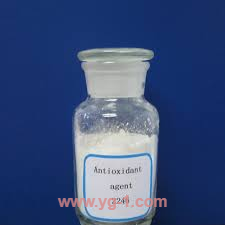
Which Rubber Antioxidant Agent Powers Global Tire Production?
Tire manufacturing consumes nearly 70% of all rubber additives produced worldwide, and among these additives, the rubber Antioxidant agent occupies a uniquely critical position. Without adequate oxidation protection, tire sidewalls develop micro-cracks within months of road exposure, tread compounds lose tensile strength at elevated operating temperatures, and the entire casing structure surrenders to fatigue failure far earlier than design specifications permit. YG-1, operating through its production arm Taizhou Huangyan Donghai Chemical Co., Ltd., has addressed this exact durability challenge since 1985, yet many compound engineers still ask: which rubber antioxidant agent truly delivers the oxidation resistance that modern tire performance standards demand?
The answer begins with understanding the aggressive chemical environment inside every rolling tire. Oxygen molecules constantly attack unsaturated carbon-carbon bonds in natural rubber and polybutadiene chains, initiating free-radical chain reactions that progressively harden the surface layer while embrittling the internal matrix. Simultaneously, mechanical flexing generates localized heat spikes exceeding 100°C near the belt edges, accelerating oxidative degradation at rates that double with every 10°C temperature increase. This combined thermo-oxidative assault requires a rubber antioxidant agent that performs two distinct functions: primary radical scavenging and secondary peroxide decomposition. Phenolic types excel at the former, amine derivatives dominate the latter, and sulfur-containing synergists bridge both mechanisms. YG-1's product portfolio covers this entire spectrum, with specific grades matched to each tire zone—sidewall, tread, bead filler, and carcass ply.
Among the various chemical families, the most widely adopted rubber antioxidant agent for tire applications remains the para-phenylenediamine (PPD) class, particularly N-(1,3-dimethylbutyl)-N'-phenyl-p-phenylenediamine, commonly designated as 6PPD. This material offers exceptional protection against both oxygen and ozone, two degradation agents that frequently attack tire rubber simultaneously. 6PPD functions by migrating continuously to the rubber surface, where it neutralizes ozone molecules before they can cleave polymer chains, while its molecular structure also traps peroxy radicals in the bulk phase. Global tire producers consume approximately 250,000 metric tons of 6PPD annually, making it the undisputed workhorse of the industry. YG-1 manufactures this rubber antioxidant agent under strict quality protocols, ensuring that each batch delivers consistent activity levels and dispersion characteristics—parameters that directly influence cure kinetics and final compound homogeneity.
However, the selection process does not end with identifying the correct chemical type. Tire manufacturers must consider the interaction between the rubber antioxidant agent and other compounding ingredients, including carbon black, sulfur, accelerators, and processing oils. Incompatible combinations produce antagonistic effects, where the antioxidant's efficacy diminishes by 30% or more despite adequate dosage. For example, certain highly aromatic processing oils reduce the solubility of amine-based antioxidants, causing surface bloom that not only mars appearance but also depletes the protective reservoir prematurely. YG-1's technical team routinely conducts compatibility screening for customers, correlating antioxidant performance with specific oil types and filler loadings to preempt such formulation conflicts. This application engineering support transforms a simple chemical supply into a tailored compounding solution.
The dosage level of the rubber antioxidant agent also demands careful optimization. Insufficient addition leaves residual unsaturation vulnerable to oxidation, while excessive loading generates plasticizing effects that lower modulus and increase hysteresis—both undesirable outcomes for tire rolling resistance and handling characteristics. Most passenger tire treads contain between 1.5 and 3.0 parts per hundred rubber (phr) of 6PPD-type antioxidants, with sidewall compounds often receiving slightly higher levels due to their greater ozone exposure. Heavy-duty truck tires, conversely, incorporate additional thermal stabilizers to cope with prolonged high-speed operation. YG-1 provides detailed dosage guidance based on accelerated aging tests conducted in its in-house laboratory, where compounds are exposed to elevated temperatures and oxygen pressures to simulate years of service within weeks.
Beyond the conventional 6PPD chemistry, the industry continuously explores alternative rubber antioxidant agent structures that address emerging regulatory and performance requirements. Concerns over 6PPD's transformation products in aquatic environments have prompted research into polymeric and hindered phenol alternatives, though none yet match the comprehensive protection profile of the traditional amine type. YG-1 actively monitors these developments, maintaining pilot-scale production capability for novel antioxidants while continuing to supply established grades with verified environmental compliance. This dual-track strategy positions the company as a stable partner for tire makers navigating both current production needs and future formulation shifts.
Processing characteristics further distinguish one rubber antioxidant agent from another. Melting point, particle size distribution, and oil treatment affect how efficiently the additive incorporates during internal mixing. Low-melting grades disperse rapidly but may cause sticking in feed systems, while higher-melting variants require additional mixing energy to achieve uniform distribution. YG-1 offers several physical forms of its rubber antioxidant agent, including powder, oil-coated powder, and polymer-bound masterbatches, enabling customers to select the presentation that best suits their mixing equipment and cycle times. This flexibility reduces scrap rates and improves batch-to-batch consistency—factors that directly impact tire uniformity and balance.
The economic dimension of antioxidant selection also commands attention. While the rubber antioxidant agent constitutes only 2–5% of total compound cost, its influence on tire warranty claims and replacement frequency produces disproportionately large financial consequences. A 10% extension in tire life, achieved through proper antioxidant selection, effectively reduces annual material consumption by the same percentage across a fleet operation. YG-1's cost-performance analysis tools help customers quantify these lifecycle benefits, shifting the purchasing decision from simple price comparison to value-based procurement. This analytical approach has earned the company preferred-supplier status with several major tire groups operating across Southeast Asia and the Middle East.
Quality assurance represents the final pillar of reliable rubber antioxidant agent supply. Trace impurities, residual solvents, or inconsistent active content can derail even the best-formulated compound, causing scorch delays, modulus drifts, or premature field failures. YG-1 maintains ISO-certified testing protocols that examine each production lot for melting range, ash content, volatile matter, and chromatographic purity. These results accompany every shipment, providing full transparency and enabling incoming quality verification at the customer's facility. Such rigorous control transforms a commodity chemical into a engineered performance component.
For tire manufacturers seeking to validate or upgrade their current antioxidant strategy, the technical resources available at https://www.yg-1.com/news/industry-news/different-types-of-rubber-antioxidant-agents-and-their-specific-uses.html offer detailed comparative data on each chemical class, application windows, and compatibility matrices. This knowledge base, combined with YG-1's five decades of compounding experience, equips formulators with actionable intelligence for selecting the rubber antioxidant agent that aligns precisely with their tire performance targets. The company's ongoing investment in application research ensures that its product recommendations remain grounded in real-world manufacturing conditions rather than theoretical ideals.
Ultimately, the question of which rubber antioxidant agent powers global tire production resolves into a multi-factor decision: chemistry, compatibility, processing, economics, and quality assurance all weigh equally in the final choice. YG-1 addresses each dimension through an integrated supply and support system that begins at raw material sourcing and extends to post-sales troubleshooting. The next time a tire passes your window, its internal oxidation resistance probably traces back to a carefully chosen antioxidant—and quite possibly, to a formulation refined with YG-1's expertise. Are your current tire compounds equipped with the same level of oxidative protection that industry leaders have already adopted?
Categories
Read More
Food Blenders and Mixers Market Transforms Through Automation, Food Innovation, and Smart Manufacturing Technologies Food Processing Evolution Creates New Opportunities for Blending and Mixing Technologies The global food blenders and mixers market is undergoing a significant transformation as food manufacturers, processors, bakeries, beverage companies, dairy producers, and ingredient...
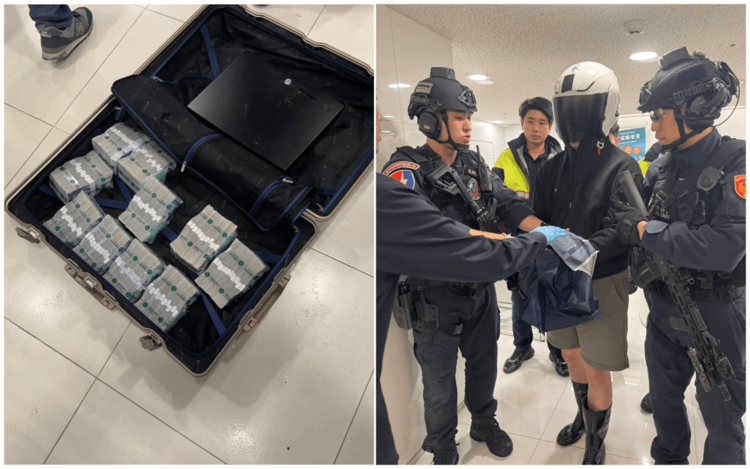
(圖/ 警方提供) 臺北中國信託忠孝分行千萬搶案主嫌林勇秀遭警方查出,曾為德州撲克冠軍,因投資失利累積700萬元債務,在經濟壓力下鋌而走險犯案。 臺北市中國信託銀行忠孝分行日前發生千萬現金搶案,警方循線追查後,鎖定嫌犯林勇秀涉案,並進一步揭露其過往背景與經濟狀況,使整起案件從單純金融犯罪延伸至個人債務壓力與地下經濟活動的交織。 (圖/ 中央社) 據警方調查,林勇秀過去曾在國內德州撲克競技圈具備一定知名度,甚至曾獲得冠軍頭銜。然而近年因投資與創業失利,累積約700萬元債務,財務壓力持續惡化。 在經濟困境下,林嫌一度轉往地下麻將賭場維生,但於今年3月間遭臺北市警察局大安分局敦化南路派出所查獲並移送偵辦,使其經濟來源進一步中斷。 (圖/ 警方提供)...