Why Are Pharmacovigilance Services Critical for Safety?
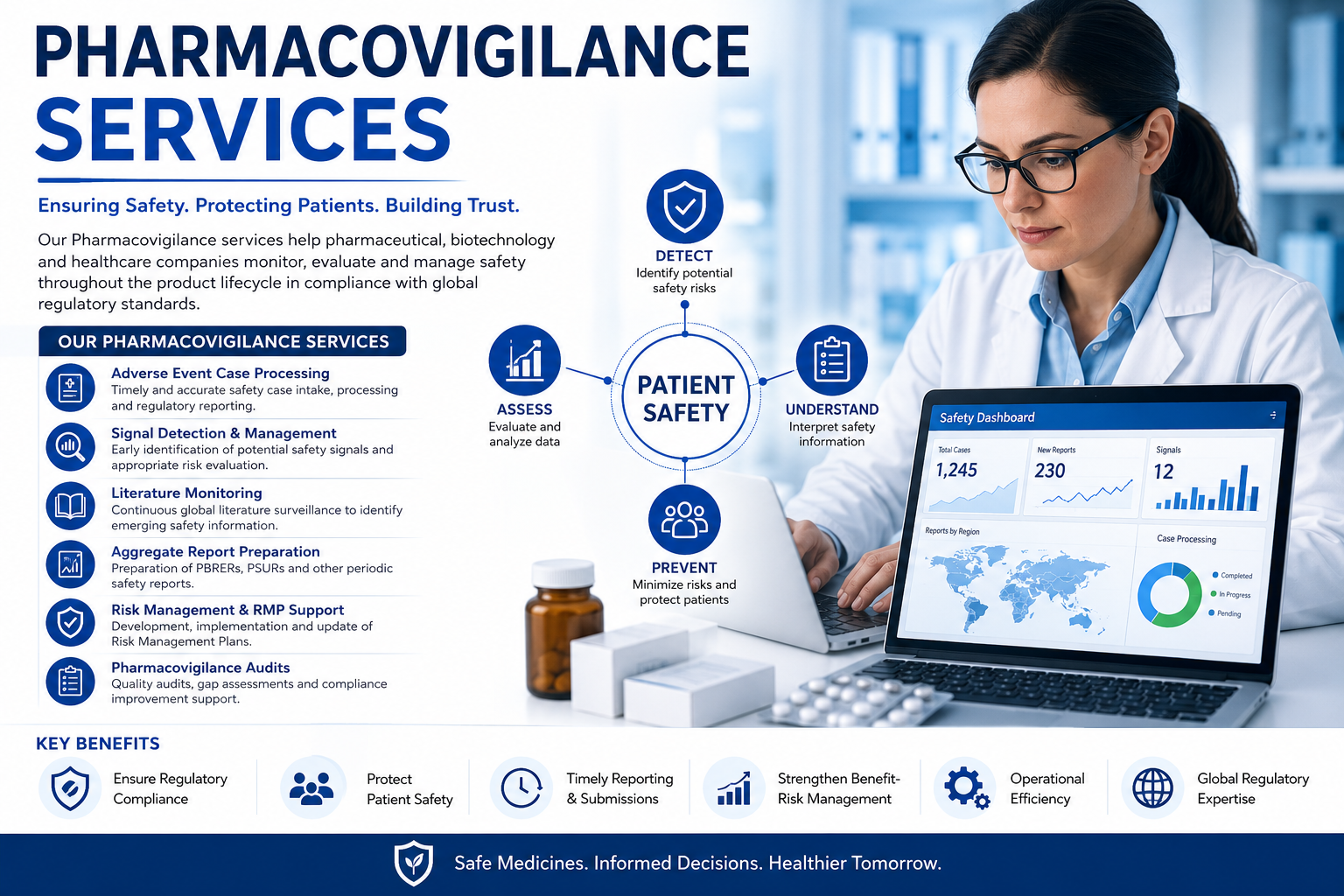
Pharmacovigilance services play a crucial role in ensuring the safety, effectiveness, and quality of medicinal products throughout their lifecycle. As healthcare regulations become increasingly complex and patient safety remains a top priority, pharmaceutical companies must implement robust pharmacovigilance systems to monitor, assess, and report adverse drug reactions effectively.
From product development and clinical trials to post-marketing surveillance, pharmacovigilance services help organizations identify potential safety concerns, comply with regulatory requirements, and maintain public confidence in healthcare products. In today's highly regulated pharmaceutical environment, effective pharmacovigilance is no longer optional—it is essential.
What Are Pharmacovigilance Services?
Pharmacovigilance refers to the science and activities related to detecting, assessing, understanding, and preventing adverse effects or other medicine-related problems. Pharmacovigilance services help pharmaceutical companies, biotechnology firms, and healthcare organizations manage drug safety responsibilities throughout a product's lifecycle.
These services are designed to ensure that any risks associated with medicines are identified quickly and managed appropriately. Regulatory authorities worldwide require companies to maintain comprehensive pharmacovigilance systems to protect patients and support public health.
Why Pharmacovigilance Is Important
Protecting Patient Safety
The primary objective of pharmacovigilance services is patient protection. Even after extensive clinical testing, some adverse reactions may only become apparent once a medicine is used by larger populations. Continuous monitoring helps identify these risks and allows companies to take appropriate corrective actions.
Meeting Regulatory Requirements
Regulatory agencies across the world require pharmaceutical companies to establish effective pharmacovigilance systems. Failure to comply with these obligations can result in regulatory actions, financial penalties, product recalls, or reputational damage.
Maintaining Product Integrity
A strong pharmacovigilance program supports ongoing product evaluation and helps maintain confidence among healthcare professionals, patients, and regulators. Effective safety monitoring contributes to better healthcare outcomes and long-term product success.
Supporting Risk Management
Pharmacovigilance services provide valuable data that can be used to develop and implement risk management strategies. These measures help minimize potential harm while maximizing therapeutic benefits.
Key Pharmacovigilance Services
Adverse Event Case Processing
Adverse event reporting is a fundamental component of pharmacovigilance. Specialists collect, evaluate, document, and submit safety reports to regulatory authorities within required timelines.
Signal Detection and Management
Signal detection involves identifying new or changing safety concerns associated with medicinal products. Advanced monitoring techniques help organizations recognize patterns that may indicate emerging risks.
Literature Monitoring
Regulatory guidelines often require ongoing reviews of scientific and medical literature to identify published safety information relevant to marketed products.
Aggregate Report Preparation
Pharmaceutical companies must prepare periodic safety reports that summarize product safety information and evaluate the benefit-risk profile of medicines.
Risk Management Planning
Risk management plans help organizations identify, assess, and mitigate potential safety concerns associated with medicinal products.
Pharmacovigilance Audits
Regular audits evaluate compliance with regulatory requirements and identify opportunities for improving pharmacovigilance systems and procedures.
Benefits of Outsourcing Pharmacovigilance Services
Many pharmaceutical and biotechnology companies choose to outsource pharmacovigilance activities to specialized providers. Outsourcing offers several advantages.
Access to Expertise
Experienced pharmacovigilance professionals possess extensive knowledge of global regulatory requirements, safety reporting obligations, and industry best practices.
Cost Efficiency
Building and maintaining an internal pharmacovigilance department can be costly. Outsourcing provides access to specialized expertise without significant infrastructure investments.
Scalability
External pharmacovigilance providers can adjust resources according to project requirements, helping organizations manage fluctuating workloads efficiently.
Improved Compliance
Dedicated pharmacovigilance teams stay updated on evolving regulations and ensure compliance with reporting timelines and regulatory expectations.
Pharmacovigilance Challenges in Modern Healthcare
As pharmaceutical innovation continues to advance, pharmacovigilance activities face increasing complexity. New therapies, biologics, personalized medicines, and digital health technologies generate unique safety considerations.
Global product launches also require companies to comply with multiple regulatory frameworks simultaneously. Managing diverse reporting requirements and maintaining consistent safety oversight can be challenging without expert support.
Additionally, regulatory authorities continue to increase expectations regarding data quality, signal detection, risk management, and patient safety monitoring. Organizations must invest in effective pharmacovigilance systems to meet these evolving standards.
The Future of Pharmacovigilance Services
Technology is transforming pharmacovigilance operations worldwide. Artificial intelligence, automation, data analytics, and machine learning tools are helping organizations process large volumes of safety data more efficiently.
These innovations support faster signal detection, improved case management, and enhanced decision-making. However, expert oversight remains essential to ensure data accuracy, regulatory compliance, and appropriate risk assessment.
As healthcare products become more sophisticated and global regulations continue to evolve, pharmacovigilance services will remain a critical component of pharmaceutical development and commercialization.
Conclusion
Pharmacovigilance services are essential for protecting patients, ensuring regulatory compliance, and supporting the long-term success of medicinal products. Effective safety monitoring enables organizations to identify potential risks, manage adverse events, and maintain confidence among healthcare professionals and patients.
Whether conducted internally or through specialized service providers, pharmacovigilance activities play a vital role in modern healthcare. Companies that invest in robust pharmacovigilance systems can improve compliance, strengthen patient safety, and support sustainable business growth in an increasingly regulated environment.