Decision Optimization Through Prescriptive Analytics
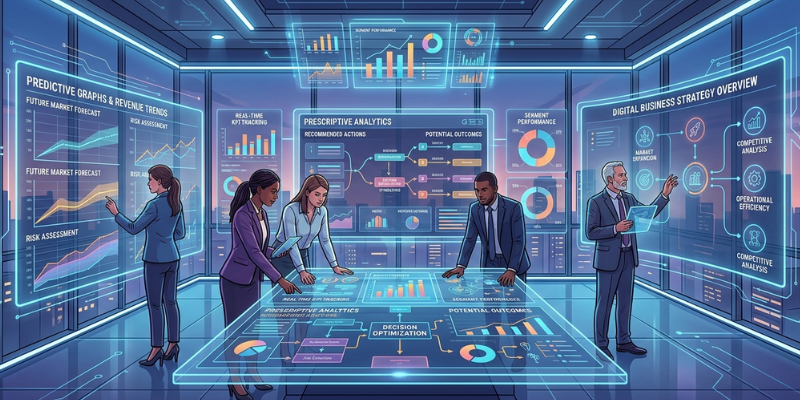
Businesses today collect massive amounts of data from customers, operations, and digital platforms. However, data alone does not create value unless organizations know how to use it correctly. Prescriptive analytics helps companies make smarter decisions by suggesting the best possible actions based on available information. It combines data analysis, machine learning, and business rules to improve outcomes and reduce uncertainty.
Many industries now depend on prescriptive analytics to improve efficiency and increase profits. Retail businesses utilize it to oversee their inventory, healthcare organizations employ it to enhance patient care, and logistics firms make use of it to streamline delivery routes. Beginners who want to understand modern business intelligence can build valuable skills through a Data Analyst Course in Trivandrum at FITA Academy to strengthen their practical analytics knowledge for future opportunities.
Understanding Prescriptive Analytics
Prescriptive analytics is a form of advanced analysis that suggests actions based on data evaluation. Unlike descriptive analytics, which explains what happened, and predictive analytics, which forecasts what may happen, prescriptive analytics focuses on what should be done next.
This approach uses mathematical models, algorithms, and historical data to identify the most effective decision. Businesses can compare multiple choices and select the option that delivers the best result. This process helps organizations save time, lower costs, and improve customer satisfaction.
Decision optimization is one of the main goals of prescriptive analytics. Companies often face complex situations with many variables. Prescriptive models simplify these situations by evaluating possible outcomes and recommending efficient solutions.
How Decision Optimization Works
Decision optimization involves finding the best course of action from several alternatives. Prescriptive analytics systems analyze patterns in data and measure the impact of different decisions before implementation.
For example, airlines use prescriptive analytics to adjust ticket pricing based on demand, weather conditions, and booking trends. Manufacturing companies use it to improve production schedules and reduce waste. Financial institutions apply it to identify risks and improve investment strategies.
These systems often rely on artificial intelligence and machine learning to improve recommendations over time. As more data becomes available, the system learns from previous decisions and becomes more accurate. Professionals who want practical exposure to these technologies can explore a Data Analytics Course in Kochi to understand how analytical tools support real business decisions in modern industries.
Benefits of Prescriptive Analytics
Prescriptive analytics offers several advantages for organizations across different sectors. One major benefit is faster decision-making. Businesses no longer need to rely only on guesswork or manual analysis because automated systems can provide quick recommendations.
Another important advantage is improved efficiency. Companies can reduce operational costs by identifying waste, improving resource allocation, and streamlining workflows. Better planning also helps organizations respond quickly to changing market conditions.
Customer experience also improves through personalized recommendations and optimized services. E-commerce platforms use prescriptive analytics to suggest products that match customer interests. Banks use it to provide customized financial solutions based on customer behavior and spending patterns.
Risk management becomes easier with prescriptive analytics because businesses can evaluate different scenarios before making critical decisions. This reduces uncertainty and supports long-term growth.
Challenges in Implementing Prescriptive Analytics
Although prescriptive analytics offers many benefits, organizations may face some challenges during implementation. One common issue is poor data quality. Faulty or insufficient information may result in flawed suggestions and poor decision-making.
Another challenge is the complexity of analytical models. Businesses need skilled professionals who understand data science, statistics, and business operations. Without proper expertise, organizations may struggle to use analytics tools effectively.
Cost is also an important factor. Advanced analytics systems require investment in software, infrastructure, and employee training. However, many companies consider this investment worthwhile because of the long-term business value it creates.
The Future of Decision Optimization
The future of decision optimization looks promising as businesses continue adopting data-driven strategies. Artificial intelligence, cloud computing, and real-time analytics are making prescriptive analytics more accessible to organizations of all sizes.
In the coming years, industries will increasingly depend on automated decision systems to improve productivity and customer engagement. Professionals with strong analytical skills will remain in high demand as companies seek experts who can turn data into actionable insights. If you want to build a strong career in analytics and improve your industry knowledge, consider joining a Data Analyst Course in Pune to gain practical skills that support smarter business decision-making.
Also check: How Data Collection Works in Data Analytics