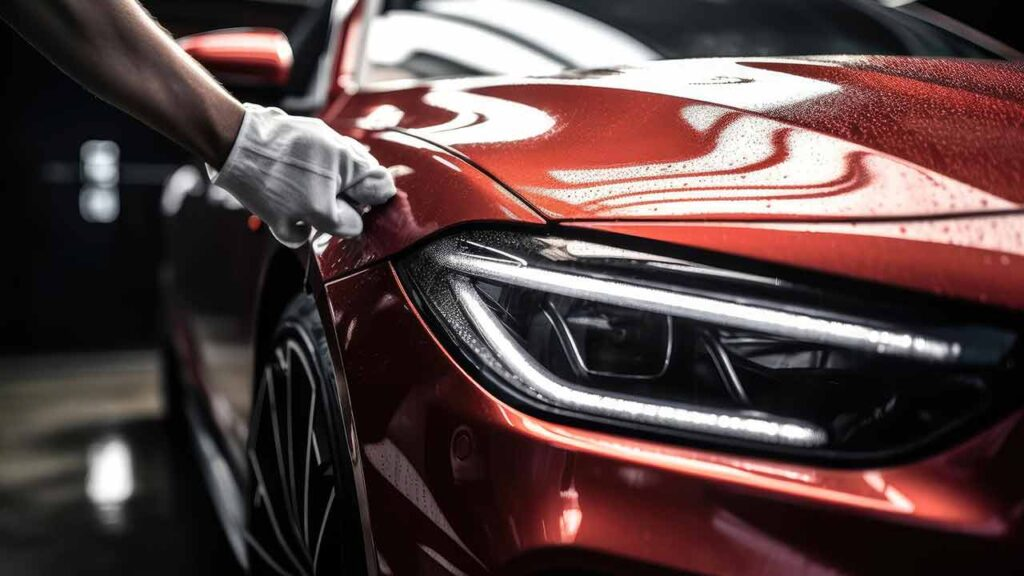
Your car's paint tells a story. Every swirl mark from an automatic car wash, every light scratch from a stray shopping cart, every water spot from a sprinkler—they accumulate into a narrative of wear that diminishes your vehicle's appearance. When it's time to restore that finish, you face a fundamental choice: address only the problematic areas or correct the entire vehicle. This decision between spot correction and full paint correction defines the philosophy and execution of modern professional car detailing, each path offering distinct advantages and trade-offs that every vehicle owner should understand.
Understanding the Two Philosophies
Before diving into technical details, it's essential to grasp the fundamental difference between these two approaches.
Spot Paint Correction: This targeted approach focuses exclusively on specific areas with visible defects—a door ding here, a deep scratch there—while leaving the remainder of the vehicle's paint untouched. The goal is surgical precision: remove the isolated imperfection while seamlessly blending into the surrounding factory finish .
Full Paint Correction: This comprehensive process involves machine polishing the entire vehicle's painted surfaces, systematically addressing every swirl mark, scratch, and imperfection across all panels. The goal is uniform perfection—a completely restored, consistent finish across the entire vehicle .
The Case for Spot Correction: Precision and Preservation
Spot correction occupies a specialized niche in the detailing world, one that requires exceptional skill and restraint.
When Spot Correction Makes Sense
Isolated Recent Damage: If your otherwise well-maintained vehicle acquires a single scratch or scuff, spot correction offers an efficient solution. You address the new damage without disturbing the healthy surrounding paint .
Minor Dealer Touch-Ups: New cars sometimes arrive with small imperfections from transport or lot damage. A skilled spot correction can address these without the expense and time of a full correction .
Budget-Conscious Maintenance: For owners who maintain their vehicles regularly, occasional spot corrections every few years can address new defects while preserving most of the original clear coat .
SMART Repairs: Small to medium area repair technology (SMART) relies entirely on spot correction principles, fixing localized damage quickly and cost-effectively without full-panel refinishing .
The Technical Challenges of Spot Correction
Spot correction is deceptive in its apparent simplicity. In reality, it's one of the most technically demanding detailing disciplines .
Non-Uniform Clear Coat Thickness: In any spot repair, the clear coat thickness varies dramatically across the working area. At the repair's center, clear coat may be relatively generous, while at the edges it tapers rapidly. Polishing across this transition requires immense restraint—the machine doesn't register the difference, but the paint certainly does .
Heat Management: Because the working area is small, friction energy concentrates rather than spreading across a panel. Heat builds rapidly, clear coat softens sooner, and damage can occur before obvious visual warnings appear. Sustained high speeds or long polishing cycles that work on full panels quickly become problematic in localized repairs .
The Blending Imperative: The transition zone matters more than the repair's center. Over-refining the repaired area while ignoring adjacent paint creates a visible halo—a glossy patch that screams "repair" under inspection lighting. Effective spot correction works outward, gradually equalizing the finish until no boundary can be detected .
Geometry Complications: Spot repairs frequently occur on bumper corners, swage lines, door edges, and other complex shapes. These areas naturally concentrate pressure and friction, increasing heat generation even at moderate machine speeds. On plastic substrates, reduced thermal mass means heat dissipates more slowly, further narrowing the margin for error .
The Risk of Visible Failure
When spot corrections fail, the causes are consistent. Edge damage occurs where clear coat is thinnest. Gloss mismatch appears when the repaired area is refined in isolation rather than blended. Visible halos form when attention focuses on the defect rather than on equalizing the entire transition zone. These failures rarely stem from poor materials—they result from treating spot correction as scaled-down full correction rather than a distinct finishing discipline .
The Case for Full Correction: Uniformity and Transformation
Full paint correction represents the gold standard of automotive paint restoration, delivering results that approach or exceed factory-new appearance.
When Full Correction Is the Right Choice
Widespread Swirl Marks and Oxidation: Vehicles with years of accumulated wash-induced swirls, environmental etching, or UV oxidation across all panels need comprehensive correction. A full correction systematically removes these defects from every surface, restoring uniform clarity .
Preparing for Ceramic Coating: Long-term protective coatings demand a flawless foundation. Applying ceramic coating over imperfect paint locks in those defects permanently. Full correction ensures the coating bonds to a perfect surface, maximizing its durability and optical performance .
Pre-Sale Preparation: Before selling a vehicle, full correction can dramatically increase perceived value and sale price. A uniformly flawless finish signals meticulous ownership and justifies premium pricing .
Restoring Neglected Vehicles: Vehicles that have never received professional paint care often have compounded defects across every panel. Full correction provides a complete reset, erasing years of accumulated damage .
Personal Pride and Passion: For enthusiasts who simply want their vehicle to look its absolute best, full correction delivers the satisfaction of knowing every inch of paint has been perfected .
The Multi-Stage Process
Full correction typically involves multiple stages, each with specific goals .
Stage One: Compounding: Using an aggressive pad and cutting compound, the detailer levels the clear coat to remove deeper imperfections—moderate scratches, severe swirls, and etching. This stage establishes the foundation but leaves some micro-marring from the abrasive process .
Stage Two: Polishing: A less aggressive pad and finer polish remove the haze left by compounding, restoring gloss while refining the surface. This stage reveals the paint's true depth and clarity .
Stage Three: Finishing (Optional): For perfectionists or show car preparation, an ultra-fine finishing polish with a soft pad eliminates any remaining micro-marring, achieving a flawless, hologram-free mirror finish .
The Investment Consideration
Full correction requires significant time investment—typically 8-12 hours for a single-stage enhancement on a sedan, and 20+ hours for multi-stage correction on larger vehicles . This translates to higher costs, often ranging from several hundred to several thousand dollars depending on vehicle size, paint condition, and correction depth required .
The Hybrid Approach: Strategic Correction
Many experienced detailers and discerning owners adopt a middle path—strategic correction that applies full correction principles to high-visibility areas while spot-correcting others.
Priority Zones: Front fascias, hoods, and roof lines often bear the brunt of environmental exposure and deserve comprehensive attention. Lower panels and less visible areas may only need spot treatment .
Paint Thickness Considerations: Using a paint thickness gauge, professionals can identify panels with thinner clear coat that cannot safely undergo aggressive correction. These areas may receive lighter enhancement while thicker panels receive full correction .
Customer Goals Alignment: The hybrid approach aligns correction intensity with the owner's priorities—show-stopping perfection on visible surfaces while preserving clear coat on less critical areas .
Making Your Decision: Key Factors to Consider
Assess Your Paint's Condition Honestly: Hold a bright LED light at an angle across your paint. If you see a uniform web of swirls across most panels, full correction likely makes sense. If only isolated scratches mar an otherwise clean surface, spot correction may suffice .
Consider Your Long-Term Goals: Planning to keep the vehicle for years and protect it with ceramic coating? Full correction provides the ideal foundation. Selling soon? Strategic correction of visible panels maximizes return on investment .
Evaluate Your Budget: Full correction represents a significant investment. Spot correction offers a more accessible entry point for addressing immediate concerns .
Trust Professional Assessment: A skilled detailer's eyes—and paint thickness gauge—provide objective data about what your paint can safely tolerate and what correction level will achieve your goals .
Conclusion
The choice between spot and full paint correction isn't about which is "better"—it's about which is right for your specific vehicle, your goals, and your budget. Spot correction offers surgical precision for isolated issues, demanding exceptional skill to blend seamlessly into surrounding paint. Full correction delivers comprehensive transformation, systematically perfecting every panel for uniform excellence. Understanding the philosophy, techniques, and trade-offs of each approach empowers you to make an informed decision that protects your investment and delivers the results you desire. For those seeking expert guidance and flawless execution without leaving home, specialized mobile car detailing services bring professional assessment and correction capability directly to your location, ready to restore your vehicle's finish to its full potential.
Frequently Asked Questions
Can spot correction be invisible?
Yes, when performed by a highly skilled professional using proper techniques and progressive blending. The key is working outward from the repair, gradually equalizing the finish until the boundary becomes undetectable. However, it requires exceptional restraint and understanding of paint behavior under different lighting conditions .
Will full correction remove all my paint scratches?
Full correction typically removes 90-95% of surface defects, though "perfection" is often unattainable (and not worth the risk of excessive clear coat removal). Deeper scratches that catch a fingernail may be too deep for complete removal without compromising the clear coat, though their appearance can be significantly improved .
How do I know if my clear coat is thick enough for correction?
Professional detailers use paint thickness gauges (PTG) to measure clear coat depth in microns across different panels. This data-driven approach ensures correction is performed safely, avoiding areas with insufficient clear coat for aggressive polishing .
Does spot correction cost less than full correction?
Significantly less, as labor time is the primary cost factor. Spot correction on a few isolated areas might take 1-3 hours, while full correction can require 8-20+ hours. However, attempting spot correction when full correction is needed can lead to inconsistent results and potentially higher long-term costs .
Can I combine spot and full correction approaches?
Absolutely. Many professionals recommend a strategic approach—full correction on high-visibility panels (hood, roof, trunk) and spot correction or lighter enhancement on less critical areas. This balances visual impact with clear coat preservation and budget considerations .