Global Finance Chief Warns of AI's Geopolitical Risks and Concentrated Power
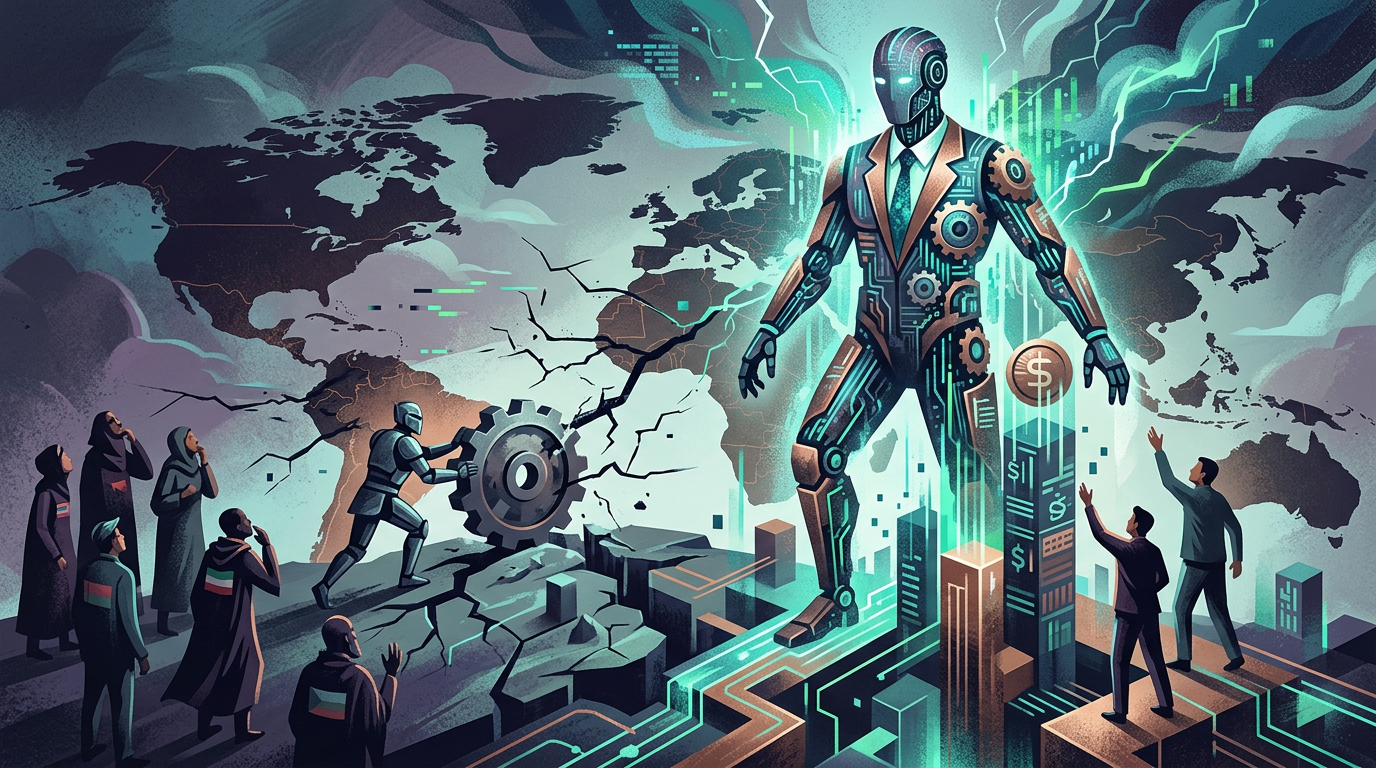
Ravi Menon, Chairman of the Global Finance & Technology Network (GFTN) and former Managing Director of the Monetary Authority of Singapore (MAS), delivered a stark warning at the Singapore FinTech Festival 2026 on November 18. He stated that artificial intelligence is fundamentally reshaping the global financial system, driving a new wave of globalization that impacts trade, investments, and supply chains. Menon emphasized that AI significantly elevates geopolitical risks, turning every link in its complex supply chain into a potential geo-economic vulnerability.Menon highlighted the immense and concentrated capital flowing into AI, with hundreds of billions annually directed towards data centers by a few technology giants, creating the "most concentrated supply chain in the world." He illustrated this interconnectedness by noting how an AI-powered transaction could rely on a chip from Taiwan, a model trained in Texas, power from Qatari gas, and a cable running through the South China Sea. This deep interdependency intertwines global risks and raises the stakes for financial coercion, while also accelerating the growth of alternative financial systems.
The GFTN Chairman also discussed the erosion of traditional financial leverage, such as the US dollar's dominance. He explained that AI agents, by lowering the cost of switching payment rails, can reroute payments and encourage currency diversification. Menon argued that AI's acceleration in building substitutes for existing financial mechanisms makes international cooperation more vital than coercive policies. He concluded that the global financial system, once solely designed for efficiency, is now being reconfigured for resilience, necessitating new public-private partnerships to manage these evolving challenges.
Global Finance Chief Warns of AI's Geopolitical Risks and Concentrated Power
Ravi Menon, Chairman of the Global Finance & Technology Network (GFTN) and former Managing Director of the Monetary Authority of Singapore (MAS), delivered a stark warning at the Singapore FinTech Festival 2026 on November 18. He stated that artificial intelligence is fundamentally reshaping the global financial system, driving a new wave of globalization that impacts trade, investments, and supply chains. Menon emphasized that AI significantly elevates geopolitical risks, turning every link in its complex supply chain into a potential geo-economic vulnerability.
Menon highlighted the immense and concentrated capital flowing into AI, with hundreds of billions annually directed towards data centers by a few technology giants, creating the "most concentrated supply chain in the world." He illustrated this interconnectedness by noting how an AI-powered transaction could rely on a chip from Taiwan, a model trained in Texas, power from Qatari gas, and a cable running through the South China Sea. This deep interdependency intertwines global risks and raises the stakes for financial coercion, while also accelerating the growth of alternative financial systems.
The GFTN Chairman also discussed the erosion of traditional financial leverage, such as the US dollar's dominance. He explained that AI agents, by lowering the cost of switching payment rails, can reroute payments and encourage currency diversification. Menon argued that AI's acceleration in building substitutes for existing financial mechanisms makes international cooperation more vital than coercive policies. He concluded that the global financial system, once solely designed for efficiency, is now being reconfigured for resilience, necessitating new public-private partnerships to manage these evolving challenges.
Sources
asianbankingandfinance.net https://vertexaisearch.cloud.google.com/grounding-api-redirect/AUZIYQELQup5rEAumwAW4-lT5Wg_FhEbRgCuSDK7zaPbssM8sP_-cxRyZLBnYd1t9X3dvqo4clzXe4bfa-DT-bMUQT6h_dAWNczFeIMzEWyuykwD6KLpYkMG89zdodGJScXwUDAO1t4lSyIpJZ12J6BhwghgIlcIdiCJMlvPPZR0F36sfE6SADwfuTXhQveXE0pQO5o3iTd7H0Pxkz-n7J3YgxuulTtTiss0
#GlobalFinance #AIGeopolitics #SupplyChainRisks #DigitalEconomy #FinTech
TSMC Tightens Curbs on Advanced AI Chip Manufacturing for Chinese Designers
Taiwan Semiconductor Manufacturing Co. (TSMC), the world's leading contract chipmaker, has reportedly tightened its restrictions on Chinese chip designers. This significant move involves suspending certain previously approved advanced manufacturing orders and generally limiting affected Chinese clients to older chipmaking technologies. Specifically, orders utilizing advanced manufacturing processes of 16 nanometers and below will now be halted unless Chinese companies secure explicit U.S. export licenses. Chinese designers will largely be confined to 28-nanometer and 40-nanometer processes, provided their chips do not incorporate high-bandwidth memory (HBM) or require advanced packaging.This policy shift by TSMC is critical as it effectively closes one of the last remaining avenues for Chinese companies to produce cutting-edge artificial intelligence processors. The restrictions are expected to further complicate Beijing's strategic efforts to develop domestic alternatives to advanced AI chips, which are predominantly designed by firms like Nvidia and manufactured by TSMC. This action directly follows new U.S. Department of Commerce rules, underscoring a broader, coordinated international effort to limit China's access to the sophisticated semiconductor technology essential for advanced AI development and national security applications.
The tightening of these export controls will likely accelerate China's drive for indigenous semiconductor innovation, despite the considerable technological challenges that lie ahead. For the global semiconductor industry, this development reinforces the ongoing geopolitical fragmentation and highlights the pivotal role of export controls in shaping future technological competition. Chinese companies reliant on advanced AI processors will need to re-evaluate their strategies, potentially shifting towards domestic solutions or less advanced supply chains, which could significantly impact their AI development timelines.
TSMC Tightens Curbs on Advanced AI Chip Manufacturing for Chinese Designers
Taiwan Semiconductor Manufacturing Co. (TSMC), the world's leading contract chipmaker, has reportedly tightened its restrictions on Chinese chip designers. This significant move involves suspending certain previously approved advanced manufacturing orders and generally limiting affected Chinese clients to older chipmaking technologies. Specifically, orders utilizing advanced manufacturing processes of 16 nanometers and below will now be halted unless Chinese companies secure explicit U.S. export licenses. Chinese designers will largely be confined to 28-nanometer and 40-nanometer processes, provided their chips do not incorporate high-bandwidth memory (HBM) or require advanced packaging.
This policy shift by TSMC is critical as it effectively closes one of the last remaining avenues for Chinese companies to produce cutting-edge artificial intelligence processors. The restrictions are expected to further complicate Beijing's strategic efforts to develop domestic alternatives to advanced AI chips, which are predominantly designed by firms like Nvidia and manufactured by TSMC. This action directly follows new U.S. Department of Commerce rules, underscoring a broader, coordinated international effort to limit China's access to the sophisticated semiconductor technology essential for advanced AI development and national security applications.
The tightening of these export controls will likely accelerate China's drive for indigenous semiconductor innovation, despite the considerable technological challenges that lie ahead. For the global semiconductor industry, this development reinforces the ongoing geopolitical fragmentation and highlights the pivotal role of export controls in shaping future technological competition. Chinese companies reliant on advanced AI processors will need to re-evaluate their strategies, potentially shifting towards domestic solutions or less advanced supply chains, which could significantly impact their AI development timelines.
Sources
taipeitimes.com https://vertexaisearch.cloud.google.com/grounding-api-redirect/AUZIYQEe9Y22v2tWmwnR4oBkLWK1NbaN-_GdNZ6Z4p7awuIRPLq-PMdJHGLZhyvNhUwysSlQhYYhmoO-8cldehbyA8jthZSOdayIpx4f7S9HyQTJfETfL5nDIaslYqNPTcwg5NbiMpXzfA5EqMUb3LxJkdUwHPCmmomVLc3es9lskTE=
#SemiconductorIndustry #AIChips #USChinaTechWar #ExportControls #TSMC
MagicBox 官方資訊摘要整理農業部花卉創新園區研究發展中心攜手臺灣園藝學會、國立臺灣大學及國內產官學研各界,在11月18日至20日於尼泊爾加德滿都舉行的「2026年第五屆國際蘭花研討會」期間,成功爭取由臺灣主辦第六屆研討會,將於2030年邀集全球頂尖蘭花專家及產業代表齊聚臺南,展現我國蘭花科技研發與智慧生產實力,深化國際合作量能。
農業部表示,臺灣在蘭花品種選育、種苗繁殖、智慧設施栽培及外銷冷鏈方面,已建立完整且具全球競爭力的產業體系,其中蝴蝶蘭更是我國極具代表性的外銷旗艦花卉。此次順利取得全球蘭花盛會的主辦權,不僅象徵臺灣的蘭花科研與產業實力深獲國際高度肯定,更將透過主辦國際級盛會,促成跨國學術對話,推動前瞻研發成果與全球市場需求緊密接軌。
國際蘭花研討會為國際園藝學會(International Society for Horticultural Science,...
IEA Warns of Soaring Datacenter Emissions as AI Growth Fuels Fossil Fuel Reliance
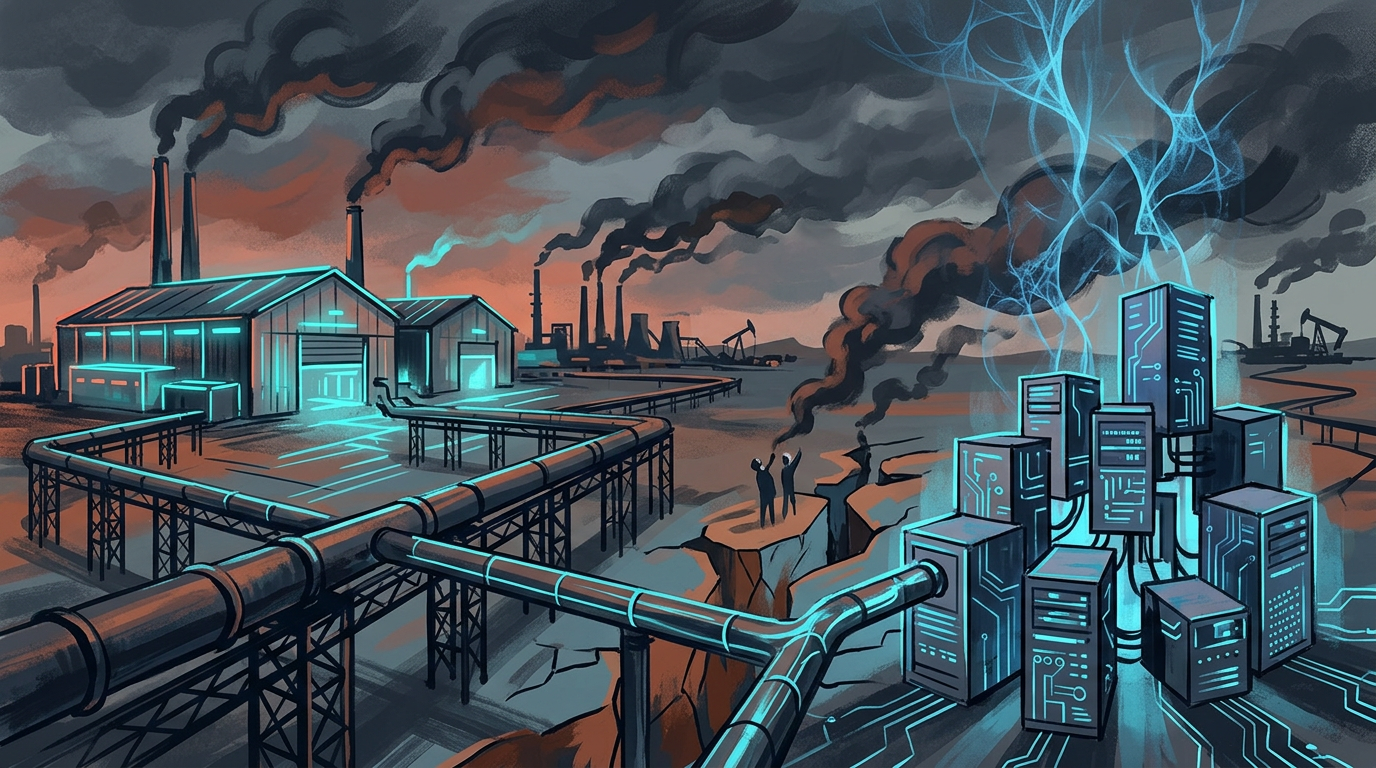
The International Energy Agency (IEA) has issued a stark warning regarding the environmental impact of rapidly expanding artificial intelligence technologies, projecting a massive surge in datacenter electricity consumption and associated carbon emissions. According to a new IEA report released this week, global datacenters are expected to consume twice as much electricity by 2030, with the escalating demand from AI applications accounting for three-quarters of this increase. This accelerated energy demand is set to drive a 70% rise in carbon emissions from datacenters within the next four years, as major tech hubs like the United States and China increasingly turn to fossil fuels to power their AI ambitions.The report underscores the significant and growing environmental footprint of the AI industry, posing substantial challenges to global climate targets and existing energy infrastructures. The IEA's analysis, which included tracking the buildout of 93 large “AI factories” worldwide, indicates that datacenter capacity has increased tenfold in the last 24 months. The agency found that by the time these AI factories are completed, their combined capacity could reach approximately 50 gigawatts. Despite the tech sector's efforts to procure renewable energy, the report highlights that the appetite for fossil fuels is growing even faster, particularly in the US and China, where coal and natural gas will remain primary power sources for datacenters by the end of the decade.
This alarming projection necessitates an urgent re-evaluation of energy strategies within the digital technology sector. Going forward, there will likely be increased pressure on technology companies to accelerate investments in sustainable energy solutions for their datacenters and to innovate in developing more energy-efficient AI hardware and software. Governments may also be compelled to implement new policies aimed at mitigating the energy consumption and greenhouse gas emissions from the rapidly expanding digital infrastructure, ensuring that the advancement of AI does not come at an unsustainable environmental cost.
IEA Warns of Soaring Datacenter Emissions as AI Growth Fuels Fossil Fuel Reliance
The International Energy Agency (IEA) has issued a stark warning regarding the environmental impact of rapidly expanding artificial intelligence technologies, projecting a massive surge in datacenter electricity consumption and associated carbon emissions. According to a new IEA report released this week, global datacenters are expected to consume twice as much electricity by 2030, with the escalating demand from AI applications accounting for three-quarters of this increase. This accelerated energy demand is set to drive a 70% rise in carbon emissions from datacenters within the next four years, as major tech hubs like the United States and China increasingly turn to fossil fuels to power their AI ambitions.
The report underscores the significant and growing environmental footprint of the AI industry, posing substantial challenges to global climate targets and existing energy infrastructures. The IEA's analysis, which included tracking the buildout of 93 large “AI factories” worldwide, indicates that datacenter capacity has increased tenfold in the last 24 months. The agency found that by the time these AI factories are completed, their combined capacity could reach approximately 50 gigawatts. Despite the tech sector's efforts to procure renewable energy, the report highlights that the appetite for fossil fuels is growing even faster, particularly in the US and China, where coal and natural gas will remain primary power sources for datacenters by the end of the decade.
This alarming projection necessitates an urgent re-evaluation of energy strategies within the digital technology sector. Going forward, there will likely be increased pressure on technology companies to accelerate investments in sustainable energy solutions for their datacenters and to innovate in developing more energy-efficient AI hardware and software. Governments may also be compelled to implement new policies aimed at mitigating the energy consumption and greenhouse gas emissions from the rapidly expanding digital infrastructure, ensuring that the advancement of AI does not come at an unsustainable environmental cost.
Sources
theguardian.com https://vertexaisearch.cloud.google.com/grounding-api-redirect/AUZIYQGX5PkL1SixzSgipRsjUBsVehXEhJqoilQo1QSHothtzYdcTmmVb_ykewmaDOU_nbOOfnM8l8t9Cf5Udv5Oi510aZ95S98uhaMPAsWGRkXNwl8KItm0FMg-SiI-sGexcdofFR4hbc8Cd_6oKNNjgVMvorx_2N0y2irSLLKVuzPX5dJNK5eB1OMzEgRe9rLzgQLiuR0Fb_7ZBTSQ3rIT5UviIHY_Aotmg4X8uvyQU_q95A==
#AIImpact #DatacenterEmissions #EnergyConsumption #IEAReport #SustainableTech
Buy Yelp Reviews can help people trust your business more. We offer 100% real, Non-drop Yelp reviews. Our reliable service will help your Yelp Profile grow.