Trump says AI risks can be managed, signals openness to guardrails
US President Donald Trump said the risks posed by artificial intelligence can be managed but signaled an openness to safeguards, telling CBS's "60 Minutes" that he "doesn't mind guardrails."
Asked whether the United States should accept the risks of artificial intelligence in order to stay ahead of China, Trump said the dangers were manageable and expressed openness to working with Democrats on safeguards.
"I don't mind guardrails," he told CBS, adding that he did not want regulations to put the United States in "a deep second position" behind China, which he said had no such restrictions.
Trump has previously favored letting technology companies police themselves rather than imposing sweeping government restrictions. His latest comments suggest some openness to safeguards, though it remains unclear at what level.
TSMC Explores Advanced 3D DRAM Production Amid NVIDIA Demand for AI Memory
Taiwan Semiconductor Manufacturing Company (TSMC) is reportedly investigating a significant foray into advanced 3D DRAM memory manufacturing. This strategic exploration comes in response to a direct request from NVIDIA, which is seeking to secure a more robust and diversified supply of memory for its burgeoning AI infrastructure. The move could position TSMC as a formidable new entrant in a market traditionally dominated by memory giants like Samsung Electronics, SK Hynix, and Micron Technology.This potential shift by TSMC is critical given the intense demand for high-bandwidth memory (HBM) and other advanced memory solutions driven by the artificial intelligence boom. NVIDIA's reliance on cutting-edge memory to power its AI accelerators has been a key factor in pushing for innovations and increased supply chain resilience. TSMC's entry into 3D DRAM could fundamentally reshape the competitive landscape, offering NVIDIA and other AI chip developers an alternative source for next-generation memory that integrates closely with their advanced packaging requirements.
Looking ahead, TSMC is currently evaluating its options, which include constructing dedicated new fabrication facilities or converting existing semiconductor plants for memory production. The successful development and mass production of 3D DRAM by TSMC would not only alleviate supply pressures but also potentially accelerate advancements in memory technology, as the company could leverage its extensive expertise in advanced manufacturing and packaging. Such a development would further solidify TSMC's crucial role at the forefront of the AI hardware ecosystem.
TSMC Explores Advanced 3D DRAM Production Amid NVIDIA Demand for AI Memory
Taiwan Semiconductor Manufacturing Company (TSMC) is reportedly investigating a significant foray into advanced 3D DRAM memory manufacturing. This strategic exploration comes in response to a direct request from NVIDIA, which is seeking to secure a more robust and diversified supply of memory for its burgeoning AI infrastructure. The move could position TSMC as a formidable new entrant in a market traditionally dominated by memory giants like Samsung Electronics, SK Hynix, and Micron Technology.
This potential shift by TSMC is critical given the intense demand for high-bandwidth memory (HBM) and other advanced memory solutions driven by the artificial intelligence boom. NVIDIA's reliance on cutting-edge memory to power its AI accelerators has been a key factor in pushing for innovations and increased supply chain resilience. TSMC's entry into 3D DRAM could fundamentally reshape the competitive landscape, offering NVIDIA and other AI chip developers an alternative source for next-generation memory that integrates closely with their advanced packaging requirements.
Looking ahead, TSMC is currently evaluating its options, which include constructing dedicated new fabrication facilities or converting existing semiconductor plants for memory production. The successful development and mass production of 3D DRAM by TSMC would not only alleviate supply pressures but also potentially accelerate advancements in memory technology, as the company could leverage its extensive expertise in advanced manufacturing and packaging. Such a development would further solidify TSMC's crucial role at the forefront of the AI hardware ecosystem.
Sources
sammyfans.com https://vertexaisearch.cloud.google.com/grounding-api-redirect/AUZIYQGIrOpQgBPITIsBsdhWxsq6Mf1ilHEiCzBUBQVlDXQrCPQeNCu7MI3nPnJ8us8ImTwhsHTxW9sfhZoSkEBG9RA8gFmlel56mun8D7N17jPGd53ATuzJhb7yLSQ3FjHLWMb08re7Pg2Bcmw46a6mKCOy_Vqhy0c0Pq_iNyMGZCGbBF2hv-ZM5EWu6K1BbjH8Xg==
#TSMC #NVIDIA #SemiconductorIndustry #AIMemory
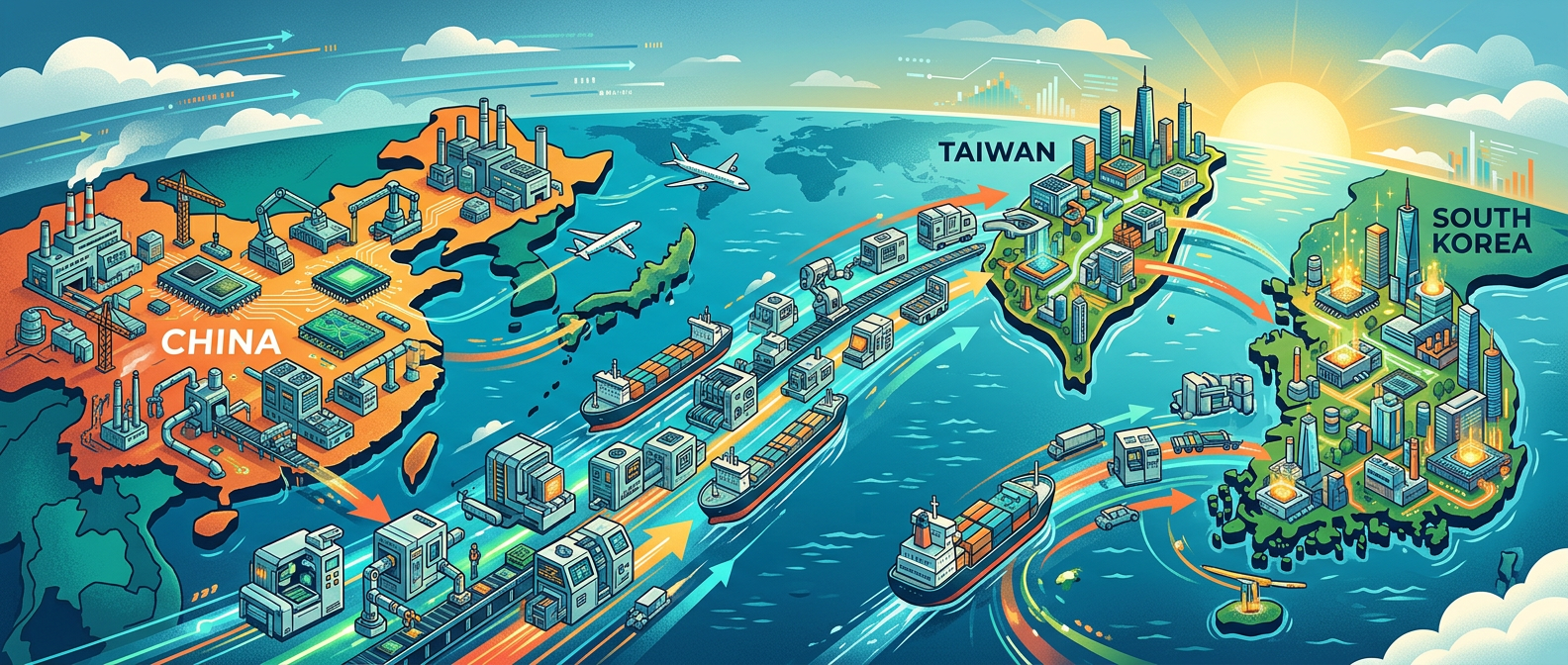
Global Semiconductor Equipment Sales Dramatically Shift Away From China Towards South Korea and Taiwan
Major global semiconductor manufacturing equipment companies have reported a significant and uniform decline in their sales ratios to China during the third quarter of 2026 compared to the same period last year. This notable shift comes as US export controls continue to restrict China's access to advanced semiconductor equipment, effectively halting the sale of cutting-edge technology to the nation. Companies like ASML, Tokyo Electron, Lam Research, and KLA all experienced reduced proportions of their sales going to China. For example, ASML's sales ratio to China plummeted by 19 percentage points, while its sales to Taiwan and South Korea collectively exceeded China's share during this period.Conversely, South Korea and Taiwan have witnessed a substantial surge in equipment purchases. This increased investment is primarily driven by their aggressive expansion into AI semiconductor infrastructure. South Korean giants such as Samsung Electronics and SK Hynix are significantly boosting their high-bandwidth memory (HBM) and advanced DRAM production capacities, essential for AI applications. Similarly, Taiwan Semiconductor Manufacturing Company (TSMC) is rapidly scaling up its advanced foundry and packaging capabilities to meet the escalating global demand for AI hardware. This redirection of sales and investment highlights a fundamental reconfiguration of the global semiconductor supply chain.
This trend is expected to continue and intensify, further solidifying the technological divide in the semiconductor industry. China will likely accelerate its efforts to bolster its domestic semiconductor equipment industry to compensate for the restrictions imposed by overseas suppliers, potentially fostering a more self-reliant but less advanced indigenous ecosystem. Meanwhile, South Korea and Taiwan are poised to further cement their roles as critical global hubs for advanced AI chip manufacturing. These nations will benefit from sustained robust global demand for AI hardware, placing continuous pressure on them for rapid innovation to maintain their technological leadership and address potential future supply chain challenges.
Global Semiconductor Equipment Sales Dramatically Shift Away From China Towards South Korea and Taiwan
Major global semiconductor manufacturing equipment companies have reported a significant and uniform decline in their sales ratios to China during the third quarter of 2026 compared to the same period last year. This notable shift comes as US export controls continue to restrict China's access to advanced semiconductor equipment, effectively halting the sale of cutting-edge technology to the nation. Companies like ASML, Tokyo Electron, Lam Research, and KLA all experienced reduced proportions of their sales going to China. For example, ASML's sales ratio to China plummeted by 19 percentage points, while its sales to Taiwan and South Korea collectively exceeded China's share during this period.
Conversely, South Korea and Taiwan have witnessed a substantial surge in equipment purchases. This increased investment is primarily driven by their aggressive expansion into AI semiconductor infrastructure. South Korean giants such as Samsung Electronics and SK Hynix are significantly boosting their high-bandwidth memory (HBM) and advanced DRAM production capacities, essential for AI applications. Similarly, Taiwan Semiconductor Manufacturing Company (TSMC) is rapidly scaling up its advanced foundry and packaging capabilities to meet the escalating global demand for AI hardware. This redirection of sales and investment highlights a fundamental reconfiguration of the global semiconductor supply chain.
This trend is expected to continue and intensify, further solidifying the technological divide in the semiconductor industry. China will likely accelerate its efforts to bolster its domestic semiconductor equipment industry to compensate for the restrictions imposed by overseas suppliers, potentially fostering a more self-reliant but less advanced indigenous ecosystem. Meanwhile, South Korea and Taiwan are poised to further cement their roles as critical global hubs for advanced AI chip manufacturing. These nations will benefit from sustained robust global demand for AI hardware, placing continuous pressure on them for rapid innovation to maintain their technological leadership and address potential future supply chain challenges.
Sources
chosun.com https://vertexaisearch.cloud.google.com/grounding-api-redirect/AUZIYQGz0RzGZAWt6mSZLEgjTLVwMool2sYfseRFXrNmALJfHKhFGRFz19FnDW6EbUu721xfyWHaTIsbo79raLmiUq-tmBLg2w6EYuHzHK8RG82Cpyk9tiTcBQpkT-fki1SC25jbNzi4GbbBJ_58b9Aoi4a_yM-phsPb-7g9OxOUQTE5dsrr9YZeCt-csKL_vw==
#SemiconductorIndustry #AITechnology #GlobalTrade #ChipManufacturing #SupplyChain


 1
 185 瀏覽次數