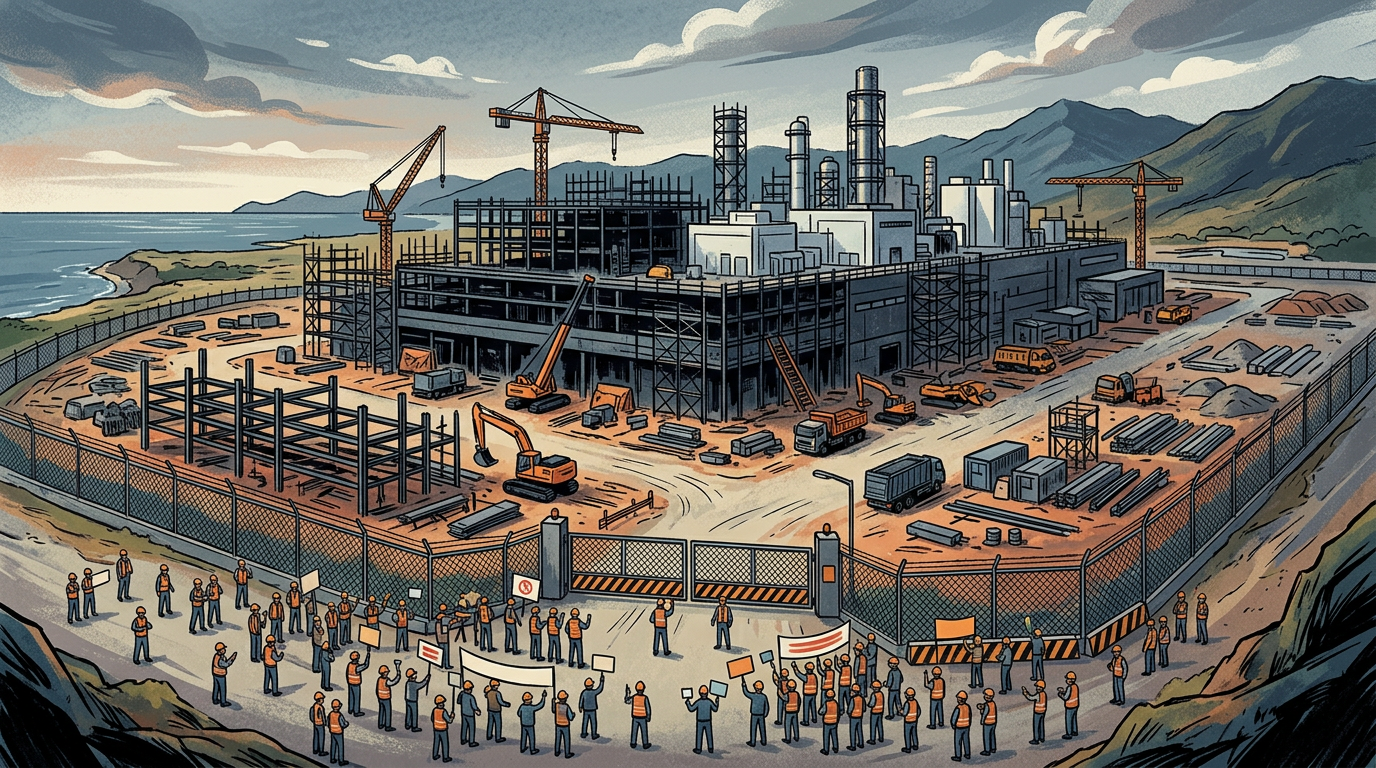
Micron Technology Inc. has indefinitely suspended the construction of a new $4.5 billion memory chip plant in Taoyuan, Taiwan, following a prolonged labor dispute. The US-based semiconductor giant has reportedly halted all work on the facility as executives express concerns over mounting uncertainties, including the risk of any agreement with local labor unions being overturned. Taiwanese officials and key suppliers have been informed of Micron's decision to pause the critical project.This suspension carries significant implications for the global supply of memory chips, which are essential components for the rapidly expanding artificial intelligence sector. Taiwan is a pivotal hub for semiconductor manufacturing, and Micron's operations there account for a substantial portion of its conventional chip output. The dispute intensified as employees sought higher compensation, citing the record profits generated by the current AI build-out. The halt exacerbates existing market anxieties over potential memory chip shortages, directly impacting the infrastructure vital for AI development and deployment.
Looking ahead, the situation underscores the complex challenges faced by semiconductor manufacturers as they navigate unprecedented demand for AI-related hardware. The resolution of the labor conflict will be crucial for Micron to resume construction and mitigate potential disruptions to the AI supply chain. This event may also prompt broader industry reflection on labor relations and operational stability within critical manufacturing regions, especially as companies strive to scale production to meet global technological needs.
Micron Halts $4.5 Billion Taiwan Chip Plant Construction Amid Labor Dispute
Micron Technology Inc. has indefinitely suspended the construction of a new $4.5 billion memory chip plant in Taoyuan, Taiwan, following a prolonged labor dispute. The US-based semiconductor giant has reportedly halted all work on the facility as executives express concerns over mounting uncertainties, including the risk of any agreement with local labor unions being overturned. Taiwanese officials and key suppliers have been informed of Micron's decision to pause the critical project.
This suspension carries significant implications for the global supply of memory chips, which are essential components for the rapidly expanding artificial intelligence sector. Taiwan is a pivotal hub for semiconductor manufacturing, and Micron's operations there account for a substantial portion of its conventional chip output. The dispute intensified as employees sought higher compensation, citing the record profits generated by the current AI build-out. The halt exacerbates existing market anxieties over potential memory chip shortages, directly impacting the infrastructure vital for AI development and deployment.
Looking ahead, the situation underscores the complex challenges faced by semiconductor manufacturers as they navigate unprecedented demand for AI-related hardware. The resolution of the labor conflict will be crucial for Micron to resume construction and mitigate potential disruptions to the AI supply chain. This event may also prompt broader industry reflection on labor relations and operational stability within critical manufacturing regions, especially as companies strive to scale production to meet global technological needs.
Sources
taipeitimes.com https://vertexaisearch.cloud.google.com/grounding-api-redirect/AUZIYQG5tM6RIWCTO_2XrLPJJ8K4DNRxC8OH7NF6GIBbPhZfrDK8Tp_6l94-s0ufAbUj_6dtW2VGmZ9oB8frc_TuWuEkPMPu5Uo9zR8amIswA2UoFnNaoSde8-QkLwvNo10_JPa-PY8SyhJ7VuUrYj9TWfNr0HLlJg2XP8u285t_vLg=
#SemiconductorIndustry #AIComponents #MicronTechnology #TaiwanManufacturing #LaborDisputes
US and France Clash Over Global AI Regulation at G7 Summit
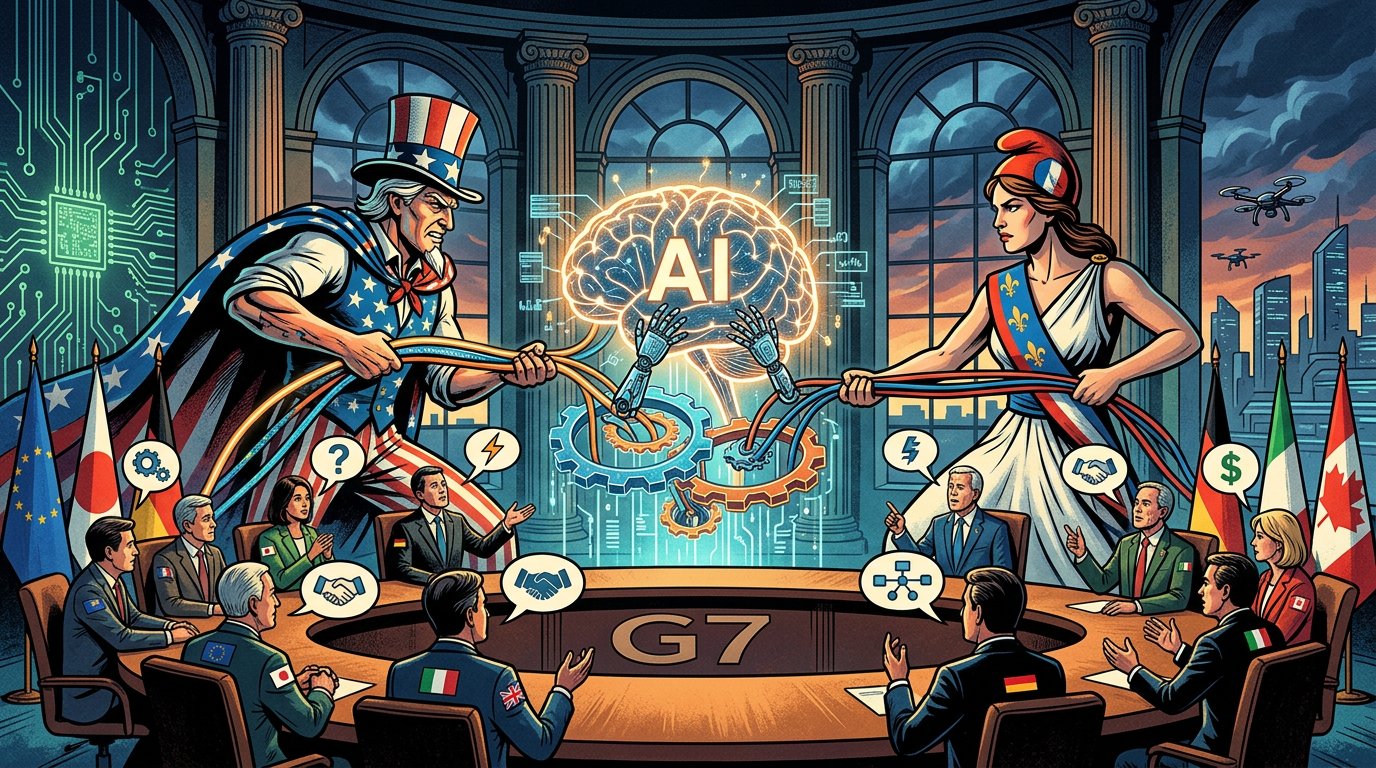
The United States and France have reached an impasse regarding international cooperation on artificial intelligence safety during recent G7 discussions. France put forth a proposal to create a joint working group tasked with testing advanced AI models and facilitating the sharing of information about security risks. However, the United States rejected this initiative, deeming it an unnecessary bureaucratic layer and indicating a preference for a less restrictive approach to AI development and regulation.This disagreement underscores a significant and growing divergence among major global powers concerning the governance of rapidly evolving AI technologies. France, alongside other European nations, advocates for robust international coordination and comprehensive safeguards, stressing the importance of common standards and assessments to mitigate risks spanning cybersecurity threats to potential misuse of AI. In contrast, the United States, under its current administration, prioritizes fostering technological leadership, innovation, and competitiveness, favoring national strategies over the establishment of additional international regulatory frameworks. The inability of the G7 to forge a unified position highlights the profound challenge of implementing global AI safeguards amidst an international race for technological dominance.
Despite the current disagreement, French Digital Minister Anne Le Hénanff has stated that France intends to persist in its efforts to promote closer collaboration with its European partners and other international allies. Further discussions are tentatively scheduled to resume in December, indicating ongoing efforts to bridge the regulatory divide and address mounting concerns related to AI security. These continued dialogues will be pivotal in shaping the future trajectory of global AI governance as AI systems steadily gain more powerful capabilities.
US and France Clash Over Global AI Regulation at G7 Summit
The United States and France have reached an impasse regarding international cooperation on artificial intelligence safety during recent G7 discussions. France put forth a proposal to create a joint working group tasked with testing advanced AI models and facilitating the sharing of information about security risks. However, the United States rejected this initiative, deeming it an unnecessary bureaucratic layer and indicating a preference for a less restrictive approach to AI development and regulation.
This disagreement underscores a significant and growing divergence among major global powers concerning the governance of rapidly evolving AI technologies. France, alongside other European nations, advocates for robust international coordination and comprehensive safeguards, stressing the importance of common standards and assessments to mitigate risks spanning cybersecurity threats to potential misuse of AI. In contrast, the United States, under its current administration, prioritizes fostering technological leadership, innovation, and competitiveness, favoring national strategies over the establishment of additional international regulatory frameworks. The inability of the G7 to forge a unified position highlights the profound challenge of implementing global AI safeguards amidst an international race for technological dominance.
Despite the current disagreement, French Digital Minister Anne Le Hénanff has stated that France intends to persist in its efforts to promote closer collaboration with its European partners and other international allies. Further discussions are tentatively scheduled to resume in December, indicating ongoing efforts to bridge the regulatory divide and address mounting concerns related to AI security. These continued dialogues will be pivotal in shaping the future trajectory of global AI governance as AI systems steadily gain more powerful capabilities.
Sources
youtube.com https://vertexaisearch.cloud.google.com/grounding-api-redirect/AUZIYQHKlt_Q2U3T9PrzOZS8hINWQLb4Q657YFVLFptMZ7amb15_09utyZbUPZ3o6R5rIi2sHFu-HdOk3_x_US5ngwmJmEkWdeAHPw_6BBsq7vzttqNVFKMP15CcVSCoUEc2casPpRhTKw==
#GlobalAIRegulation #G7AI #USFranceTech #AIStandards #DigitalDiplomacy
Marvell Acquires Lumentum in $115 Billion Deal to Advance AI Infrastructure Connectivity
Marvell Technology has announced its acquisition of Lumentum Holdings Inc. in a substantial all-stock transaction valued at $115 billion. This strategic merger is set to integrate complementary electrical and optical technologies, which are considered vital for the development of next-generation artificial intelligence infrastructure. The move builds upon Marvell's earlier acquisition of Celestial AI in February, further expanding its expertise in optical connectivity to deliver high-bandwidth and power-efficient solutions crucial for modern data centers.The acquisition is a direct response to what Marvell describes as an "inflection point" in the artificial intelligence infrastructure sector. This period is marked by an explosion in bandwidth requirements, coupled with the inherent physical limitations of traditional copper-based wiring. Optical technologies are increasingly recognized as indispensable for meeting AI's demanding connectivity needs, ensuring that sophisticated AI models can communicate rapidly and efficiently across vast server and chip clusters. This consolidation positions Marvell as a significant leader in the rapidly evolving scale-up interconnect market, a critical role for sustaining the smooth operation and advancement of complex AI applications.
Looking ahead, the integration of Lumentum's advanced optical components with Marvell's existing electrical technology portfolio is expected to accelerate the development of more tightly integrated and efficient solutions for AI data centers. The combined entity is poised to hold a substantial share of the semiconductor wired communications market, driving innovation in advanced optics tailored for AI infrastructure. This major acquisition underscores a broader industry trend: the significant investment required in foundational hardware to support the ongoing AI revolution, with a pointed focus on overcoming data transmission bottlenecks to enable the future growth and enhanced capabilities of artificial intelligence.
Marvell Acquires Lumentum in $115 Billion Deal to Advance AI Infrastructure Connectivity
Marvell Technology has announced its acquisition of Lumentum Holdings Inc. in a substantial all-stock transaction valued at $115 billion. This strategic merger is set to integrate complementary electrical and optical technologies, which are considered vital for the development of next-generation artificial intelligence infrastructure. The move builds upon Marvell's earlier acquisition of Celestial AI in February, further expanding its expertise in optical connectivity to deliver high-bandwidth and power-efficient solutions crucial for modern data centers.
The acquisition is a direct response to what Marvell describes as an "inflection point" in the artificial intelligence infrastructure sector. This period is marked by an explosion in bandwidth requirements, coupled with the inherent physical limitations of traditional copper-based wiring. Optical technologies are increasingly recognized as indispensable for meeting AI's demanding connectivity needs, ensuring that sophisticated AI models can communicate rapidly and efficiently across vast server and chip clusters. This consolidation positions Marvell as a significant leader in the rapidly evolving scale-up interconnect market, a critical role for sustaining the smooth operation and advancement of complex AI applications.
Looking ahead, the integration of Lumentum's advanced optical components with Marvell's existing electrical technology portfolio is expected to accelerate the development of more tightly integrated and efficient solutions for AI data centers. The combined entity is poised to hold a substantial share of the semiconductor wired communications market, driving innovation in advanced optics tailored for AI infrastructure. This major acquisition underscores a broader industry trend: the significant investment required in foundational hardware to support the ongoing AI revolution, with a pointed focus on overcoming data transmission bottlenecks to enable the future growth and enhanced capabilities of artificial intelligence.
Sources
manufacturingdive.com https://vertexaisearch.cloud.google.com/grounding-api-redirect/AUZIYQGyoHzhJv9OSuZ2WBUkczsU9RvVZhFuK76Jf4HT1No63JELT-zZ81qvKkErTKGN6OcLtfPo0vgt5lYIS6sbW3GwlS-8mlsAQlgkZRDXv5gEh9tR6eJHagpVB3wqtfTx8iVZ8zp8rMG-MwE8V66BPD9EM5IEOXnfXoPPNTuc4lF-tCfF49wucFViJMwN7DwZ62-Jv70wXLMhMvY=
businessinsider.com https://vertexaisearch.cloud.google.com/grounding-api-redirect/AUZIYQHecJzNVUqu-HUX3GuNhj5qS1xRD8geqNuwU-UGvYFy2AXOMOCevrsd4FxgbueQeMQ7ATXmTh5LZOkDiQ0Nnfi0I1wpeAAdZI7GGNzNGNpyVIZlV9ABWxG1MP_X-bd-ON9ZqmnB_xu3TAhaqVy5NOey-GK-cfUSfdwFAMQMW-RC7d_jdf5CXiesagr5mj8U-P9vsW5OCrY1s0aAMMOSW0Q=
#AIInfrastructure #SemiconductorMerger #OpticalTechnology #DataCenterConnectivity