South Korea Unveils Ambitious National Quantum Computing Strategy
South Korea has officially launched a comprehensive national strategy to accelerate its development in quantum computing, backed by a multi-billion dollar investment over the next five years. The Ministry of Science and ICT, alongside major industrial players and research institutions, revealed the detailed roadmap on November 5, 2026, outlining plans to establish a robust quantum ecosystem. This initiative includes significant funding for quantum hardware and software research, talent development, and specialized innovation hubs. The announcement emphasizes building sovereign quantum capability and fostering domestic breakthroughs in algorithms and applications.This bold move underscores the growing global race for quantum technology, a field poised to revolutionize industries from pharmaceuticals and finance to AI and national security. South Korea, a powerhouse in semiconductors and digital innovation, recognizes the strategic imperative of securing an early lead. Efforts to cultivate a skilled workforce and foster academia-industry collaboration are expected to significantly enhance the nation's competitive edge. This government-led investment signals quantum computing's transition from theoretical research to a national strategic priority.
Looking ahead, the strategy targets a 1000-qubit quantum computer prototype by 2032 and commercialization of quantum-safe communication technologies within three years. Future steps involve establishing international partnerships for knowledge exchange and joint research, particularly in quantum cryptography and materials science. Experts suggest this ambitious vision could attract substantial foreign investment, solidifying South Korea's position as a hub for cutting-edge quantum innovation. Success will depend on sustained funding, effective talent retention, and agile adaptation to evolving technological advancements.
South Korea Unveils Ambitious National Quantum Computing Strategy
South Korea has officially launched a comprehensive national strategy to accelerate its development in quantum computing, backed by a multi-billion dollar investment over the next five years. The Ministry of Science and ICT, alongside major industrial players and research institutions, revealed the detailed roadmap on November 5, 2026, outlining plans to establish a robust quantum ecosystem. This initiative includes significant funding for quantum hardware and software research, talent development, and specialized innovation hubs. The announcement emphasizes building sovereign quantum capability and fostering domestic breakthroughs in algorithms and applications.
This bold move underscores the growing global race for quantum technology, a field poised to revolutionize industries from pharmaceuticals and finance to AI and national security. South Korea, a powerhouse in semiconductors and digital innovation, recognizes the strategic imperative of securing an early lead. Efforts to cultivate a skilled workforce and foster academia-industry collaboration are expected to significantly enhance the nation's competitive edge. This government-led investment signals quantum computing's transition from theoretical research to a national strategic priority.
Looking ahead, the strategy targets a 1000-qubit quantum computer prototype by 2032 and commercialization of quantum-safe communication technologies within three years. Future steps involve establishing international partnerships for knowledge exchange and joint research, particularly in quantum cryptography and materials science. Experts suggest this ambitious vision could attract substantial foreign investment, solidifying South Korea's position as a hub for cutting-edge quantum innovation. Success will depend on sustained funding, effective talent retention, and agile adaptation to evolving technological advancements.
Sources
msit.go.kr https://vertexaisearch.cloud.google.com/grounding-api-redirect/AUZIYQE2kPFfvwCTaGirdGekT2iy5e_ZWn6GhJIJYbFbohaKjiNrfTR5nJ-PqB4G6gznknug-993rRsnOhivfamrjG9cj1ko5zjACuHavP5Lb7F8Y4JCuJM3QASeIc9yT0vPwW3Z6Xk_LIsVqD_y4ZVufQBz6tvueGdqOpChexwalPVVfNLytMOmwopr2nlhz2_8mfMVngiXxl6a-a-_i9r90qf-XAnkWijQueubpadPUZ6W-OxB4KIibQ==
biggo.com https://vertexaisearch.cloud.google.com/grounding-api-redirect/AUZIYQGA8Amu6hjZCGAouh6AMx2Yvab-LNga8Owb74DCnBSV4bwDnXqXkqbyVFHd1xjZrAo7COcoZqasAIZnzzXC_80Sgkj6jhULFU4UakjEdtvZUUUwtcsoKhLajmLrBZuaJtkEcMHI6lhXOv657DixQ6kTDlrl_F8vXFohW4KlpOw=
qvhinc.com https://vertexaisearch.cloud.google.com/grounding-api-redirect/AUZIYQGCqeW3EkJdxq9vU3VYqh8FOoMvhxLPhHpnlZVisdoV72dXg037tDs5G69SWzkaVKa80WpMXhYTljsSPbLX7A8PPml3tKM3kiw0FMTRNWiCgCTPnpm4gaxP_mxBQ2kw0ohminMEmT6g0XbOy2G5-r6HJ7u1WGRein7ufUh_CwWYwkggf-6PwTw1MVKgO7hBkQ==
#QuantumComputing #SouthKoreaTech #NationalStrategy #DigitalInnovation #FutureTech
Intel Redirects Chip Manufacturing to AI, Signaling PC Market Shift
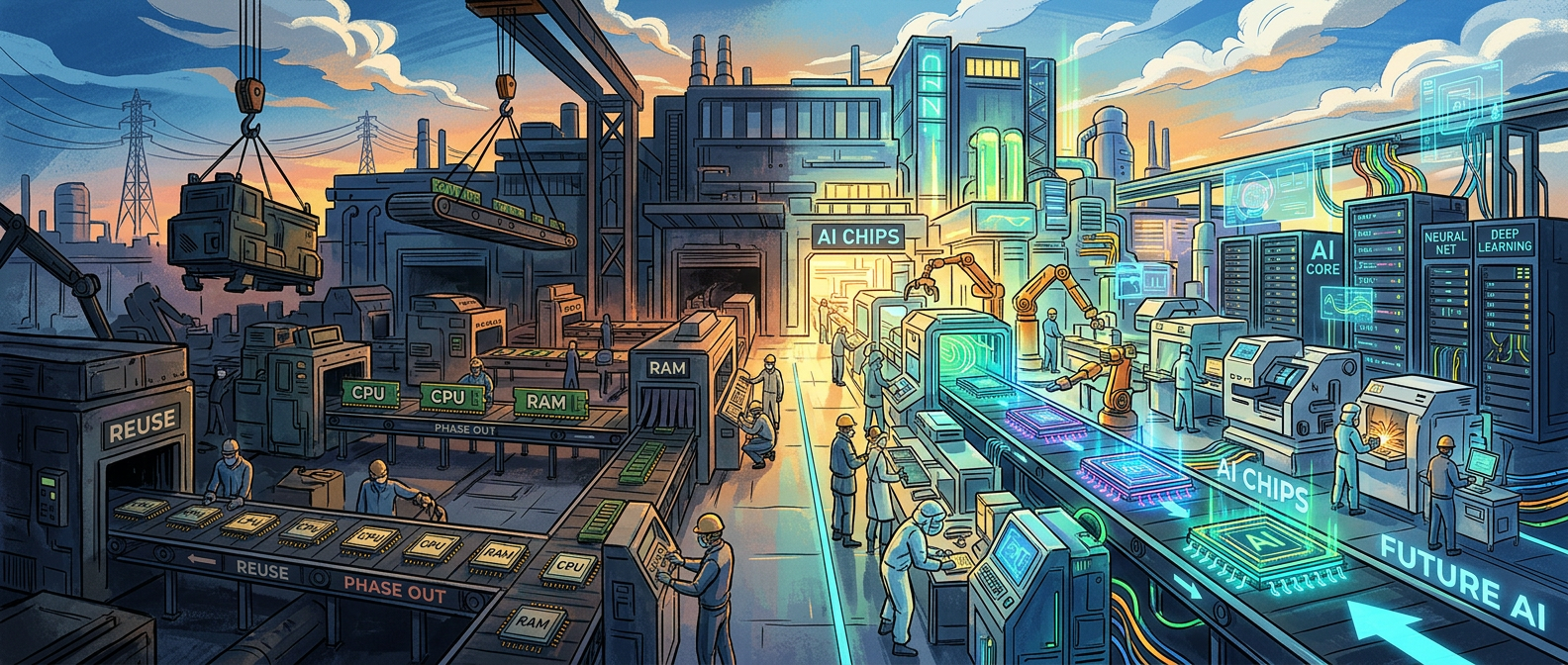
Intel has announced a significant strategic shift, reallocating a portion of its manufacturing capacity from traditional PC processors to high-demand AI data center CPUs. This decision, reported on November 5, 2026, comes in response to the surging global demand for artificial intelligence infrastructure. The move underscores the intense pressure the AI boom is placing on semiconductor production, prompting major industry players to prioritize emerging, lucrative markets.The immediate consequence of this reallocation is a potential tightening of supply and an increase in prices for consumer laptops and desktops, a trend Intel expects to persist through at least the first half of 2027. This pivot highlights a broader industry trend where enterprise AI needs are taking precedence over the traditional client computing market, which has faced headwinds from weakening consumer demand and rising memory prices. Intel's focus is now firmly on its Xeon family of processors, critical components for servers, data centers, and high-performance computing required by AI workloads.
This strategic adjustment by one of the world's leading chip manufacturers signifies a foundational shift in the technology landscape. As AI adoption accelerates across industries, companies like Intel are adapting their core business models to capitalize on this growth. Moving forward, the industry will closely watch how this capacity shift impacts the availability and pricing of both AI infrastructure and consumer electronics, setting a precedent for future resource allocation within the competitive semiconductor sector.
Intel Redirects Chip Manufacturing to AI, Signaling PC Market Shift
Intel has announced a significant strategic shift, reallocating a portion of its manufacturing capacity from traditional PC processors to high-demand AI data center CPUs. This decision, reported on November 5, 2026, comes in response to the surging global demand for artificial intelligence infrastructure. The move underscores the intense pressure the AI boom is placing on semiconductor production, prompting major industry players to prioritize emerging, lucrative markets.
The immediate consequence of this reallocation is a potential tightening of supply and an increase in prices for consumer laptops and desktops, a trend Intel expects to persist through at least the first half of 2027. This pivot highlights a broader industry trend where enterprise AI needs are taking precedence over the traditional client computing market, which has faced headwinds from weakening consumer demand and rising memory prices. Intel's focus is now firmly on its Xeon family of processors, critical components for servers, data centers, and high-performance computing required by AI workloads.
This strategic adjustment by one of the world's leading chip manufacturers signifies a foundational shift in the technology landscape. As AI adoption accelerates across industries, companies like Intel are adapting their core business models to capitalize on this growth. Moving forward, the industry will closely watch how this capacity shift impacts the availability and pricing of both AI infrastructure and consumer electronics, setting a precedent for future resource allocation within the competitive semiconductor sector.
Sources
businesstoday.in https://vertexaisearch.cloud.google.com/grounding-api-redirect/AUZIYQEYeN4BNEMx5PzgRM2nTvCKVbrAeSXpJjq-1jIjIlwkf5YfjY7l-BoqS_Wpl1WNqZHhP9cZj4DDhA8RS1kWEIppIZ9vzABgcudaz3Lr9YxEWEHOsJWqMqTcckPI1D8l2w22jY4hUOkrRCpkwxKki1ru1167umdy8MS2WgW3yHIdKCjtcSgsm0VByQdvKmjxgVfPnF4m2EB3LBIcvyVtqXP_J5tq0j6ZX75b5oWMhPUpoAuOrSzOSNWWQg5h6392TtB_ROP9CjU4S7ak-KvcThT6LRUe8A2bjYg7MH6_OJPXCOJoTpVMdh4=
#Intel #AIChips #SemiconductorIndustry #PCMarket #StrategicShift