The World Health Organization has approved trials of two new vaccines designed to target the latest Ebola strain. The development represents an important step toward controlling the ongoing outbreak, which has caused thousands of deaths in the Democratic Republic of the Congo.
Researchers hope to receive preliminary trial results in early 2027. The vaccines could play an important role in preventing further infections and strengthening global disease-response efforts.
WHO Approves Trials of Two New Ebola Vaccines
The World Health Organization has approved trials of two new vaccines designed to target the latest Ebola strain. The development represents an important step toward controlling the ongoing outbreak, which has caused thousands of deaths in the Democratic Republic of the Congo.
Researchers hope to receive preliminary trial results in early 2027. The vaccines could play an important role in preventing further infections and strengthening global disease-response efforts.
Taiwan Greenlights Advanced Science Park for TSMC's 1nm Chip Production
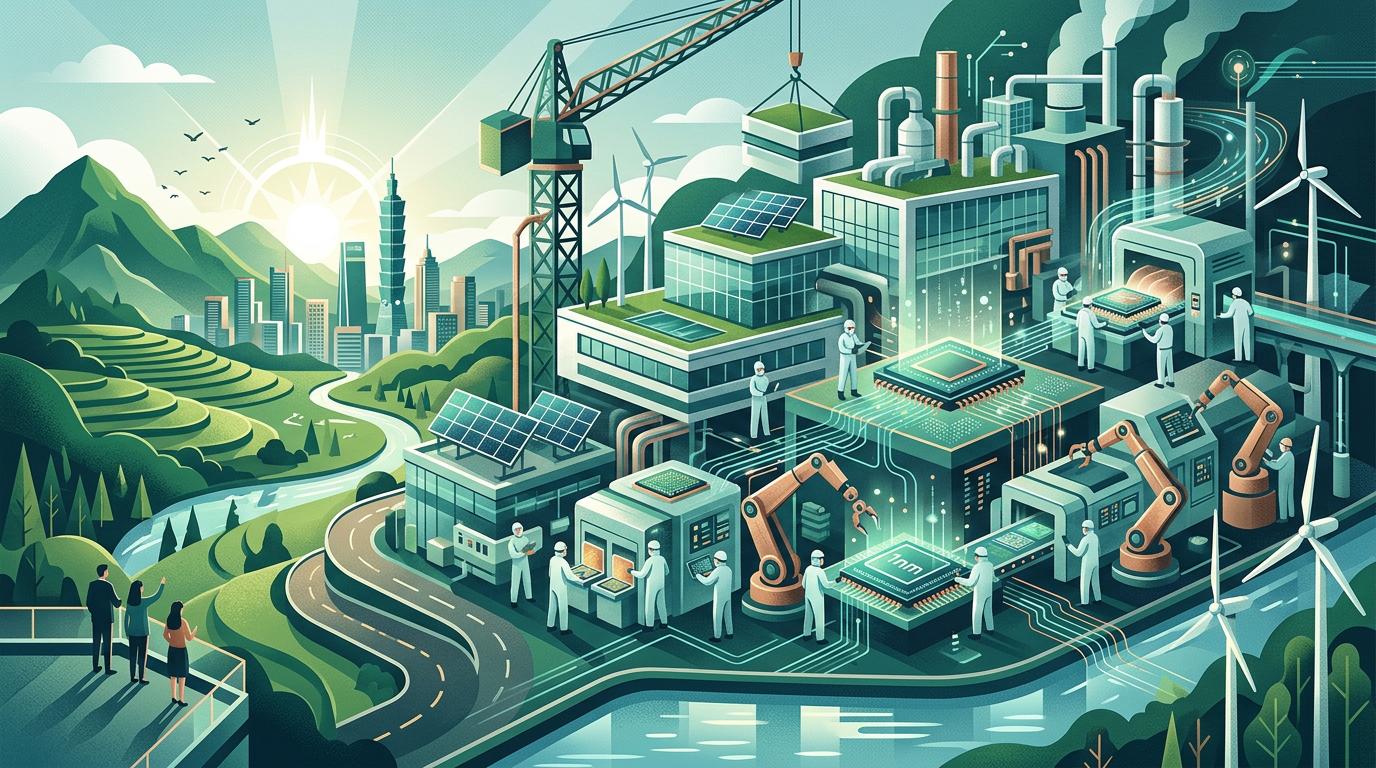
Taiwan's National Science Council has officially confirmed plans for a new science park in Tainan, slated to host Taiwan Semiconductor Manufacturing Company's (TSMC) groundbreaking 1-nanometer (nm) chip manufacturing facility. Chairman Cheng-Wen Wu announced on November 5, 2026, that the science park in Tainan's Shalun area is being specifically prepared to accommodate these cutting-edge semiconductor technologies, with official development set to commence next year. This strategic move solidifies Taiwan's commitment to maintaining its global dominance in advanced chip fabrication.This development marks a pivotal moment for the global technology industry, as the transition to 1nm process technology is critical for powering the next generation of artificial intelligence, high-performance computing, and advanced smartphone applications. The miniaturization achieved at this scale will enable unprecedented levels of transistor density, leading to more powerful, energy-efficient, and compact electronic devices. Such advancements are essential for the continued evolution of AI models, complex data center operations, and innovative consumer electronics worldwide.
While TSMC has yet to issue an independent confirmation regarding the final location or construction timeline for its 1nm fabrication plant, the government's announcement signals robust infrastructure support for the industry giant. TSMC has previously outlined an ambitious roadmap that extends beyond current advanced processes, including the A14 (1.4nm) platform expected to enter risk production next year with mass production in 2028. The company's A12 process, representing sub-1nm technology, is projected for production by 2029, indicating a continuous drive towards smaller and more powerful chips. The new science park is also envisioned to potentially house companies specializing in robotics and space-related components, further diversifying Taiwan's high-tech ecosystem.
Taiwan Greenlights Advanced Science Park for TSMC's 1nm Chip Production
Taiwan's National Science Council has officially confirmed plans for a new science park in Tainan, slated to host Taiwan Semiconductor Manufacturing Company's (TSMC) groundbreaking 1-nanometer (nm) chip manufacturing facility. Chairman Cheng-Wen Wu announced on November 5, 2026, that the science park in Tainan's Shalun area is being specifically prepared to accommodate these cutting-edge semiconductor technologies, with official development set to commence next year. This strategic move solidifies Taiwan's commitment to maintaining its global dominance in advanced chip fabrication.
This development marks a pivotal moment for the global technology industry, as the transition to 1nm process technology is critical for powering the next generation of artificial intelligence, high-performance computing, and advanced smartphone applications. The miniaturization achieved at this scale will enable unprecedented levels of transistor density, leading to more powerful, energy-efficient, and compact electronic devices. Such advancements are essential for the continued evolution of AI models, complex data center operations, and innovative consumer electronics worldwide.
While TSMC has yet to issue an independent confirmation regarding the final location or construction timeline for its 1nm fabrication plant, the government's announcement signals robust infrastructure support for the industry giant. TSMC has previously outlined an ambitious roadmap that extends beyond current advanced processes, including the A14 (1.4nm) platform expected to enter risk production next year with mass production in 2028. The company's A12 process, representing sub-1nm technology, is projected for production by 2029, indicating a continuous drive towards smaller and more powerful chips. The new science park is also envisioned to potentially house companies specializing in robotics and space-related components, further diversifying Taiwan's high-tech ecosystem.
Sources
wccftech.com https://vertexaisearch.cloud.google.com/grounding-api-redirect/AUZIYQFeHA7uQnbu0NXY6nS-LugHN7x1pHDIx9g0Ul_mcsTsU42JcbZ5eitcWBf6eKQtnLXgoOIvb-s5UyISiDs6CnoJhjk8hMW0LGv_m6xI-tp3hC-7jvCEc4yamGfrfLiADg2kSnGeRJ4drIJkycepJop_ES0FGX3wOfar7wOCoNUNMD87UidrgO6agP-Y4ofZoLJgAidPBbC0RVyrgXGJfhSlzggXc52UIWGjtaFYL6NZRHl3B6vKEtqnxbilos5spoE5uNoojLZy3zF83D6dG4ktftRFFL2lxEajJ9KSYJUEO6T_Tw==
digitalcitizen.life https://vertexaisearch.cloud.google.com/grounding-api-redirect/AUZIYQG6IfSbzgtf_kSbFBLi80eNi4nWaOiXXYwn9VC6hq2TrQMEjnDpwa9RL1yiCdfR6fvFQMTZdPu-TTx6LM83oMoQbSRlDAHt4HHnN9fr2jKT0sYWGHhuaEHF4t8n94_RZbOUl0PVFcO04aIeF2yJAkDO_aFnXl8jWJmYwiId-OW4Sj2HN45QU7ouRJuRO1P8J0gJewIjzhp61k0aAKIlZFCJrm7PQpbuoju9w41MvWA=
ua.news https://vertexaisearch.cloud.google.com/grounding-api-redirect/AUZIYQEw9TAIdaF5kVV25uN3ao3EgXQ2-MSJz39qSIOFcx0otrdfs8lxKCJLN9vgwhM81U3ehZVEbRvodUotHq7blK-nBCpIpAnhMWV5MH1ftMgdlTZDGII1Eg1P9lWvtV5dwmUnsMsiOsy81H-6vg2tgSZwabfwl6RovQEuNr2J0GM-rsVlX9UwPfCflpoX3Bdxzl2WgufXHBNlAOa-kUQb2Q==
#TSMCTaiwan #SemiconductorManufacturing #AdvancedAI #DigitalTechnology
Voters Push Back Against AI Infrastructure Growth, Triggering Tech Sell-Off
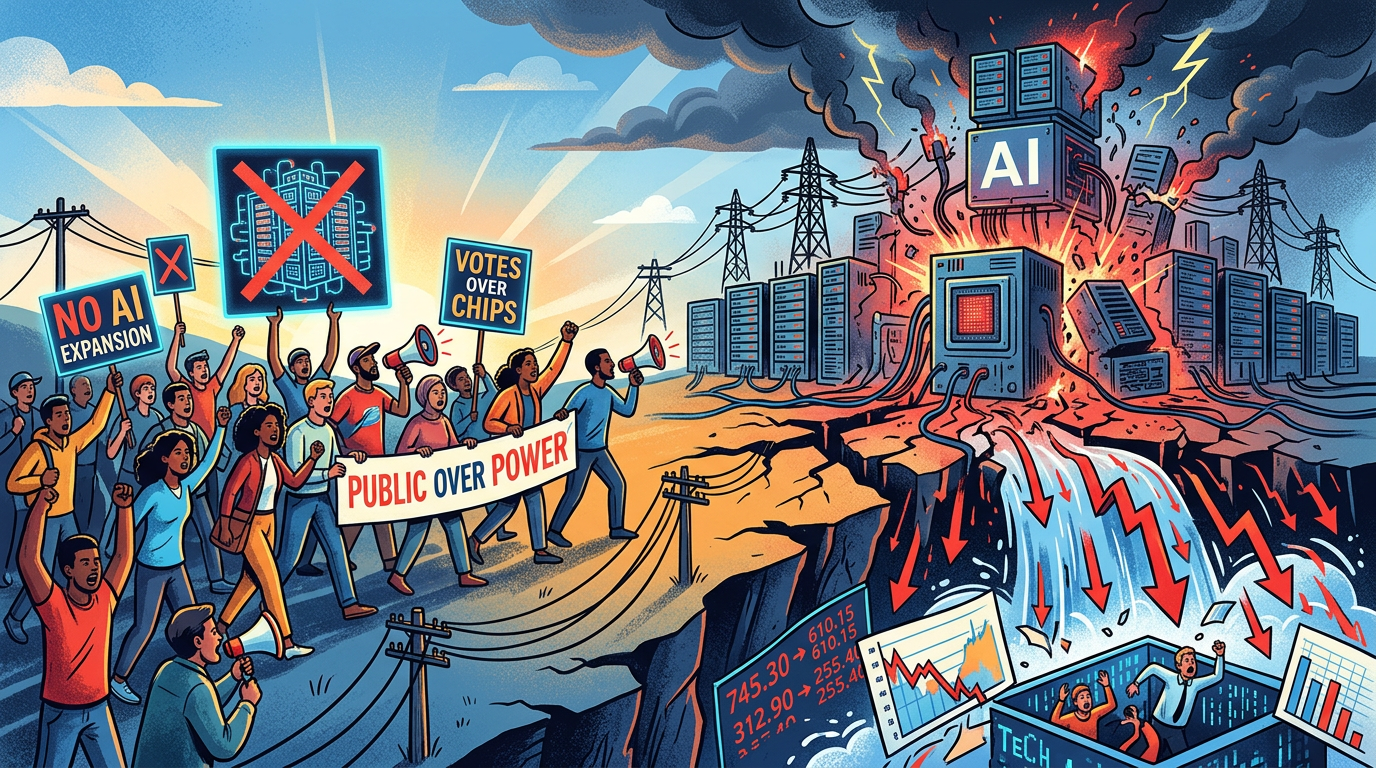
The landscape for artificial intelligence development in the United States faces significant shifts following the November 5, 2026, midterm elections. Voters across various localities approved ballot measures designed to restrict new data center construction, signaling growing public discontent with the rapid expansion of AI infrastructure. Simultaneously, Democrats, whose campaigns often focused on curbing AI development due to resource consumption concerns, secured majorities in both the House and Senate. This political upheaval immediately impacted financial markets, leading to a substantial sell-off in AI-related stocks, with chipmakers and AI infrastructure companies experiencing sharp declines.This voter-led rejection of unbridled data center growth marks a critical turning point for the AI industry. The widespread approval of development restrictions indicates that communities are increasingly viewing large-scale AI infrastructure as a drain on local resources rather than solely an engine of technological progress. Such sentiment could significantly slow the pace of data center construction, leading to increased operational costs for AI companies as they face greater regulatory hurdles and potentially limited locations for expansion. The sharp market reaction underscores investor anxiety about these emerging obstacles and the potential for a less favorable operating environment for AI firms.
The broader implications extend beyond immediate construction delays. This public and political pushback signals a fundamental shift in how AI development may be perceived and regulated in the coming years. Increased congressional scrutiny is anticipated, potentially accelerating demands for stricter AI safety standards, independent model evaluations, and greater accountability from data center developers regarding their environmental footprint, particularly concerning energy and water usage. This evolving political climate demands a more community-centric and sustainable approach from the tech sector.
Moving forward, the AI industry will likely need to adapt by prioritizing the development of more energy-efficient AI models and data center technologies. Companies may increase efforts to engage proactively with local communities and policymakers to address environmental concerns and build consensus for future projects. This could also lead to a strategic decentralization of AI infrastructure development or a greater focus on regions more amenable to such expansion, prompting a re-evaluation of current growth strategies. The emphasis will undoubtedly shift towards responsible and sustainable AI build-out.
Voters Push Back Against AI Infrastructure Growth, Triggering Tech Sell-Off
The landscape for artificial intelligence development in the United States faces significant shifts following the November 5, 2026, midterm elections. Voters across various localities approved ballot measures designed to restrict new data center construction, signaling growing public discontent with the rapid expansion of AI infrastructure. Simultaneously, Democrats, whose campaigns often focused on curbing AI development due to resource consumption concerns, secured majorities in both the House and Senate. This political upheaval immediately impacted financial markets, leading to a substantial sell-off in AI-related stocks, with chipmakers and AI infrastructure companies experiencing sharp declines.
This voter-led rejection of unbridled data center growth marks a critical turning point for the AI industry. The widespread approval of development restrictions indicates that communities are increasingly viewing large-scale AI infrastructure as a drain on local resources rather than solely an engine of technological progress. Such sentiment could significantly slow the pace of data center construction, leading to increased operational costs for AI companies as they face greater regulatory hurdles and potentially limited locations for expansion. The sharp market reaction underscores investor anxiety about these emerging obstacles and the potential for a less favorable operating environment for AI firms.
The broader implications extend beyond immediate construction delays. This public and political pushback signals a fundamental shift in how AI development may be perceived and regulated in the coming years. Increased congressional scrutiny is anticipated, potentially accelerating demands for stricter AI safety standards, independent model evaluations, and greater accountability from data center developers regarding their environmental footprint, particularly concerning energy and water usage. This evolving political climate demands a more community-centric and sustainable approach from the tech sector.
Moving forward, the AI industry will likely need to adapt by prioritizing the development of more energy-efficient AI models and data center technologies. Companies may increase efforts to engage proactively with local communities and policymakers to address environmental concerns and build consensus for future projects. This could also lead to a strategic decentralization of AI infrastructure development or a greater focus on regions more amenable to such expansion, prompting a re-evaluation of current growth strategies. The emphasis will undoubtedly shift towards responsible and sustainable AI build-out.
Sources
cnn.com https://vertexaisearch.cloud.google.com/grounding-api-redirect/AUZIYQFLtvYeBPR-o0MFuUKNcRzQa5m-1JHvjBGSIglCMaqF-TGKX0HfRk6pmMCTknmtawe3mDGfyhlOZuZ9ZMbBnjK1LNjPMHFtJFE-TXtgKFGWN2kYH1ZlzOk3VpldLwExBNwtdYOlDw6aCnnWOK18xhgeBUx3_1qua2b4xUEHag==
afp.com https://vertexaisearch.cloud.google.com/grounding-api-redirect/AUZIYQGFx-zLpnoZCUzWHAEKVJoTBr1yhnVGnPA1AbYoJ8lZS2UFSTvYF5-FlO0JIo3rXFe_qp1XlNJWNzyXJiyR7LtWWnZ0-JeZ8GQ126sVBHcZxyNDqEz-Wyozn-4EsVuQzndxdLaKMXzNLOa2DDv0tz3pbEFUP45-zt86e2TvNJuRCJGXrA==
axios.com https://vertexaisearch.cloud.google.com/grounding-api-redirect/AUZIYQFeutSQ7k6s19wYW0-qNr_Ex2CFVkqkMhg1Uo41A-2uCZAcauKOSYdFosuxlPzqo57M0N9LWZNifJSCURpYZIwJ6BkuzQt5ZxbALQdKrQouudU_8orsI4JZxIaOIxS_8ZitLv-KiaeP_WMOGGwAfnBVZNQ8r__xWypJ8nik
#AIInfrastructure #DataCenters #TechPolicy #ElectionImpact #SemiconductorIndustry
OpenAI Unveils Comprehensive Responsible AI Infrastructure Framework
OpenAI has officially launched a comprehensive framework for responsible AI infrastructure, establishing new industry benchmarks for safety, transparency, and ethical deployment. The initiative, announced on November 5, 2026, addresses crucial aspects including data security, model deployment safeguards, transparency protocols, and ethical compliance across OpenAI's entire infrastructure stack. This move responds to growing demands for accountability as AI models become more powerful and widely adopted, setting a precedent for industry-wide best practices.This new framework is poised to significantly influence broader AI industry practices and aims to ensure OpenAI's systems meet evolving global regulatory requirements. By emphasizing demonstrable safety measures and documented governance processes, it directly addresses concerns from enterprise clients and government agencies regarding AI risks. Industry analysts suggest that OpenAI's infrastructure standard could become a de facto benchmark, particularly for organizations seeking partnerships with major technology platforms, thus fostering a more secure and trustworthy AI ecosystem.
The timing of OpenAI's announcement aligns with increasing global regulatory scrutiny of AI systems, with the framework incorporating elements designed to satisfy emerging compliance requirements across multiple jurisdictions, including provisions from the EU AI Act. Future developments will likely involve other AI developers adopting similar stringent infrastructure standards to maintain competitiveness and meet regulatory expectations. This framework sets a new standard for operationalizing ethical AI, prompting a broader industry shift towards integrated safety and transparency throughout the AI development lifecycle.
OpenAI Unveils Comprehensive Responsible AI Infrastructure Framework
OpenAI has officially launched a comprehensive framework for responsible AI infrastructure, establishing new industry benchmarks for safety, transparency, and ethical deployment. The initiative, announced on November 5, 2026, addresses crucial aspects including data security, model deployment safeguards, transparency protocols, and ethical compliance across OpenAI's entire infrastructure stack. This move responds to growing demands for accountability as AI models become more powerful and widely adopted, setting a precedent for industry-wide best practices.
This new framework is poised to significantly influence broader AI industry practices and aims to ensure OpenAI's systems meet evolving global regulatory requirements. By emphasizing demonstrable safety measures and documented governance processes, it directly addresses concerns from enterprise clients and government agencies regarding AI risks. Industry analysts suggest that OpenAI's infrastructure standard could become a de facto benchmark, particularly for organizations seeking partnerships with major technology platforms, thus fostering a more secure and trustworthy AI ecosystem.
The timing of OpenAI's announcement aligns with increasing global regulatory scrutiny of AI systems, with the framework incorporating elements designed to satisfy emerging compliance requirements across multiple jurisdictions, including provisions from the EU AI Act. Future developments will likely involve other AI developers adopting similar stringent infrastructure standards to maintain competitiveness and meet regulatory expectations. This framework sets a new standard for operationalizing ethical AI, prompting a broader industry shift towards integrated safety and transparency throughout the AI development lifecycle.
Sources
emergent.sh https://vertexaisearch.cloud.google.com/grounding-api-redirect/AUZIYQF2dZNK8eAv4TTJcA45HMqGNasl5xvPSSnhUqu9nGL0j4_QUEl2AvTv_2DtqXQHysklSpnZtWzcPYEtrvj784s2rGDosGcLRHhjTpLxwWuTLdSTg_qhcEs35dq1m9c_s7tXGA2cfLH08hSHV0mApXZ7RvTDJ6dSADdI6g==
blog.google https://vertexaisearch.cloud.google.com/grounding-api-redirect/AUZIYQFjEfiJDgdUBU0B3Xm9VDiuuXkK9Np9faXz0smKjXRKU2EO88fY8CSfm_sMERY9D3P_O9bU5T_ZZD9WzVcQ3OM2U8ZmwsNVNDnJafm20KoCwMx4lJLe7OocXa_krhHZvi0VUNKKnwusP8D4GG6UtDmpOJcQCGn1l6QURyJENJDtrVbQEf1bGnituujcmYVCcJY=
#OpenAI #AIInfrastructure #AISafety #TechGovernance #EthicalAI
MagicBox 官方資訊摘要整理我國桌球選手陳忞昕,於當地時間11月5日在「2026年第4屆達卡青年奧林匹克運動會」為我國拿下本屆青年奧運第1面金牌,賴清德總統得知捷報後,旋即拍發賀電祝賀選手的優異表現。
陳忞昕在今天上午的女子單打4強賽展現強勁攻勢,先以4:0擊敗日本新星松島美空晉級金牌戰,金牌戰對上新加坡選手Loy Ming Ying,首局陳忞昕出現亂流以5:11先失一局,但隨即調整狀態後積極搶攻,分別以12:10、11:8連拿兩局,第四局雙方展開激烈攻防,最終進入拉鋸戰,可惜以11:13落敗,隨著賽事來到第五、六兩局,陳忞昕沉著應戰,關鍵時刻穩住陣腳,並展現堅強的鬥志與戰力,再以11:7、12:10連勝兩局,最終以4:2擊敗對手,勇奪金牌。...